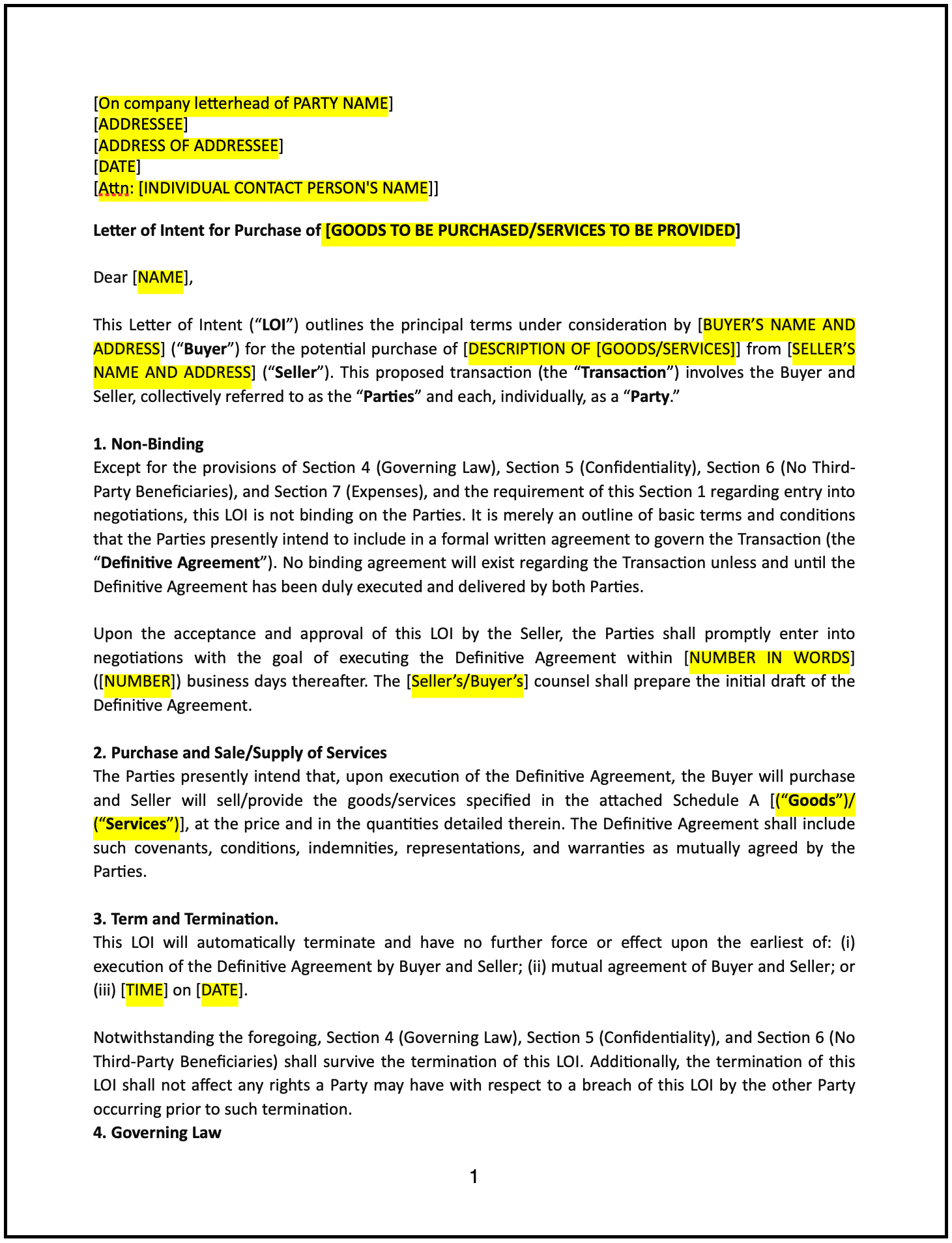
Letter of intent to enter a business agreement: Free template
Expresses the intent to enter into a business agreement, outlining the basic terms and goals, with a commitment to move forward with formal negotiations.
- Letters
Letter of intent to enter a business agreement
A letter of intent (LOI) to enter a business agreement sets the stage for formal negotiations and outlines the key terms and intentions of the parties involved. This letter provides a professional way to express your interest, define preliminary terms, and establish a framework for moving forward while maintaining flexibility.
How to use this letter of intent to enter a business agreement
- Identify the parties: Clearly state the names and roles of all parties involved in the potential agreement to avoid ambiguity.
- Customize the template: Replace placeholders with your organization’s details, the purpose of the agreement, and the key terms or conditions being considered.
- Specify the intent: Clearly outline the intentions of both parties, including the general nature of the business relationship or transaction.
- Include preliminary terms: If applicable, summarize any agreed-upon terms, such as timelines, responsibilities, or key deliverables, while noting that these are subject to formal agreement.
- Maintain a professional tone: Ensure the letter reflects respect, collaboration, and a shared commitment to moving forward.
- Include a call to action: Propose the next steps, such as scheduling a meeting, drafting a formal agreement, or conducting further due diligence.
Benefits of using a letter of intent to enter a business agreement
This letter template provides a structured and professional way to initiate a business agreement while maintaining clarity and flexibility. Here’s how it helps:
- Establishes mutual understanding: The letter outlines the intentions and preliminary terms, ensuring all parties are aligned before formal negotiations.
- Provides clarity: Clearly stating key terms and objectives reduces ambiguity and sets the foundation for a successful agreement.
- Demonstrates professionalism: A formal LOI reflects respect for the other party and a commitment to constructive engagement.
- Maintains flexibility: By noting that terms are preliminary, the letter allows room for adjustments during formal negotiations.
- Facilitates next steps: Including a call to action ensures the process moves forward efficiently and collaboratively.
Tips for writing an effective letter of intent to enter a business agreement
- Be specific: Clearly identify the parties, the purpose of the agreement, and any key preliminary terms being proposed.
- Use professional language: Maintain a respectful and collaborative tone to foster a positive working relationship.
- Clarify intent: Clearly state that the letter is non-binding, if applicable, while expressing your commitment to moving forward.
- Address potential questions: Anticipate and address any concerns or areas requiring clarification to ensure alignment.
- Keep it concise: Focus on the key objectives and terms, avoiding unnecessary details or overly technical language.
Frequently asked questions (FAQs)
Similar templates
Where deals go from offer to paid
