Letter of rejected goods due to quality issues: Free template
Customize it in Cobrief and see the moment it's opened, signed, or actioned.
Customize this template for free
TL;DR
A formal notification letter used to inform suppliers about rejected goods due to quality issues. It details specific problems, references relevant agreements, and requests corrective actions, making it essential for procurement teams and quality control departments to address non-compliance and maintain supplier accountability.
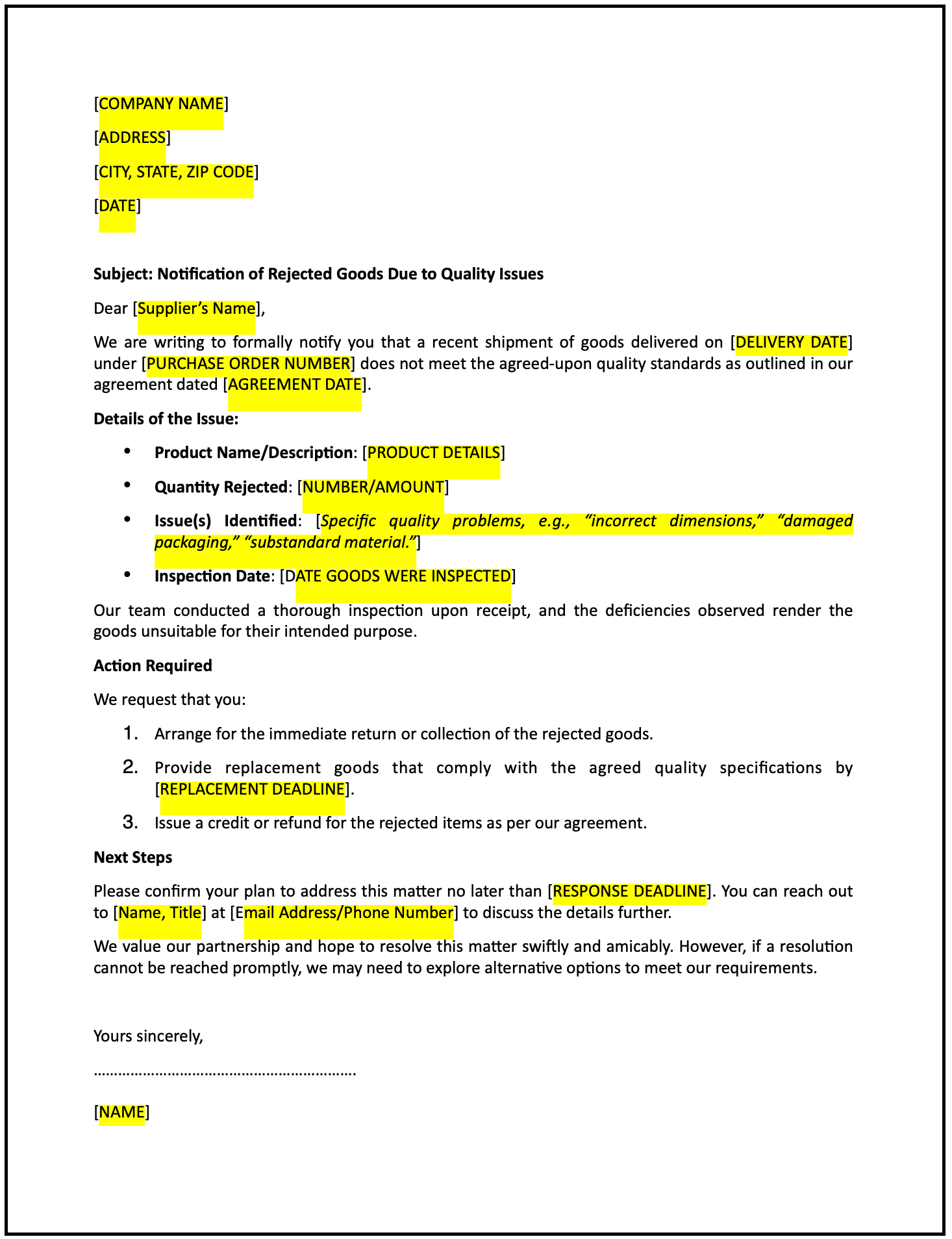
Letter of rejected goods due to quality issues
A notification letter of rejected goods due to quality issues is a formal communication used to inform a supplier or vendor that delivered goods do not meet agreed-upon quality standards or specifications. This letter outlines the specific issues, references the relevant agreement or standards, and requests corrective action or next steps.
How to use this letter of rejected goods due to quality issues
- Open with an introduction: Address the recipient respectfully and reference the delivery of goods in question, including relevant details such as the delivery date, order number, or invoice reference.
- State the rejection: Clearly communicate that the goods have been rejected due to quality issues, specifying that they do not meet agreed-upon standards or specifications.
- Provide details: Outline the specific quality issues identified, such as defects, inconsistencies, or deviations from specifications. Include evidence, such as inspection reports, photographs, or test results, if applicable.
- Reference the agreement: Mention the relevant contract terms, purchase order, or agreed standards that the goods failed to meet.
- Request corrective action: Specify the next steps, such as replacement goods, a refund, or reinspection, and include a deadline for resolution.
- Emphasize compliance: Reiterate your commitment to maintaining quality standards and the importance of adherence to the agreed terms.
- Maintain a professional tone: Ensure the letter is clear, respectful, and focused on resolving the issue constructively.
- Provide contact information: Include details for the recipient to reach out with questions or discuss the matter further.
Benefits of using a letter of rejected goods due to quality issues
This letter ensures a structured and professional way to communicate quality concerns while fostering accountability and resolution. Here’s how it helps:
- Promotes clarity: Clearly outlining quality issues helps the supplier understand the problem and take appropriate action.
- Reflects professionalism: A well-crafted letter demonstrates respect and commitment to quality standards.
- Encourages accountability: Documenting the rejection emphasizes the importance of meeting agreed-upon terms.
- Supports resolution: Providing actionable next steps ensures a constructive path forward.
- Preserves relationships: Maintaining a respectful tone fosters goodwill for future collaboration.
Tips for writing an effective letter of rejected goods due to quality issues
- Be specific: Clearly describe the quality issues, referencing relevant standards or agreements.
- Use professional language: Maintain a respectful and constructive tone to encourage cooperation.
- Provide evidence: Include documentation, such as photos or test results, to substantiate the rejection.
- Highlight next steps: Specify corrective actions required, such as replacement, refund, or reinspection.
- Include a timeline: Provide a deadline for resolving the issue to ensure timely action.
- Keep it concise: Focus on the key points while ensuring the tone is professional and solution-oriented.
Frequently asked questions (FAQs)
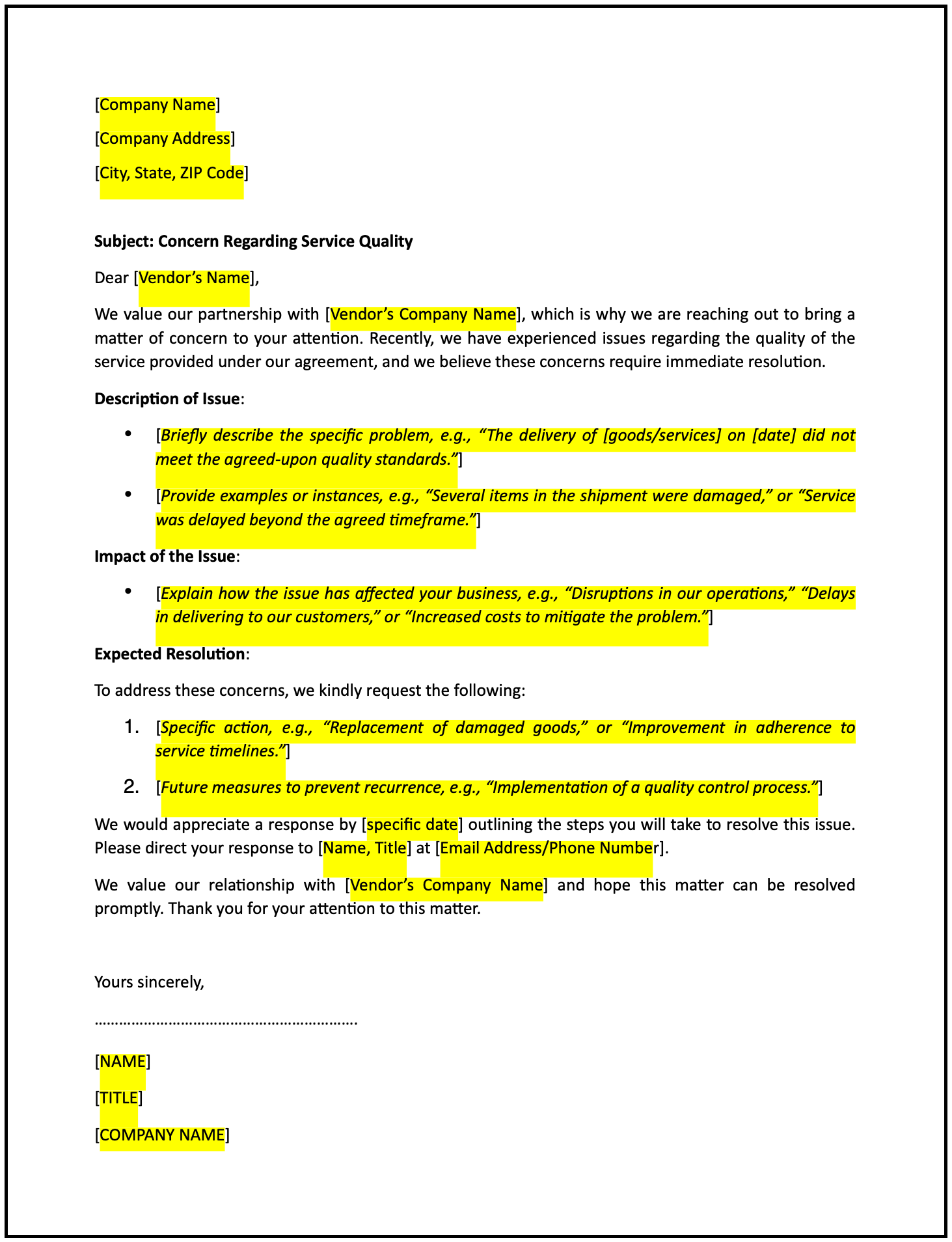
Expresses dissatisfaction with the vendor’s service quality, detailing the specific issues and requesting corrective action or resolution.
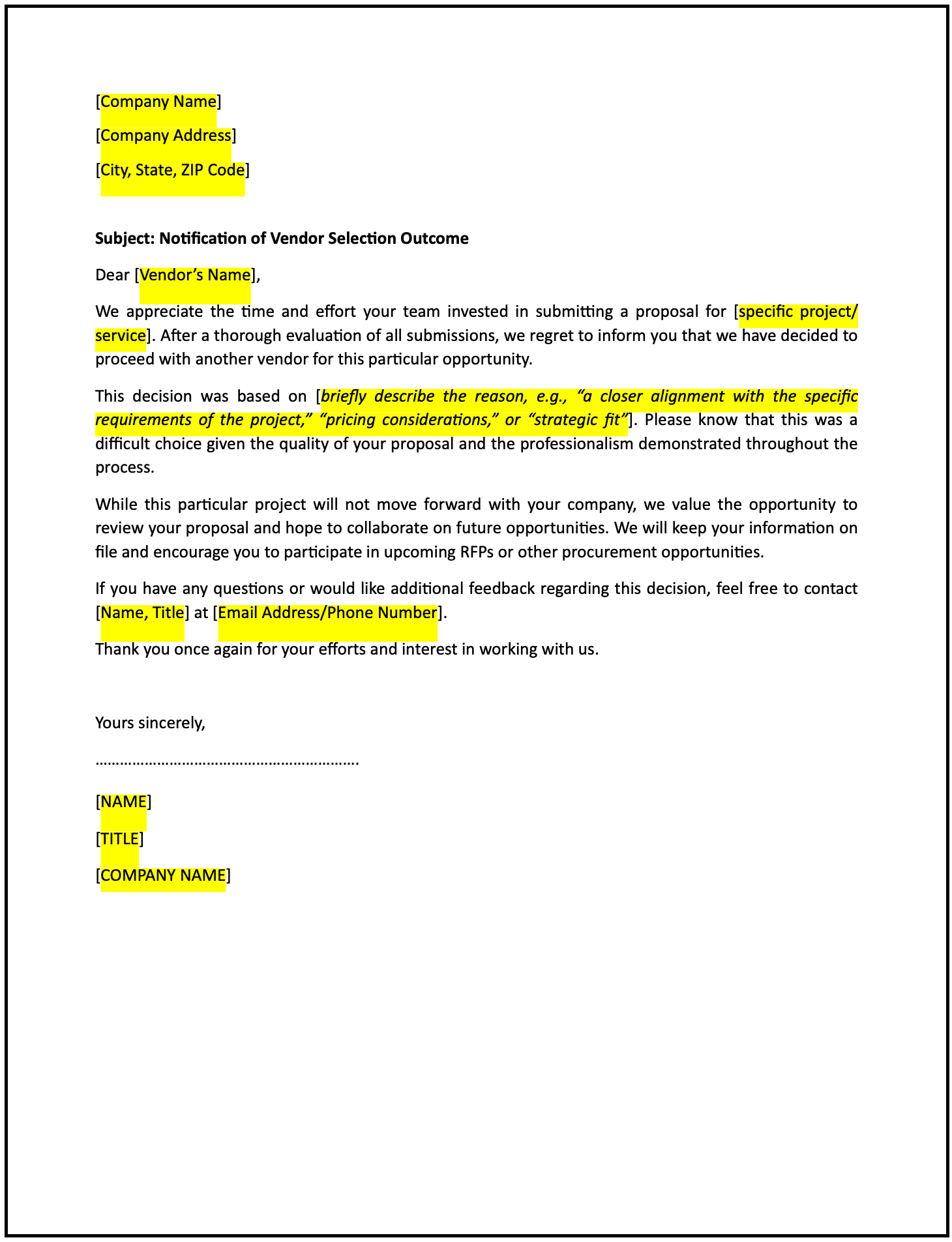
Notifies a vendor of the rejection of their selection, thanking them for their participation and offering feedback if appropriate.
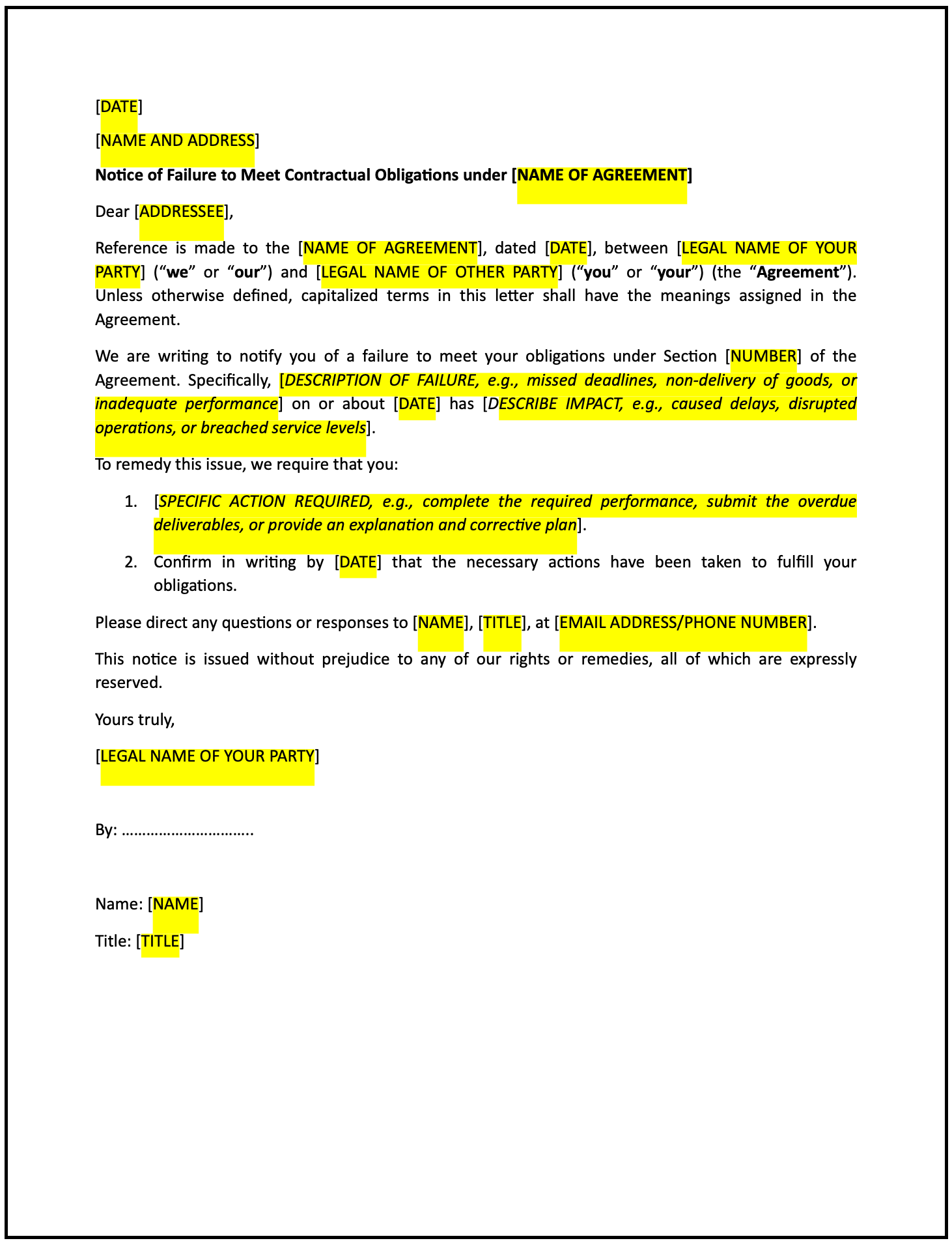
Notifies the recipient of their failure to meet contractual obligations, outlining the specific areas of non-compliance and requesting prompt corrective action.
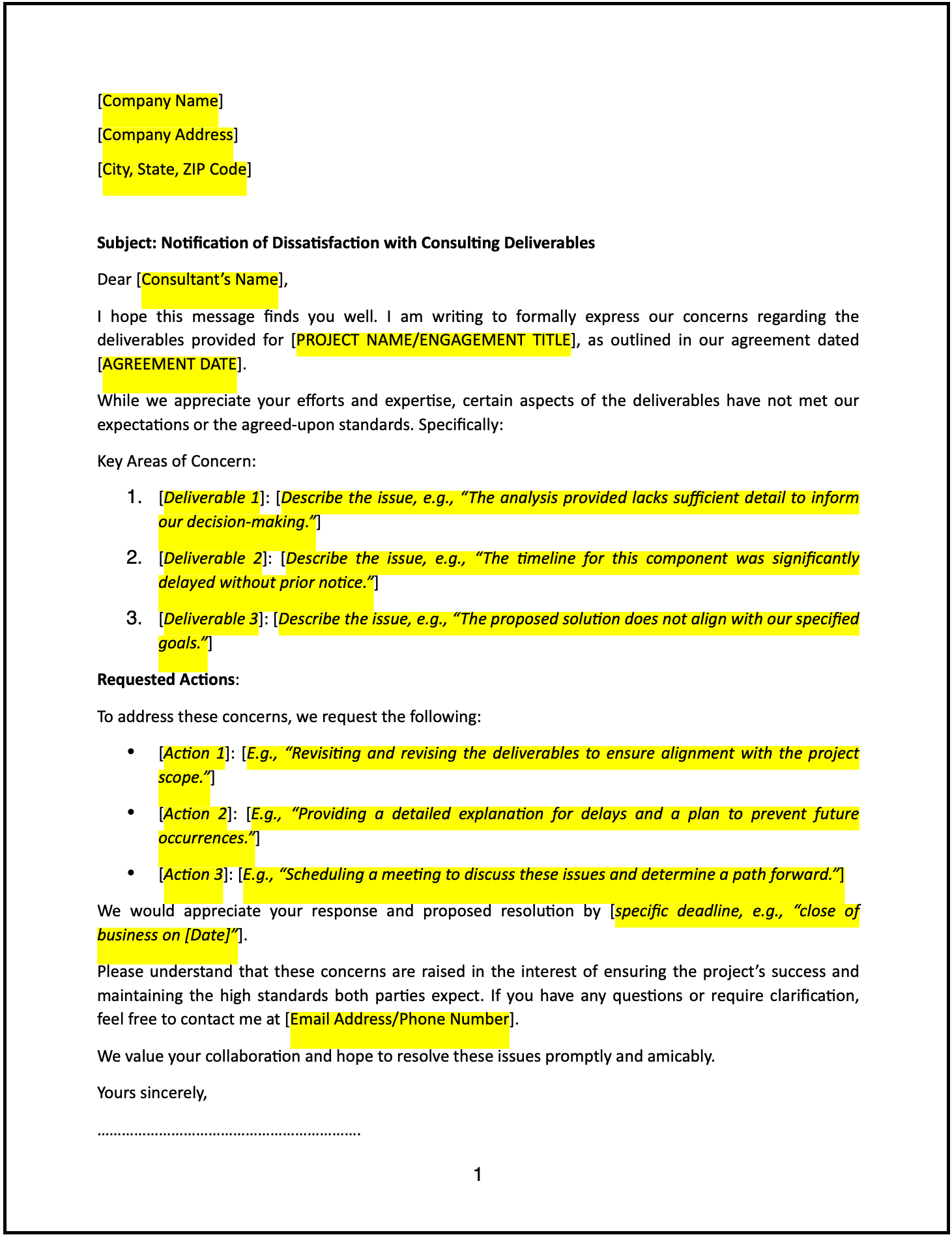
Expresses dissatisfaction with consulting deliverables, outlining specific areas of concern and requesting corrective actions or adjustments to meet expectations.
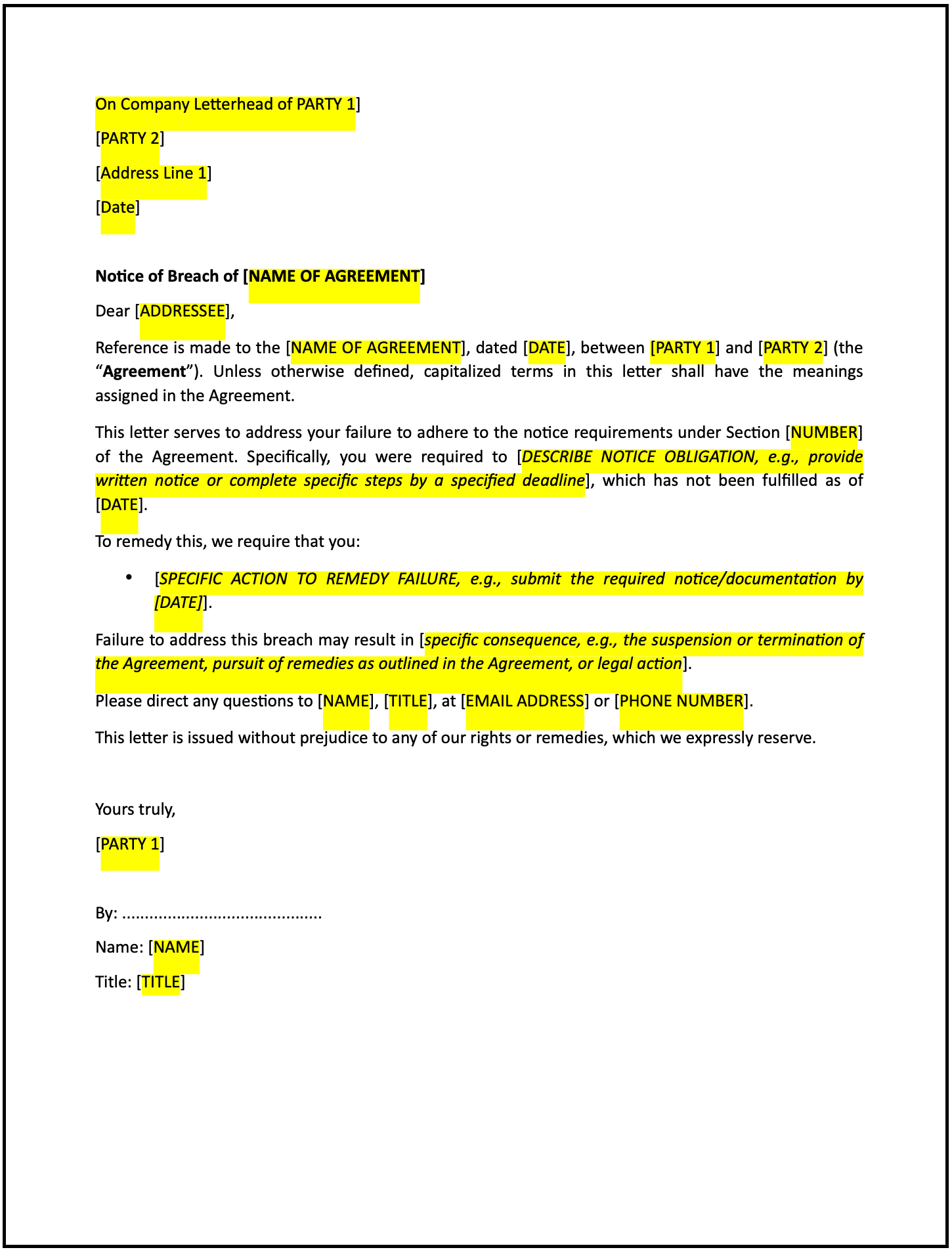
Notifies the recipient of their failure to adhere to notification requirements in the contract, requesting immediate compliance and outlining potential consequences.