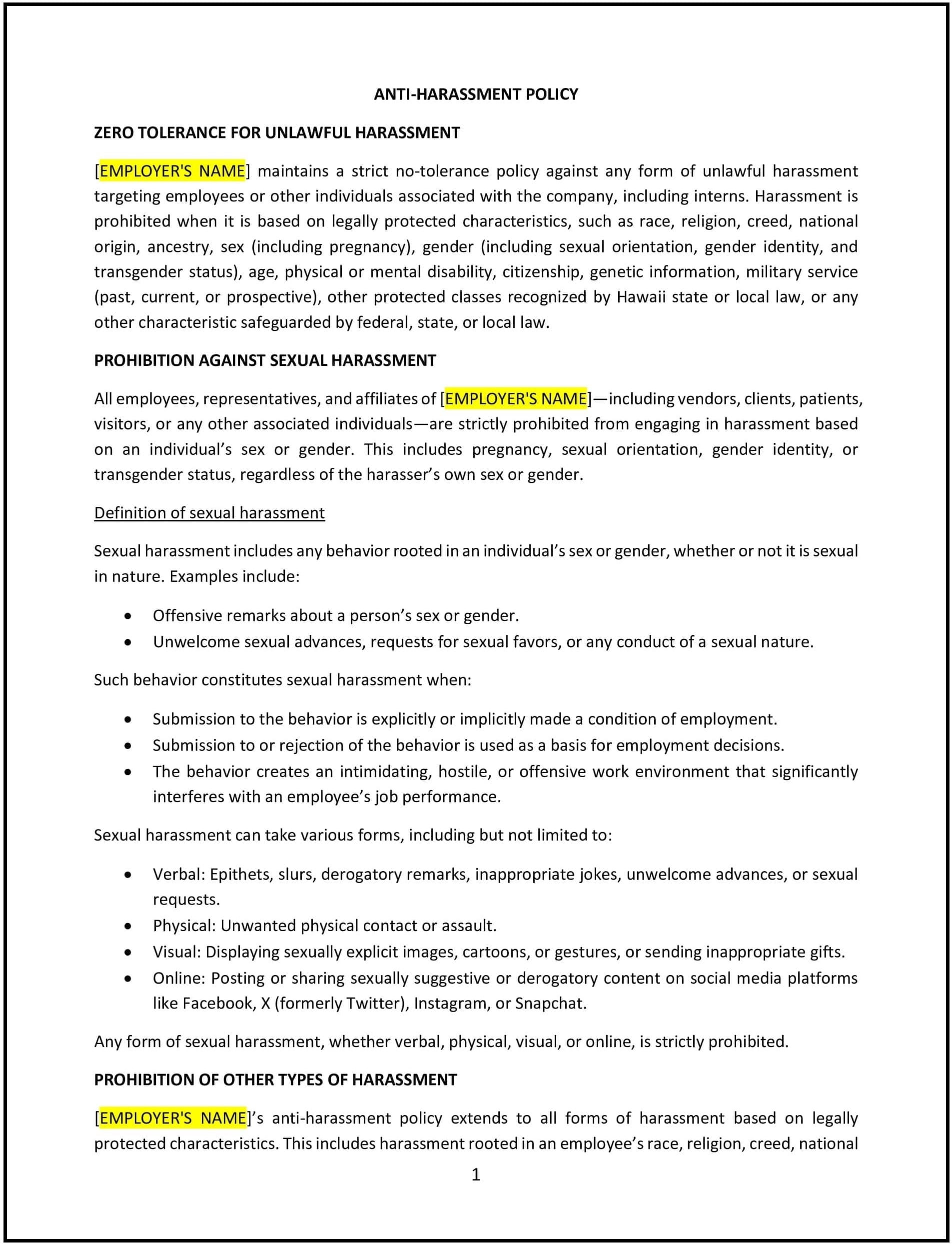
Anti-harassment policy (Hawai'i): Free template
Protects employees from all forms of harassment, fostering a respectful and safe work environment as required by Hawaiʻi law.
- Policies
Anti-harassment policy (Hawaiʻi)
An anti-harassment policy helps Hawaiʻi businesses create a safe, respectful, and inclusive workplace by addressing and preventing harassment of any kind. This policy defines prohibited behaviors, outlines reporting procedures, and emphasizes the importance of fostering a culture of respect and dignity. It is designed to align with Hawaiʻi state laws and federal regulations, such as Title VII of the Civil Rights Act, while addressing the unique cultural and workplace dynamics of the islands.
By implementing this policy, businesses in Hawaiʻi can promote a positive work environment, reduce the risk of legal issues, and demonstrate their commitment to protecting employees from harassment.
How to use this anti-harassment policy (Hawaiʻi)
- Define harassment clearly: Provide specific examples of prohibited behaviors, such as verbal, physical, or visual harassment, including actions based on protected characteristics like race, gender, religion, or disability. The policy should also address cyber harassment and other modern forms of misconduct.
- Establish reporting procedures: Create a clear, confidential process for employees to report harassment. Include multiple reporting channels, such as HR representatives, supervisors, or an anonymous hotline, to ensure accessibility.
- Train employees and managers: Businesses should provide regular training on recognizing, preventing, and addressing harassment. Training should emphasize the policy’s guidelines and the importance of maintaining a respectful workplace.
- Investigate complaints promptly: Outline steps for conducting thorough, impartial investigations into harassment claims. Businesses should ensure investigations are handled confidentially and without retaliation against the complainant.
- Enforce consequences: Specify the disciplinary actions that may result from policy violations, ranging from warnings to termination, depending on the severity of the offense.
- Promote a culture of respect: Encourage open communication and mutual respect among employees. Businesses should lead by example, with leadership demonstrating a commitment to the policy’s principles.
- Review and update the policy: Regularly assess the policy’s effectiveness and make adjustments as needed to reflect changes in Hawaiʻi laws, workplace dynamics, or best practices.
Benefits of using this anti-harassment policy (Hawaiʻi)
This policy offers several advantages for Hawaiʻi businesses:
- Creates a safe workplace: By addressing harassment proactively, businesses can foster a safe and supportive environment for all employees.
- Reduces legal risks: A clear anti-harassment policy helps businesses avoid lawsuits, fines, or reputational damage associated with harassment claims.
- Improves employee morale: Employees are more likely to feel valued and respected in a workplace that prioritizes their well-being and safety.
- Enhances productivity: A harassment-free workplace encourages collaboration, reduces absenteeism, and boosts overall productivity.
- Builds a positive reputation: Demonstrating a commitment to preventing harassment can enhance a business’s reputation among employees, customers, and the community.
- Aligns with legal requirements: The policy helps businesses comply with Hawaiʻi state laws and federal regulations, such as Title VII of the Civil Rights Act.
Tips for using this anti-harassment policy (Hawaiʻi)
- Communicate the policy effectively: Share the policy with all employees during onboarding and through regular reminders, such as emails or posters in common areas.
- Provide ongoing training: Businesses should offer regular training sessions to ensure employees understand the policy and know how to report harassment.
- Encourage reporting: Create a culture where employees feel safe and supported when reporting harassment. Emphasize that retaliation against complainants will not be tolerated.
- Monitor workplace culture: Regularly assess the workplace environment to identify and address potential issues before they escalate.
- Lead by example: Ensure leadership adheres to the policy and actively promotes a culture of respect and inclusivity.
- Review the policy periodically: Update the policy as needed to reflect changes in Hawaiʻi laws, workplace dynamics, or industry best practices.
Frequently asked questions (FAQs)
Similar templates
Where deals go from offer to paid
