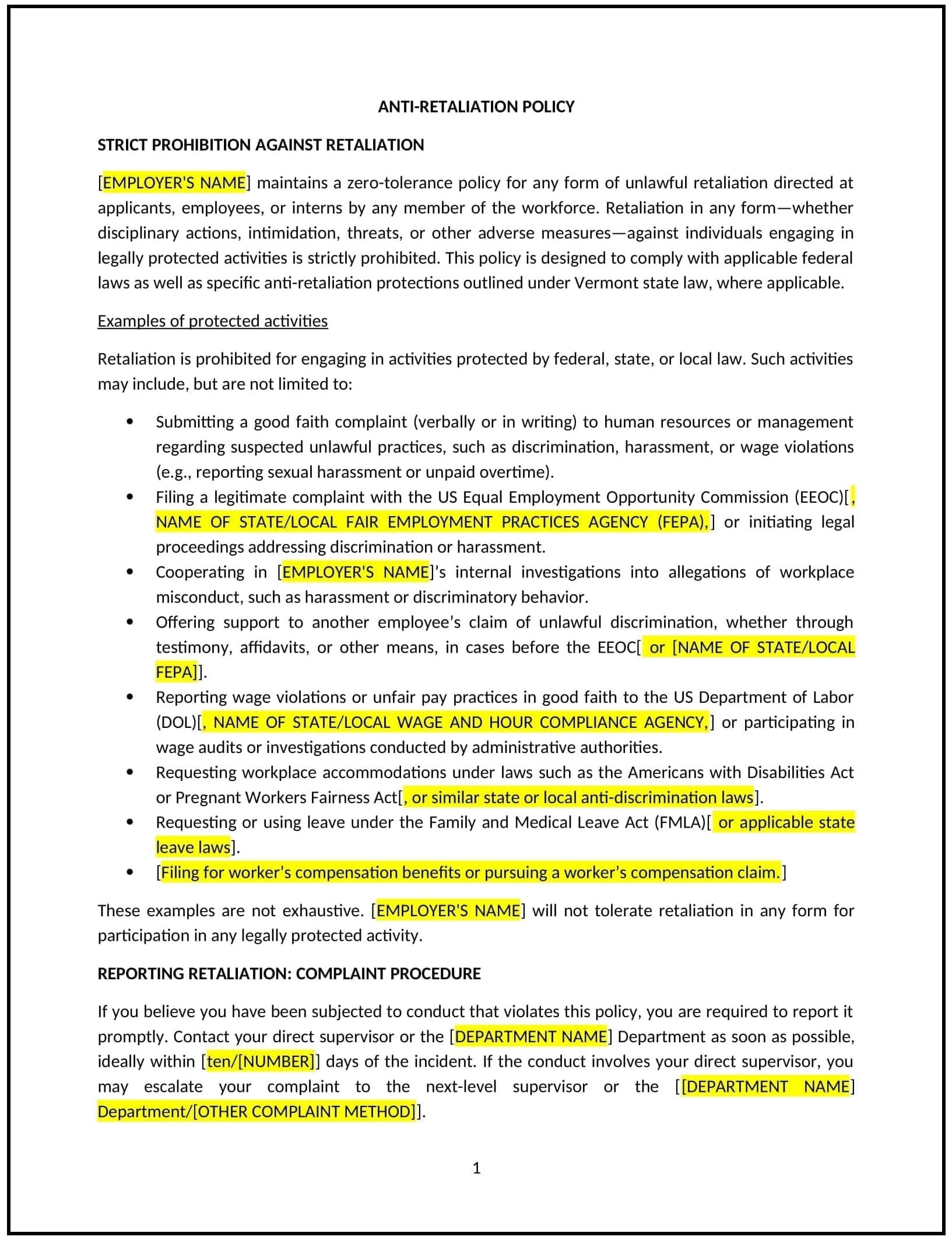
Anti-retaliation policy (Vermont): Free template
Protects employees who report concerns or assert their rights, ensuring legal compliance in Vermont workplaces.
- Policies
- Vermont
Anti-retaliation policy (Vermont)
This anti-retaliation policy is designed to help Vermont businesses protect employees who report concerns, participate in investigations, or exercise their legal rights. It outlines protections against retaliation, promoting compliance with Vermont laws such as the Vermont Fair Employment Practices Act (VFEPA) and other applicable federal regulations.
By adopting this policy, businesses can foster a culture of transparency and accountability while mitigating legal risks.
How to use this anti-retaliation policy (Vermont)
- Define retaliation: Clearly specify what constitutes retaliation, such as adverse actions like termination, demotion, harassment, or unfair treatment following a protected activity.
- Outline protected activities: Include actions like reporting harassment, discrimination, safety violations, or participating in investigations or legal proceedings.
- Establish reporting procedures: Provide employees with clear channels to report retaliation, such as contacting HR or a designated manager.
- Include investigation guidelines: Detail how reports of retaliation will be handled, including confidentiality and a commitment to impartial investigations.
- Reinforce corrective actions: Specify that employees found engaging in retaliation will face disciplinary measures, up to and including termination.
- Promote education: Offer training for employees and managers on recognizing and preventing retaliation.
- Monitor compliance: Regularly review workplace practices to ensure adherence to Vermont laws and company policies.
Benefits of using this anti-retaliation policy (Vermont)
This policy provides several benefits for Vermont businesses:
- Encourages reporting: Provides employees with confidence to raise concerns without fear of reprisal.
- Enhances compliance: Aligns with Vermont state laws and federal regulations to reduce legal risks.
- Promotes accountability: Holds employees and managers accountable for maintaining a retaliation-free workplace.
- Fosters transparency: Demonstrates the company’s commitment to ethical behavior and employee protection.
- Supports a positive work environment: Reinforces trust and respect among employees and management.
Tips for using this anti-retaliation policy (Vermont)
- Communicate the policy: Share the policy with employees during onboarding and include it in the employee handbook.
- Train managers: Educate supervisors on their responsibilities to prevent retaliation and handle reports appropriately.
- Encourage early reporting: Remind employees to report concerns about retaliation promptly to enable timely resolution.
- Maintain documentation: Keep detailed records of all retaliation complaints, investigations, and outcomes to ensure transparency.
- Update regularly: Revise the policy to reflect changes in Vermont laws or workplace practices.
Frequently asked questions (FAQs)
Similar templates
Where deals go from offer to paid
