Breastfeeding break policy (Kansas): Free template
Guarantees break time and private space for nursing employees, complying with Kansas and federal requirements.
- Policies
- Kansas
Breastfeeding break policy (Kansas)
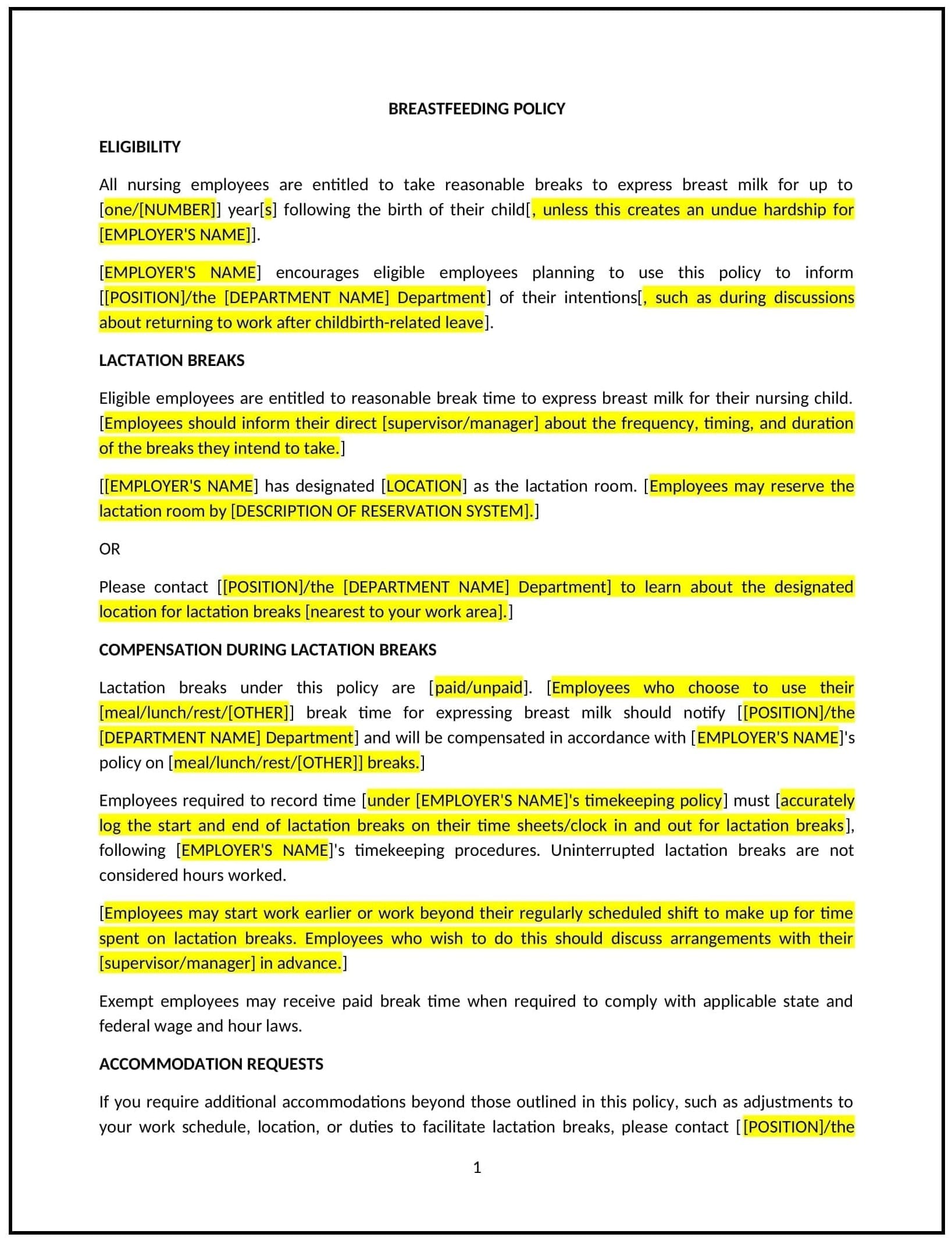
A breastfeeding break policy helps Kansas businesses support employees who need time and space to express milk during the workday. This policy outlines break accommodations, designated lactation spaces, and guidelines for ensuring a comfortable and private environment for nursing employees.
By implementing this policy, businesses can promote workplace inclusivity, support working parents, and create a positive work environment that meets the needs of nursing employees.
How to use this breastfeeding break policy (Kansas)
- Define break availability: Businesses should specify how often and for how long employees may take breastfeeding breaks during the workday.
- Designate private lactation spaces: Businesses should provide a clean, private space for nursing employees that is not a restroom. This space should have seating, an electrical outlet, and a secure door.
- Outline scheduling expectations: Businesses should establish a flexible process for employees to coordinate breastfeeding breaks while minimizing workplace disruptions.
- Address milk storage: Businesses should allow employees to store expressed milk in a personal cooler or a designated refrigerator, if available.
- Communicate employee rights: Businesses should inform employees about their right to breastfeeding breaks and how to request accommodations.
- Encourage supportive workplace culture: Businesses should promote an environment where nursing employees feel comfortable taking breaks without stigma or retaliation.
- Review and update regularly: Businesses should periodically assess the policy to align with workplace needs and best practices.
Benefits of using a breastfeeding break policy (Kansas)
- Supports working parents: Provides nursing employees with the flexibility to balance work and family responsibilities.
- Promotes employee retention: Encourages long-term workforce engagement by offering family-friendly policies.
- Enhances workplace inclusivity: Fosters a culture that respects and supports the needs of all employees.
- Reduces stress for nursing employees: Helps employees feel more comfortable returning to work after childbirth.
- Improves productivity: Allows employees to manage their needs effectively without added workplace stress.
- Strengthens company reputation: Demonstrates a commitment to employee well-being and family-friendly policies.
Tips for using this breastfeeding break policy (Kansas)
- Communicate break options clearly: Businesses should inform employees of their right to breastfeeding breaks and how to request them.
- Provide a comfortable lactation space: Businesses should ensure the designated space meets privacy and accessibility needs.
- Offer flexible scheduling: Businesses should accommodate reasonable break requests while balancing operational needs.
- Encourage manager training: Supervisors should understand the importance of breastfeeding breaks and how to support nursing employees.
- Maintain confidentiality: Businesses should respect employees’ privacy when handling breastfeeding break requests.
- Review policy effectiveness: Businesses should gather employee feedback to improve the policy as needed.
Frequently asked questions (FAQs)
Similar templates
Where deals go from offer to paid
