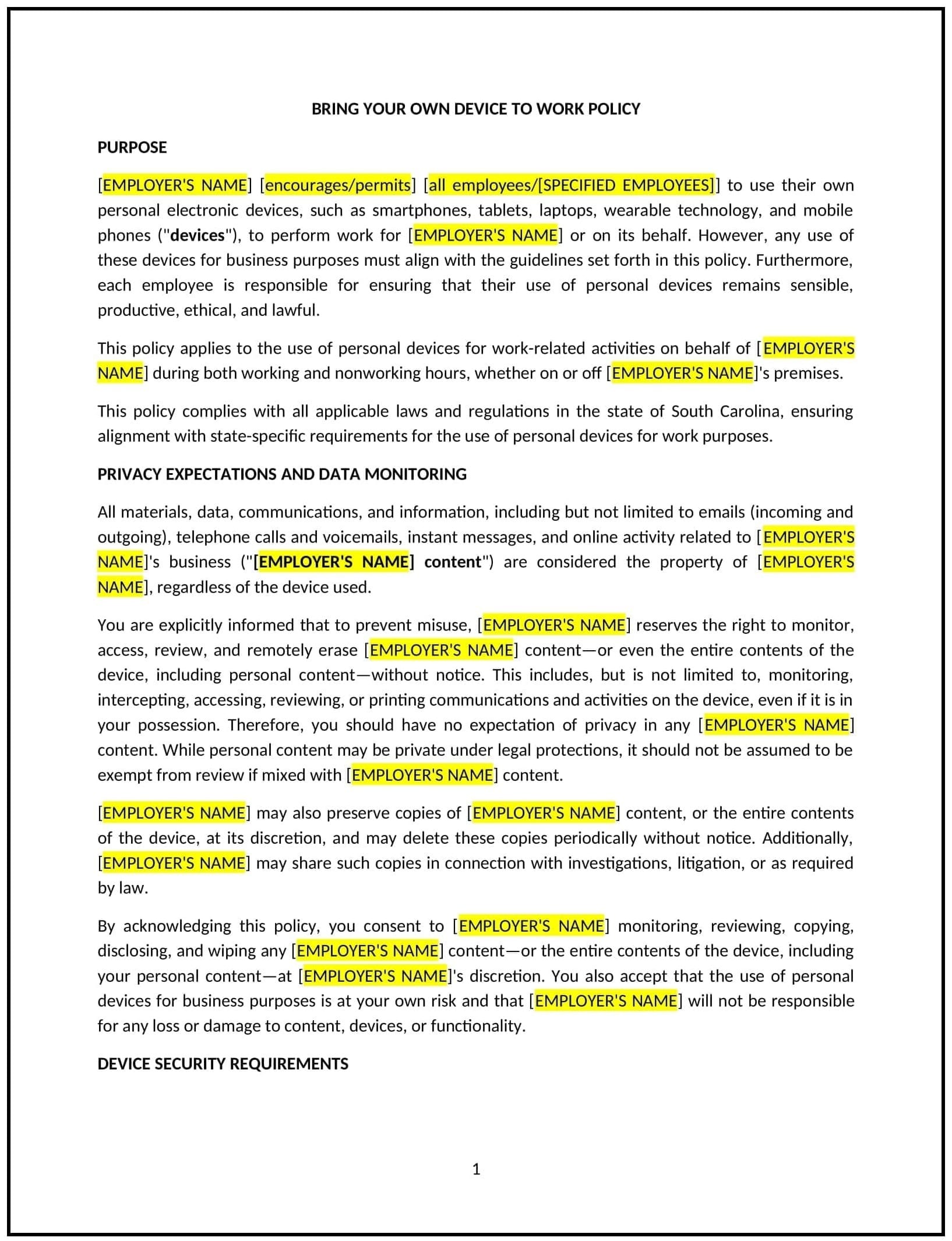
Bring your own device to work policy (South Carolina): Free template
Outlines security and usage expectations for employees using personal devices for work purposes.
- Policies
- South Carolina
Bring your own device to work policy (South Carolina)
This bring your own device (BYOD) to work policy is designed to help South Carolina businesses establish guidelines for employees who use personal devices, such as smartphones, tablets, or laptops, for work-related tasks. It outlines procedures for ensuring data security, protecting privacy, and maintaining productivity.
By adopting this policy, businesses can leverage the benefits of BYOD while minimizing risks and aligning with general best practices for technology use.
How to use this bring your own device to work policy (South Carolina)
- Define eligible devices: Specify which personal devices are allowed for work-related use, such as smartphones, tablets, or laptops.
- Establish security requirements: Provide guidelines for securing devices, such as password protection, encryption, and antivirus software.
- Address data access: Outline procedures for accessing company data on personal devices, including the use of virtual private networks (VPNs) or secure apps.
- Set usage expectations: Explain acceptable use of personal devices for work, such as avoiding unauthorized apps or websites.
- Ensure privacy protections: Include measures to protect employee privacy, such as separating personal and work data.
- Train employees: Educate employees on the policy’s requirements and their responsibilities for securing devices and data.
- Review and update: Assess the policy annually to ensure it aligns with evolving technology and business needs.
Benefits of using this bring your own device to work policy (South Carolina)
This policy offers several advantages for South Carolina businesses:
- Increases flexibility: Allows employees to use familiar devices, improving productivity and convenience.
- Reduces costs: Minimizes the need for businesses to provide company-owned devices.
- Enhances security: Establishes clear guidelines for securing devices and protecting company data.
- Aligns with best practices: Demonstrates a commitment to responsible technology use and data protection.
- Supports remote work: Facilitates seamless access to work resources from personal devices, enabling remote work options.
Tips for using this bring your own device to work policy (South Carolina)
- Communicate the policy: Share the policy with employees and include it in the employee handbook.
- Provide training: Educate employees on securing devices, accessing company data, and adhering to the policy’s guidelines.
- Monitor compliance: Regularly review device usage and security measures to ensure adherence to the policy.
- Address issues promptly: Take corrective action if devices are compromised or employees violate the policy.
- Update regularly: Review the policy annually to ensure it aligns with evolving technology and business needs.
Frequently asked questions (FAQs)
Similar templates
Where deals go from offer to paid
