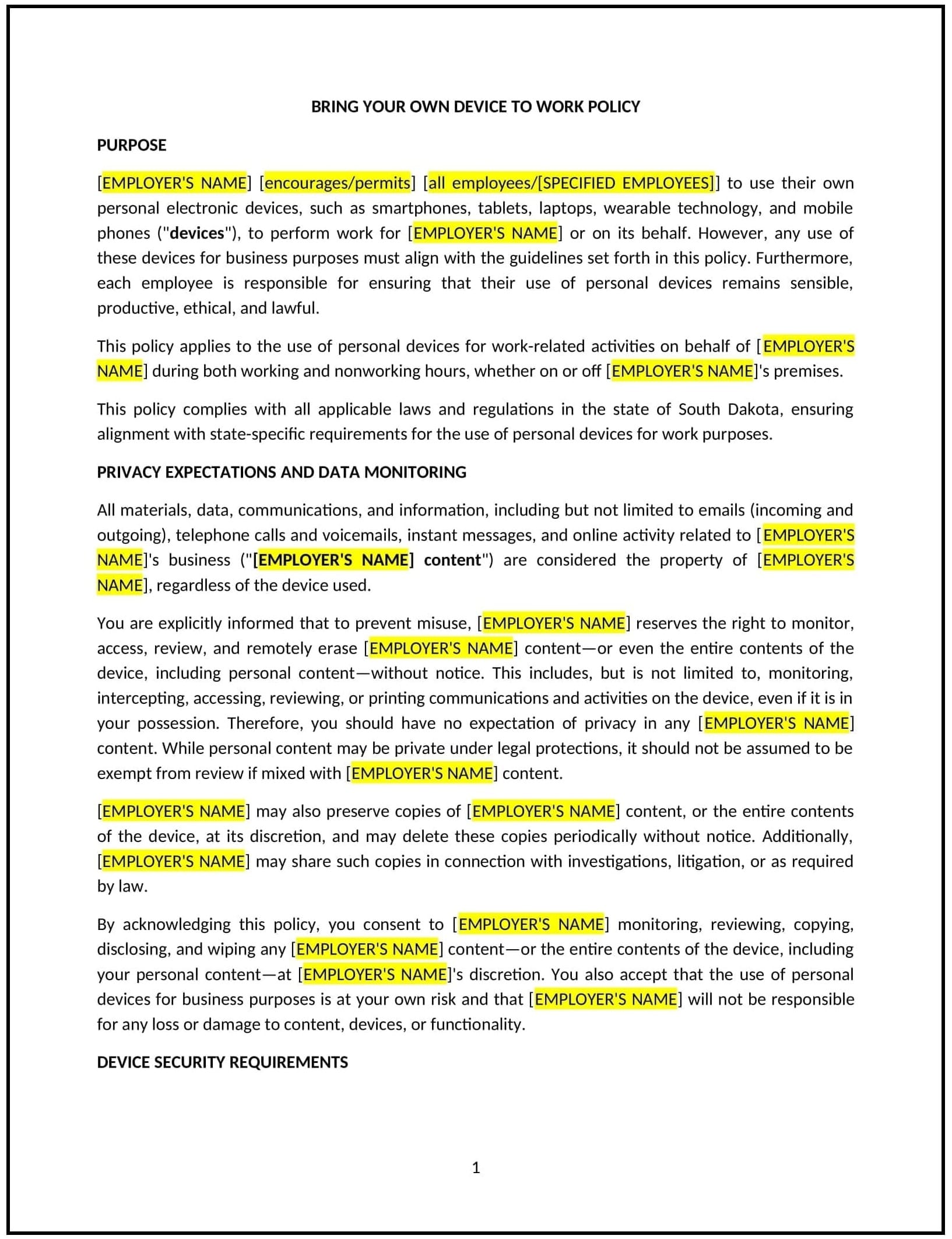
Bring your own device to work policy (South Dakota): Free template
Sets requirements for using personal devices for work purposes while ensuring data security and system integrity.
- Policies
- South Dakota
Bring your own device to work policy (South Dakota)
This bring your own device to work (BYOD) policy is designed to help South Dakota businesses establish guidelines for employees using personal devices for work purposes. It outlines procedures for device security, data protection, and acceptable use.
By adopting this policy, businesses can enhance flexibility, reduce costs, and align with general best practices for device management.
How to use this bring your own device to work policy (South Dakota)
- Define acceptable devices: Specify which personal devices are allowed for work purposes, such as smartphones, tablets, or laptops.
- Establish security requirements: Outline security measures, such as password protection, encryption, and software updates.
- Set usage guidelines: Provide steps for employees to use personal devices responsibly, including data protection and acceptable use.
- Address liability: Specify the business’s liability for personal devices used for work purposes.
- Train employees: Educate employees on following the policy and maintaining device security.
- Review and update: Assess the policy annually to ensure it aligns with evolving business needs and technology standards.
Benefits of using this bring your own device to work policy (South Dakota)
This policy offers several advantages for South Dakota businesses:
- Enhances flexibility: Allows employees to use familiar devices, improving productivity and convenience.
- Reduces costs: Minimizes the need for businesses to provide work devices.
- Promotes security: Ensures personal devices used for work purposes meet security standards.
- Builds trust: Demonstrates a commitment to supporting employees’ preferences and needs.
- Supports reputation: Positions the business as a modern and flexible employer in the community.
Tips for using this bring your own device to work policy (South Dakota)
- Communicate the policy: Share the policy with employees and include it in the employee handbook.
- Provide training: Educate employees on following the policy and maintaining device security.
- Monitor compliance: Regularly review device usage to ensure adherence to the policy.
- Address issues promptly: Take corrective action if device usage conflicts with the policy.
- Update regularly: Assess the policy annually to ensure it aligns with evolving business needs and technology standards.
Frequently asked questions (FAQs)
Similar templates
Where deals go from offer to paid
