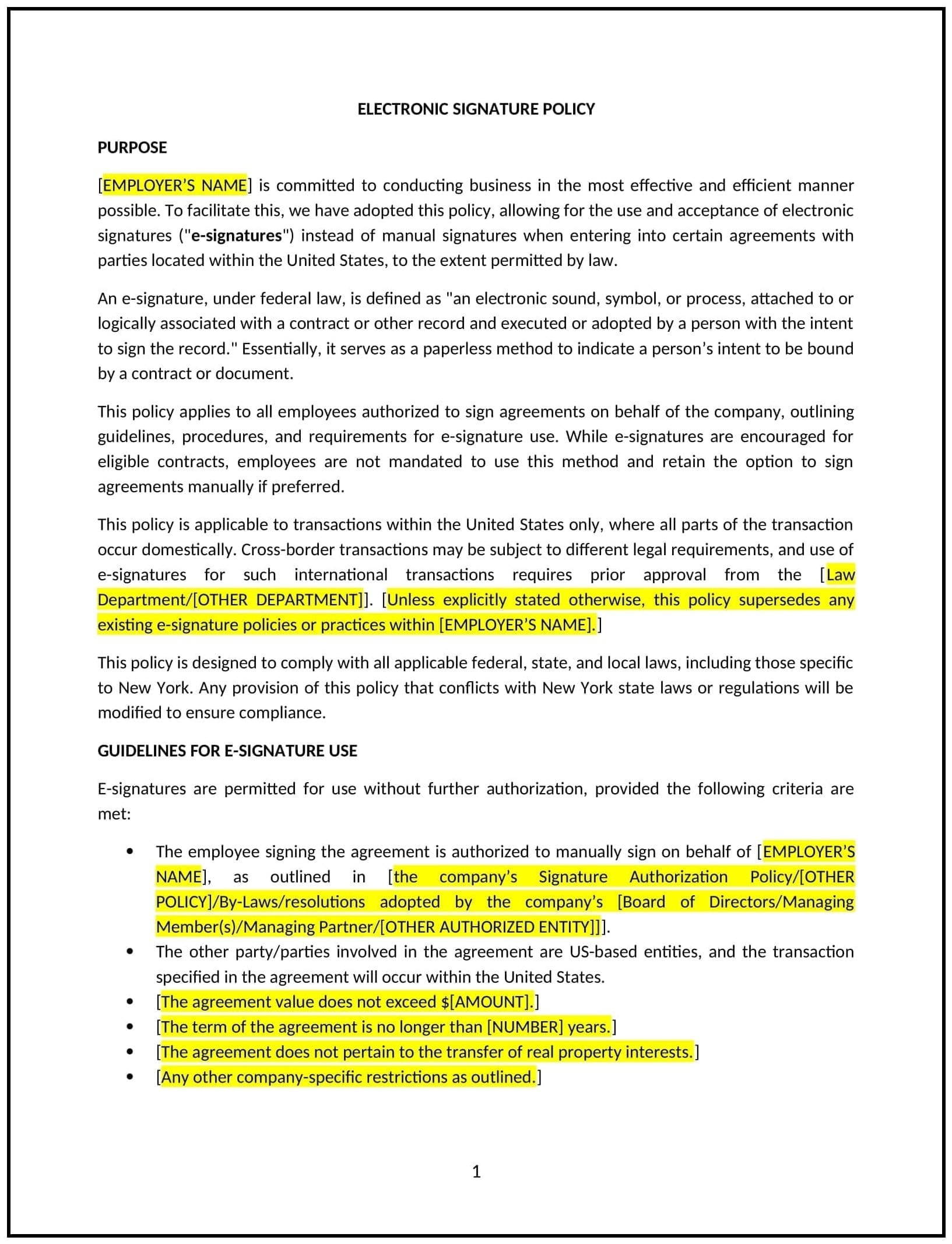
Electronic signature policy (New York): Free template
Authorizes the use of digital signatures for official documents in compliance with applicable laws.
- Policies
- New York
Electronic signature policy (New York)
This electronic signature policy is designed to help New York businesses establish clear guidelines for the use of electronic signatures in conducting business transactions. Whether businesses are formalizing contracts, processing approvals, or maintaining records, this template ensures all essential considerations are addressed.
By using this template, businesses can streamline processes, enhance efficiency, and align with New York’s regulations on electronic signatures under the Electronic Signatures and Records Act (ESRA).
How to use this electronic signature policy (New York)
- Define acceptable use: Clearly state the situations where electronic signatures are acceptable, such as for contracts, agreements, or internal approvals.
- Specify requirements: Outline the necessary criteria for an electronic signature to be valid, such as the signer’s intent and authentication measures.
- Address security measures: Include provisions for safeguarding electronic signature processes, such as encryption, access controls, and audit trails.
- Establish record-keeping standards: Define how electronic signatures and related documents will be stored and retained, ensuring they are accessible and tamper-proof.
- Clarify limitations: Highlight scenarios where electronic signatures may not be appropriate, such as for certain legal documents requiring traditional signatures.
Benefits of using an electronic signature policy (New York)
This policy offers several benefits for New York businesses:
- Streamlines processes: Electronic signatures enable faster transactions by eliminating the need for physical paperwork and mailing delays.
- Improves efficiency: By allowing documents to be signed digitally, businesses can enhance workflow and reduce administrative burdens.
- Reduces costs: Using electronic signatures reduces expenses related to printing, mailing, and document storage.
- Promotes security: The policy ensures secure signing processes, helping protect against fraud and unauthorized access.
- Aligns with regulations: Adhering to ESRA standards provides businesses with confidence in the validity and enforceability of electronic signatures.
Tips for using this electronic signature policy (New York)
- Provide clear guidance: Ensure all employees understand when and how electronic signatures can be used, with clear examples of acceptable scenarios.
- Use reliable platforms: Choose electronic signature platforms that comply with ESRA and include features such as authentication, encryption, and document tracking.
- Train employees: Offer training to familiarize employees with the policy and electronic signature tools, reducing the risk of errors or misuse.
- Monitor compliance: Regularly review the use of electronic signatures within the business to ensure adherence to the policy and identify any potential issues.
- Regularly update the policy: Keep the policy up to date with changes in New York state laws and advancements in electronic signature technologies.
Frequently asked questions (FAQs)
Similar templates
Where deals go from offer to paid
