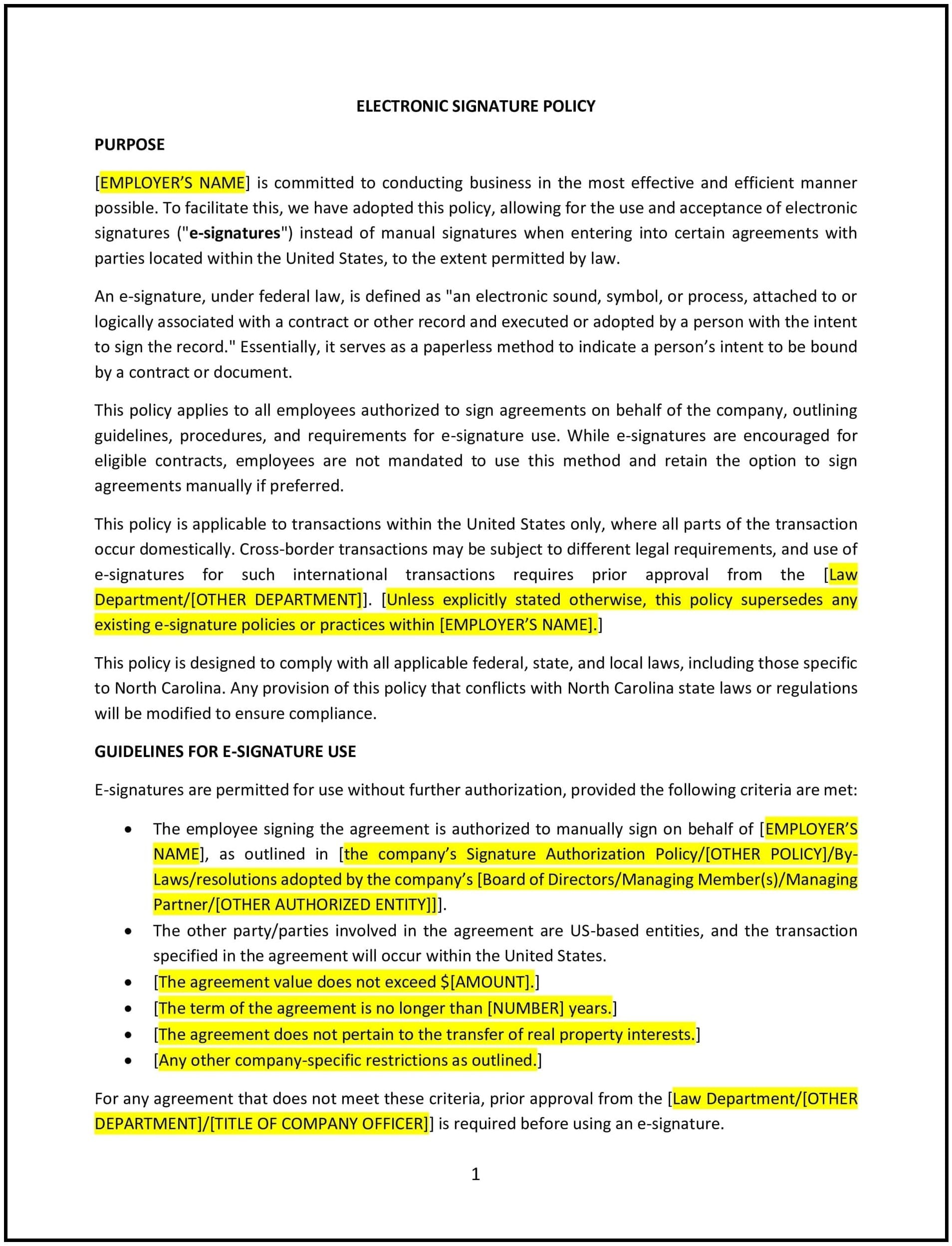
Electronic signature policy (North Carolina): Free template
Authorizes the use of electronic signatures for official documents and outlines their legal validity.
- Policies
- North Carolina
Electronic signature policy (North Carolina)
An electronic signature policy helps North Carolina businesses establish clear guidelines for the use of electronic signatures in place of traditional handwritten signatures. This policy outlines when electronic signatures are permissible, how they should be used, and the security measures required to ensure the validity and integrity of electronically signed documents.
By adopting this policy, businesses can streamline document workflows, reduce paperwork, and ensure compliance with state and federal laws governing electronic signatures, including the U.S. Electronic Signatures in Global and National Commerce (ESIGN) Act.
How to use this electronic signature policy (North Carolina)
- Define acceptable use: Specify the types of documents that can be signed electronically, such as contracts, agreements, forms, and internal company documents.
- Establish signature requirements: Clearly outline how electronic signatures should be created (e.g., using specific software or platforms) and what information must accompany the signature (e.g., name, date, intent).
- Implement security measures: Detail the security protocols required for electronic signatures, including encryption, authentication, and audit trails to ensure the integrity and non-repudiation of signed documents.
- Define approval procedures: Outline the approval process for using electronic signatures, including who must authorize the use of electronic signatures and in what contexts.
- Reflect North Carolina-specific considerations: Ensure the policy complies with North Carolina’s specific regulations related to electronic signatures and data security, as well as any federal laws.
Benefits of using this electronic signature policy (North Carolina)
This policy provides several benefits for North Carolina businesses:
- Increases efficiency: Electronic signatures reduce the time and effort required to sign and process documents, speeding up workflow and decision-making processes.
- Reduces paper usage: The policy supports a paperless approach, reducing costs associated with printing, mailing, and storing physical documents.
- Enhances security: By implementing encryption and audit trails, the policy ensures that electronically signed documents are secure, traceable, and legally binding.
- Supports compliance: The policy helps businesses comply with North Carolina’s laws and federal regulations surrounding electronic signatures, including the ESIGN Act.
- Improves sustainability: Reducing paper usage aligns with environmentally conscious business practices, supporting sustainability efforts.
Tips for using this electronic signature policy (North Carolina)
- Communicate the policy clearly: Ensure all employees understand when and how to use electronic signatures, including any software or tools the company uses.
- Provide training: Train employees on how to use electronic signature software securely and efficiently.
- Monitor usage: Regularly check the use of electronic signatures to ensure compliance with the policy and security standards.
- Review the policy regularly: The policy should be reviewed periodically to ensure it aligns with current North Carolina laws and business needs.
Frequently asked questions (FAQs)
Similar templates
Where deals go from offer to paid
