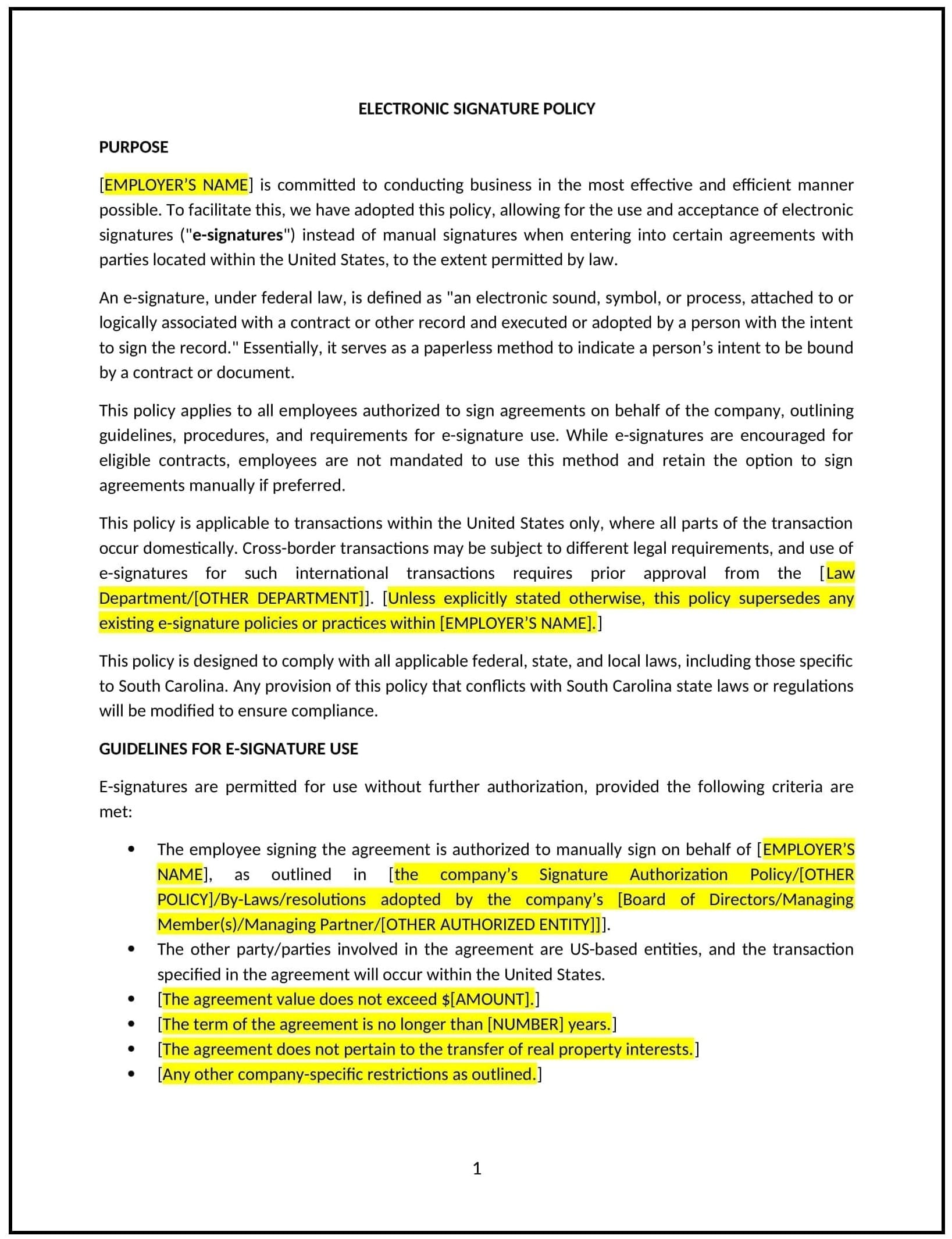
Electronic signature policy (South Carolina): Free template
Authorizes the use of electronic signatures while ensuring security, consistency, and legal compliance.
- Policies
- South Carolina
Electronic signature policy (South Carolina)
This electronic signature policy is designed to help South Carolina businesses establish guidelines for using electronic signatures in place of handwritten signatures on documents. It outlines procedures for creating, verifying, and storing electronic signatures to ensure their validity and security.
By adopting this policy, businesses can streamline document processes, reduce paperwork, and align with general best practices for digital transactions.
How to use this electronic signature policy (South Carolina)
- Define electronic signatures: Explain what constitutes an electronic signature, such as a typed name, digital signature, or scanned image.
- Establish procedures: Outline the steps for creating and verifying electronic signatures, including the use of secure platforms.
- Address security measures: Require the use of encryption, authentication, and secure storage systems to protect electronic signatures.
- Train employees: Educate staff on their responsibilities for using electronic signatures securely and appropriately.
- Monitor compliance: Regularly review electronic signature practices to ensure adherence to the policy.
- Review and update: Assess the policy annually to ensure it aligns with evolving business needs and legal standards.
Benefits of using this electronic signature policy (South Carolina)
This policy offers several advantages for South Carolina businesses:
- Streamlines processes: Reduces paperwork and speeds up document approvals by using electronic signatures.
- Enhances security: Protects sensitive information by requiring secure platforms and encryption for electronic signatures.
- Aligns with best practices: Provides a structured approach to managing digital transactions.
- Builds customer trust: Demonstrates a commitment to modern, efficient, and secure business practices.
- Reduces costs: Minimizes expenses related to printing, mailing, and storing physical documents.
Tips for using this electronic signature policy (South Carolina)
- Communicate the policy: Share the policy with employees and include it in the employee handbook.
- Provide training: Educate staff on their responsibilities for using electronic signatures securely and appropriately.
- Monitor adherence: Regularly review electronic signature practices to ensure compliance with the policy.
- Address issues promptly: Take corrective action if electronic signatures are mishandled or used improperly.
- Update regularly: Assess the policy annually to ensure it aligns with evolving business needs and legal standards.
Frequently asked questions (FAQs)
Similar templates
Where deals go from offer to paid
