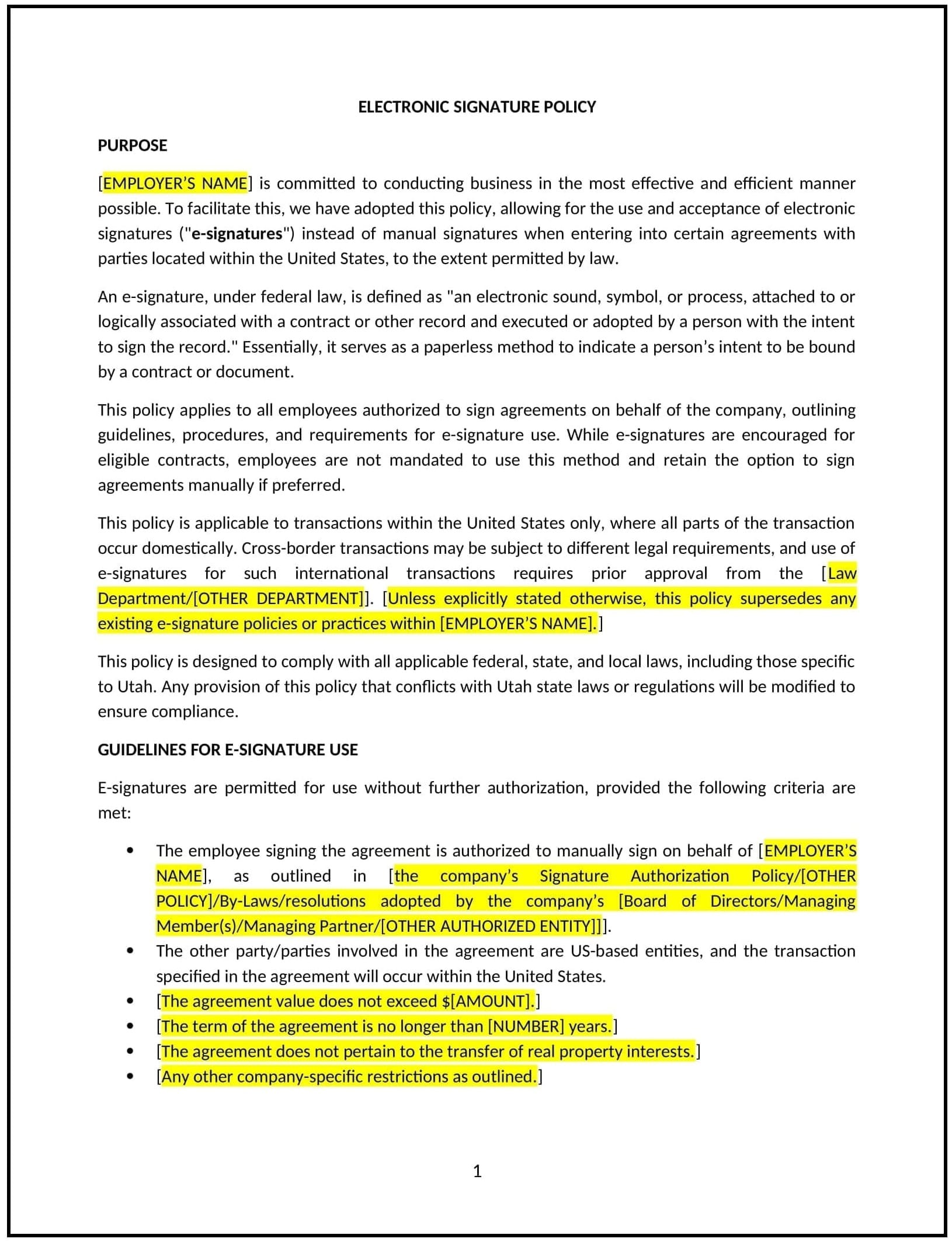
Electronic signature policy (Utah): Free template
Supports legal use of electronic signatures by defining accepted practices under Utah’s e-signature laws.
- Policies
- Utah
Electronic signature policy (Utah)
This electronic signature policy is designed to help Utah businesses establish guidelines for using electronic signatures in place of handwritten signatures. It outlines the types of documents that can be signed electronically, the technology requirements, and the legal validity of electronic signatures.
By adopting this policy, businesses can streamline document signing processes, improve efficiency, and align with general best practices for electronic transactions.
How to use this electronic signature policy (Utah)
- Define electronic signatures: Explain what constitutes an electronic signature and how it differs from a handwritten signature.
- Specify acceptable documents: Outline the types of documents that can be signed electronically, such as contracts, agreements, or internal forms.
- Address technology requirements: Specify the software or platforms approved for electronic signatures.
- Ensure legal compliance: Verify that electronic signatures comply with federal and state laws, such as the Utah Uniform Electronic Transactions Act.
- Train employees: Educate employees on the policy, electronic signature tools, and their legal validity.
- Monitor compliance: Regularly review electronic signature usage to ensure adherence to the policy.
- Review and update: Assess the policy annually to ensure it aligns with evolving technology and legal requirements.
Benefits of using this electronic signature policy (Utah)
This policy offers several advantages for Utah businesses:
- Improves efficiency: Streamlines document signing processes and reduces paperwork.
- Enhances convenience: Allows employees and clients to sign documents remotely and securely.
- Aligns with legal requirements: Ensures electronic signatures comply with federal and state laws.
- Reduces costs: Minimizes printing, mailing, and storage expenses associated with paper documents.
- Supports sustainability: Reduces paper usage and promotes environmentally friendly practices.
Tips for using this electronic signature policy (Utah)
- Communicate the policy: Share the policy with employees and include it in the employee handbook.
- Provide training: Educate employees on electronic signature tools and their legal validity.
- Monitor compliance: Regularly review electronic signature usage to ensure adherence to the policy.
- Address issues promptly: Take corrective action if electronic signatures are used improperly or without authorization.
- Update regularly: Assess the policy annually to ensure it aligns with evolving technology and legal requirements.
Frequently asked questions (FAQs)
Similar templates
Where deals go from offer to paid
