Customize it in Cobrief and get sign-off from employees, contractors, or partners in one place.
Customize this template for free
TL;DR
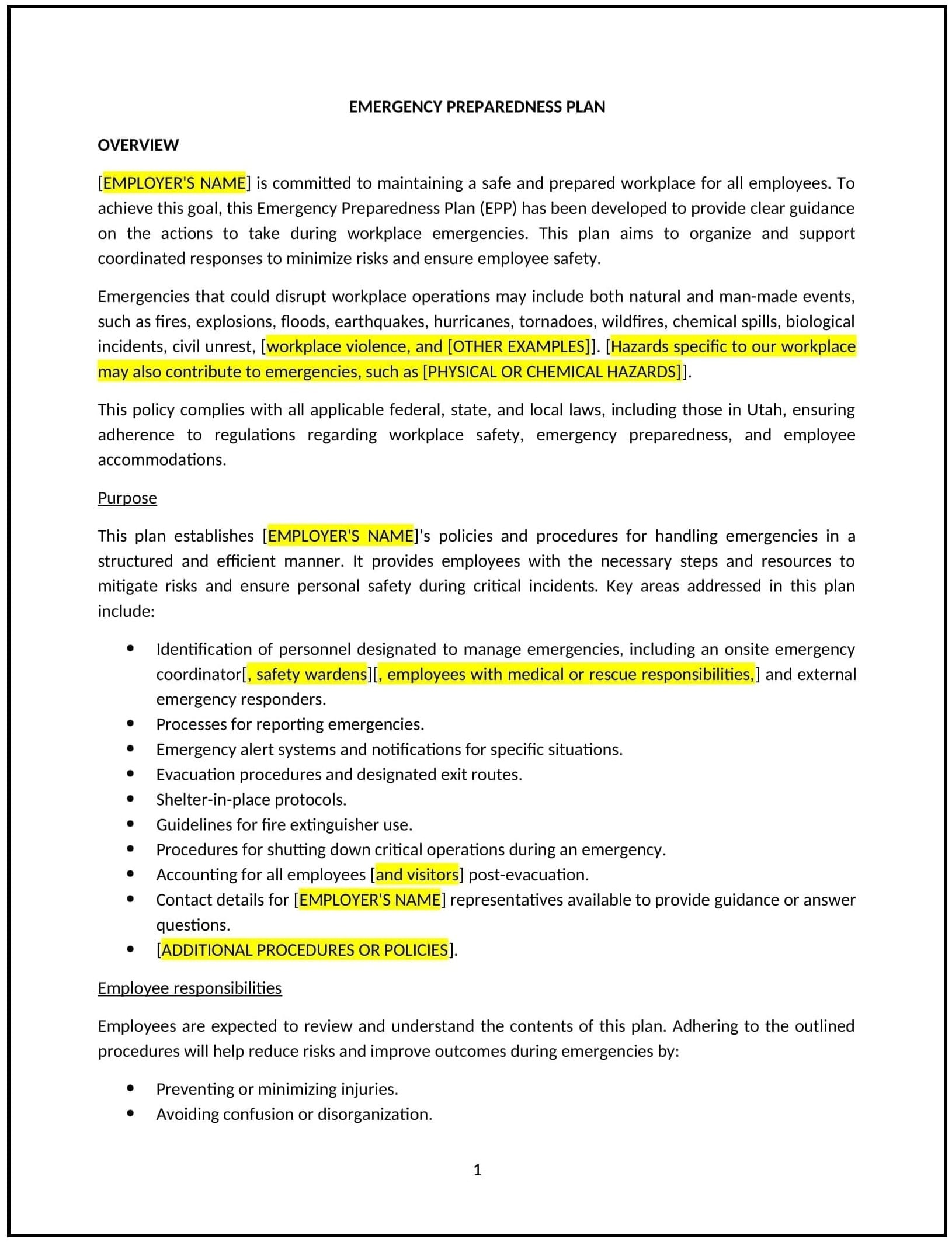
An emergency preparedness plan tailored for Utah businesses to establish effective response procedures for various emergencies, including natural disasters and workplace incidents. It details evacuation routes, communication protocols, and roles for employees, aiming to enhance safety and minimize operational disruptions.
Emergency preparedness plan (Utah)
This emergency preparedness plan is designed to help Utah businesses establish procedures for responding to emergencies, such as natural disasters, fires, or workplace incidents. It outlines steps for evacuation, communication, and recovery to ensure the safety of employees and minimize disruption to operations.
By adopting this plan, businesses can protect employees, reduce risks, and align with general best practices for emergency preparedness.
How to use this emergency preparedness plan (Utah)
- Identify potential emergencies: Assess risks specific to the business, such as earthquakes, floods, or power outages.
- Develop evacuation procedures: Outline clear evacuation routes and assembly points for employees.
- Establish communication protocols: Define how employees will be notified of emergencies and how they can communicate with management.
- Assign roles and responsibilities: Designate employees to lead emergency response efforts, such as evacuation coordinators or first aid responders.
- Provide training: Educate employees on emergency procedures, including evacuation drills and first aid training.
- Maintain emergency supplies: Ensure the availability of first aid kits, flashlights, and other essential supplies.
- Review and update: Regularly assess the plan to ensure it aligns with evolving risks and business needs.
Benefits of using this emergency preparedness plan (Utah)
This plan offers several advantages for Utah businesses:
- Protects employees: Ensures the safety and well-being of employees during emergencies.
- Reduces risks: Minimizes potential damage to property and disruption to operations.
- Aligns with best practices: Provides a structured approach to managing emergencies.
- Enhances preparedness: Helps businesses respond effectively to unexpected events.
- Builds confidence: Demonstrates a commitment to employee safety and business continuity.
Tips for using this emergency preparedness plan (Utah)
- Communicate the plan: Share the plan with employees and include it in the employee handbook.
- Provide training: Educate employees on emergency procedures and conduct regular drills.
- Monitor supplies: Regularly check and replenish emergency supplies.
- Address feedback: Incorporate employee feedback to improve the plan’s effectiveness.
- Update regularly: Assess the plan annually or as needed to ensure it aligns with evolving risks and business needs.
Frequently asked questions (FAQs)
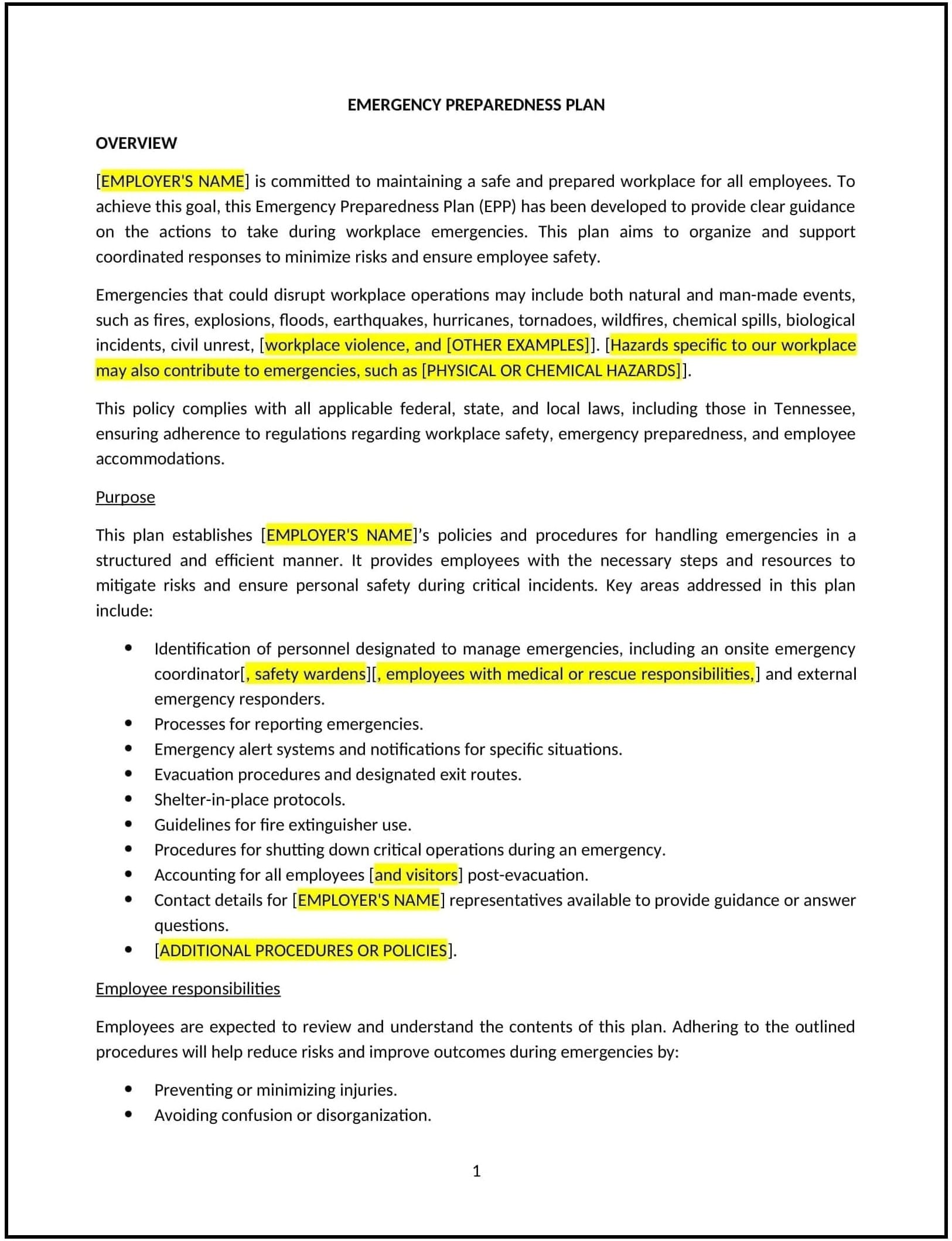
Outlines actions and responsibilities during emergencies to protect people, property, and operations.
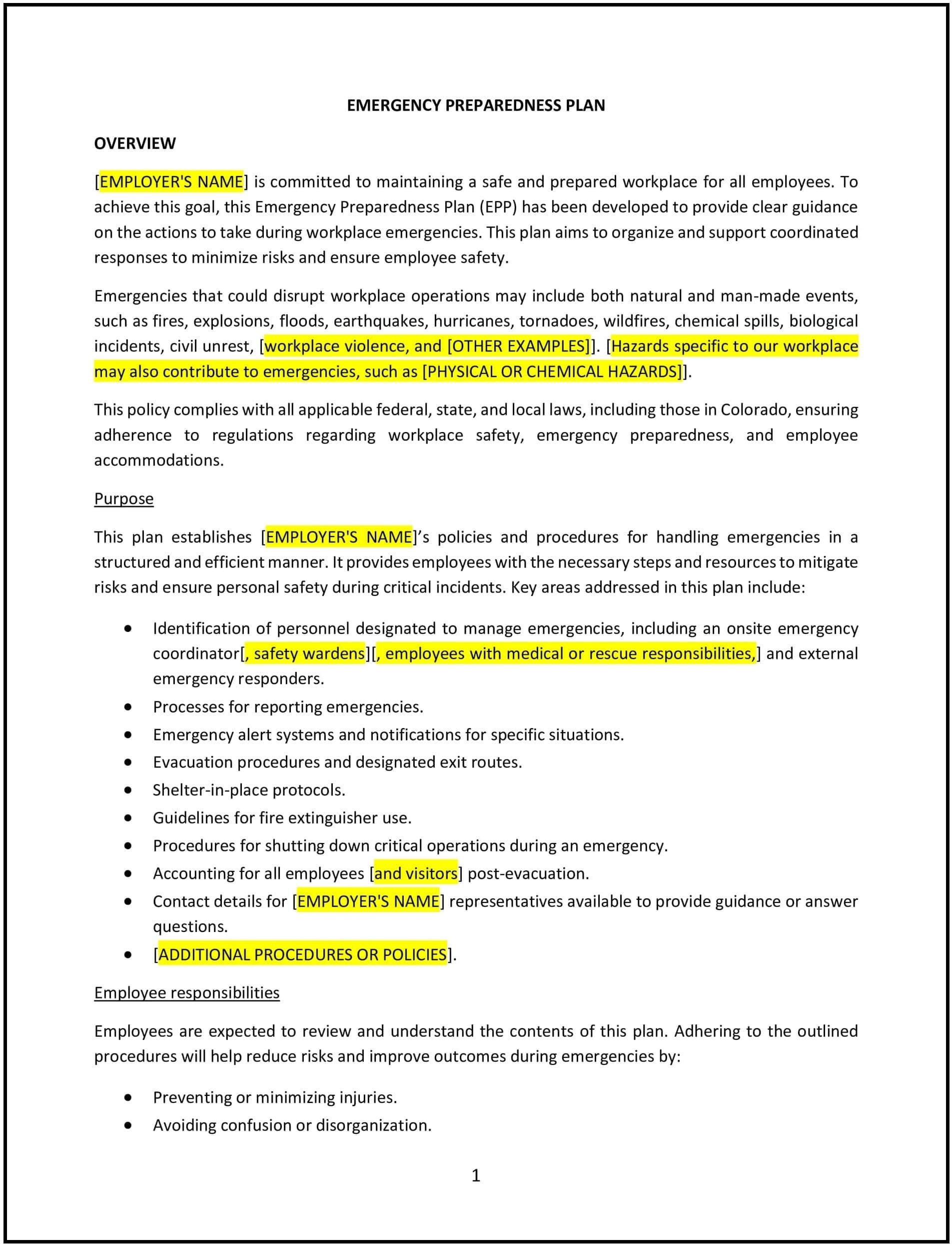
Provides roles, communication, and response steps to protect employees during emergencies statewide in Colorado.
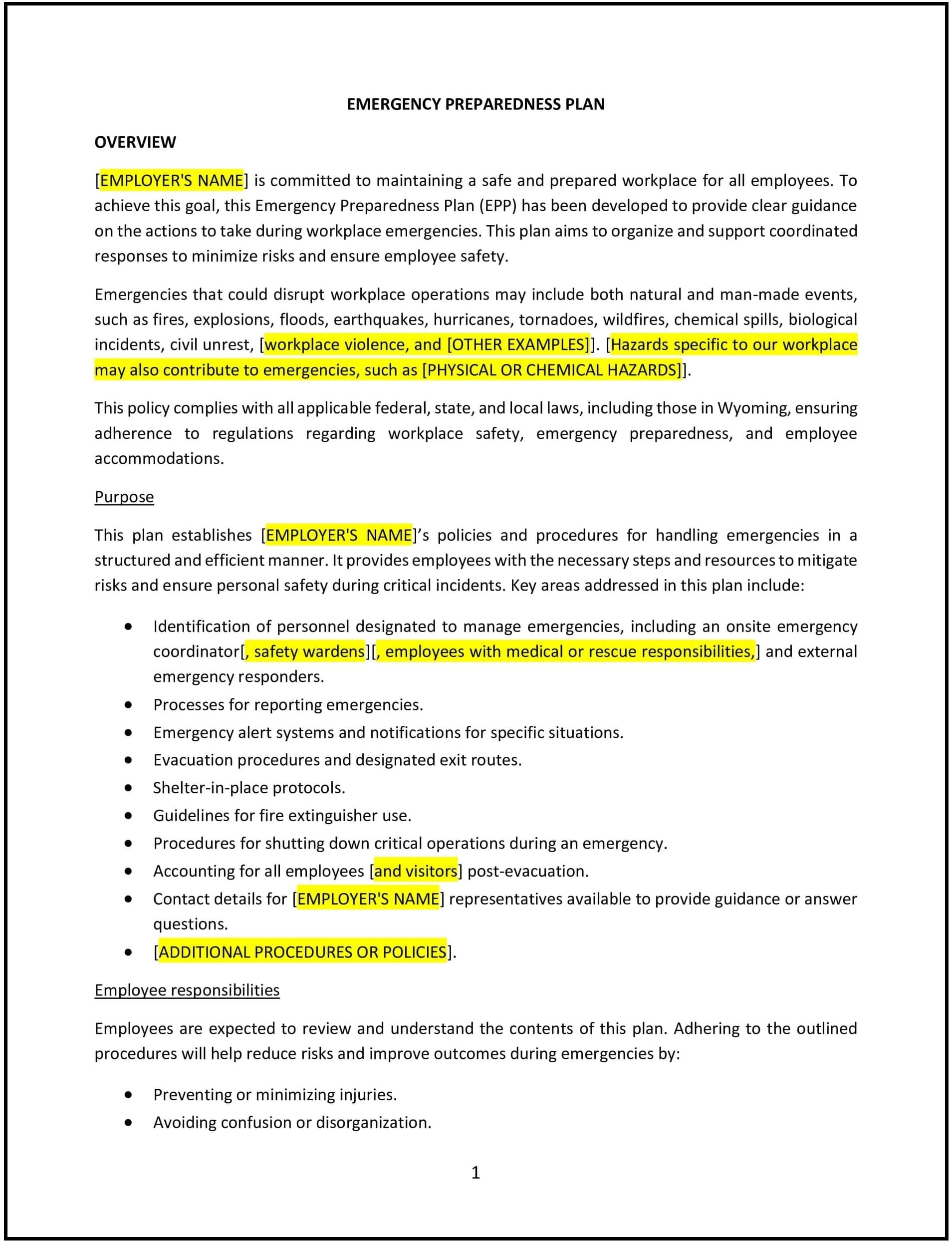
Provides procedures to ensure safety and continuity during emergencies in Wyoming workplaces.
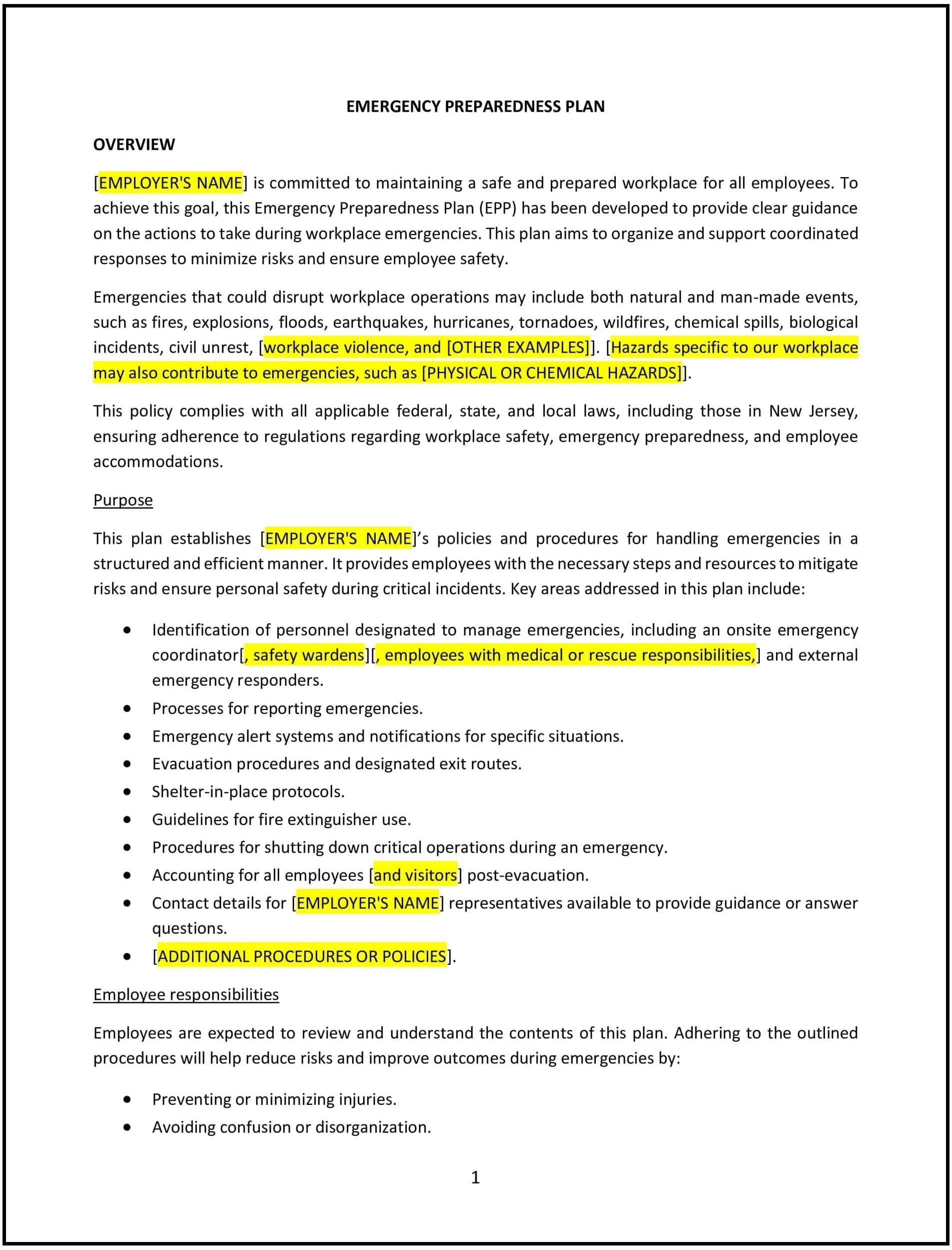
Prepares staff and operations for natural disasters, fires, threats, or other emergencies.
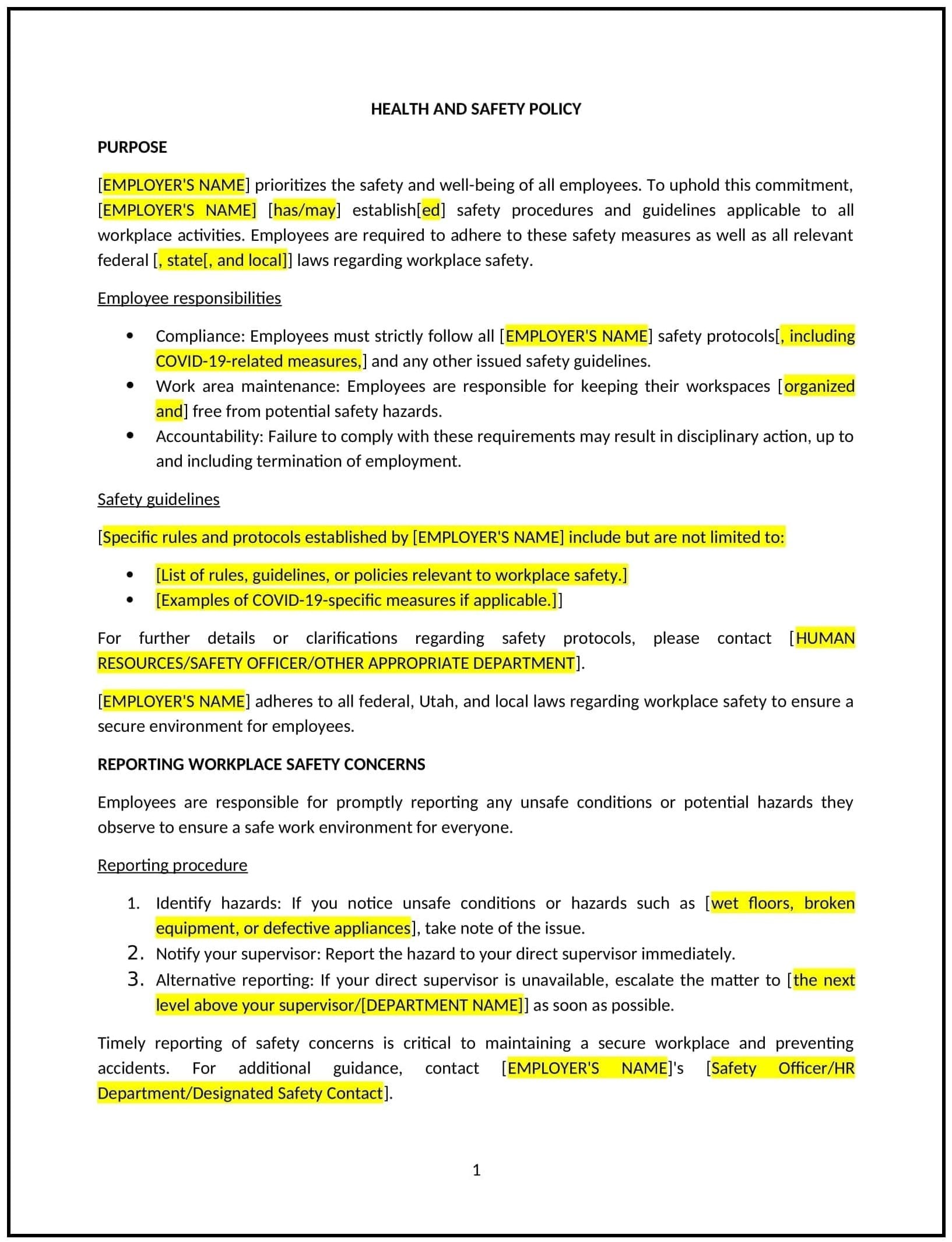
Promotes a safe work environment by outlining roles, procedures, and compliance with Utah safety standards.