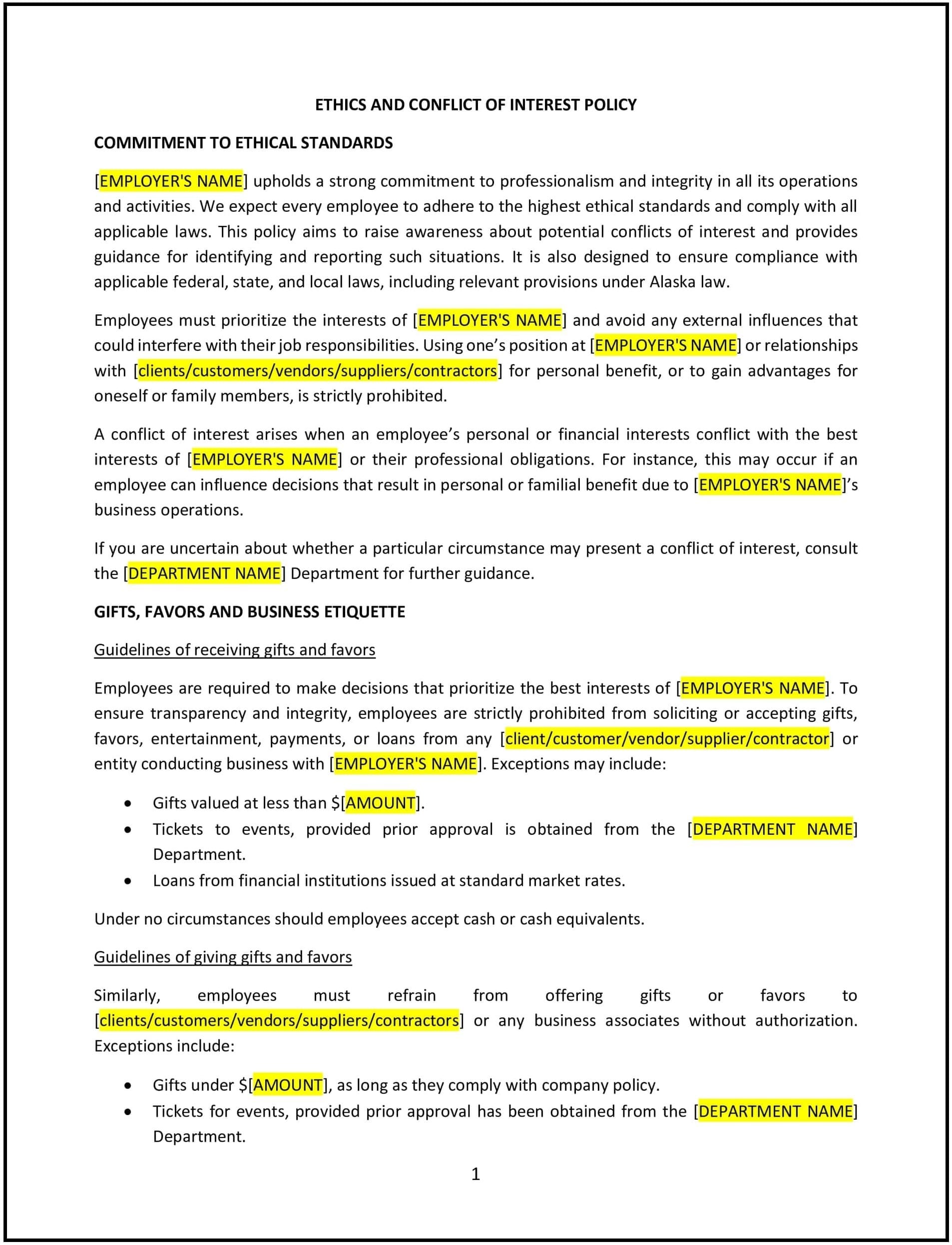
Ethics and conflict of interest policy (Alaska): Free template
Establishes guidelines to prevent conflicts of interest and promote ethical conduct in Alaska workplaces.
- Policies
- Alaska
Ethics and conflict of interest policy (Alaska)
In Alaska, an ethics and conflict of interest policy provides guidelines for maintaining high ethical standards and avoiding conflicts of interest in the workplace. This policy helps employees identify and address situations that may compromise their professional integrity or the company’s interests. By implementing this policy, businesses can foster trust, promote transparency, and reduce risks of misconduct.
Given Alaska’s unique industries and remote work settings, businesses may need to include provisions for addressing conflicts that arise from close-knit community dynamics or partnerships with local organizations.
How to use this ethics and conflict of interest policy (Alaska)
- Define ethical standards: Clearly outline the company’s expectations for ethical behavior, including honesty, integrity, and professionalism.
- Identify conflicts of interest: Provide examples of potential conflicts, such as outside employment, personal relationships, or financial interests that could affect business decisions.
- Establish reporting procedures: Include steps employees should follow to disclose potential conflicts of interest or report ethical concerns, ensuring confidentiality and protection against retaliation.
- Set enforcement guidelines: Specify the consequences for violating the policy, such as disciplinary actions, to reinforce its importance.
- Provide training: Educate employees about the policy, ensuring they understand how to recognize and address ethical dilemmas and conflicts of interest.
Benefits of using an ethics and conflict of interest policy (Alaska)
An ethics and conflict of interest policy provides several advantages for businesses in Alaska. Here’s how it helps:
- Promotes accountability: Encourages employees to act with integrity and prioritize the company’s best interests.
- Protects the company’s reputation: Reduces risks of unethical behavior that could harm the company’s image or stakeholder trust.
- Reduces legal risks: Helps businesses comply with laws and regulations by addressing potential conflicts proactively.
- Enhances workplace culture: Fosters a transparent and trustworthy environment where employees feel confident in the company’s values.
- Supports decision-making: Provides a framework for employees to handle complex ethical situations effectively and consistently.
Tips for using an ethics and conflict of interest policy (Alaska)
- Include industry-specific examples: Tailor the policy to address common ethical challenges in Alaska’s key industries, such as resource management or tourism.
- Address remote work dynamics: Incorporate provisions for managing conflicts of interest and ethical behavior in remote or hybrid work environments.
- Encourage open dialogue: Create an environment where employees feel comfortable discussing potential conflicts or seeking guidance on ethical issues.
- Monitor compliance: Regularly review employee disclosures and company practices to ensure adherence to the policy.
- Update regularly: Revise the policy as needed to reflect changes in laws, company practices, or industry standards.
Frequently asked questions (FAQs)
Similar templates
Where deals go from offer to paid
