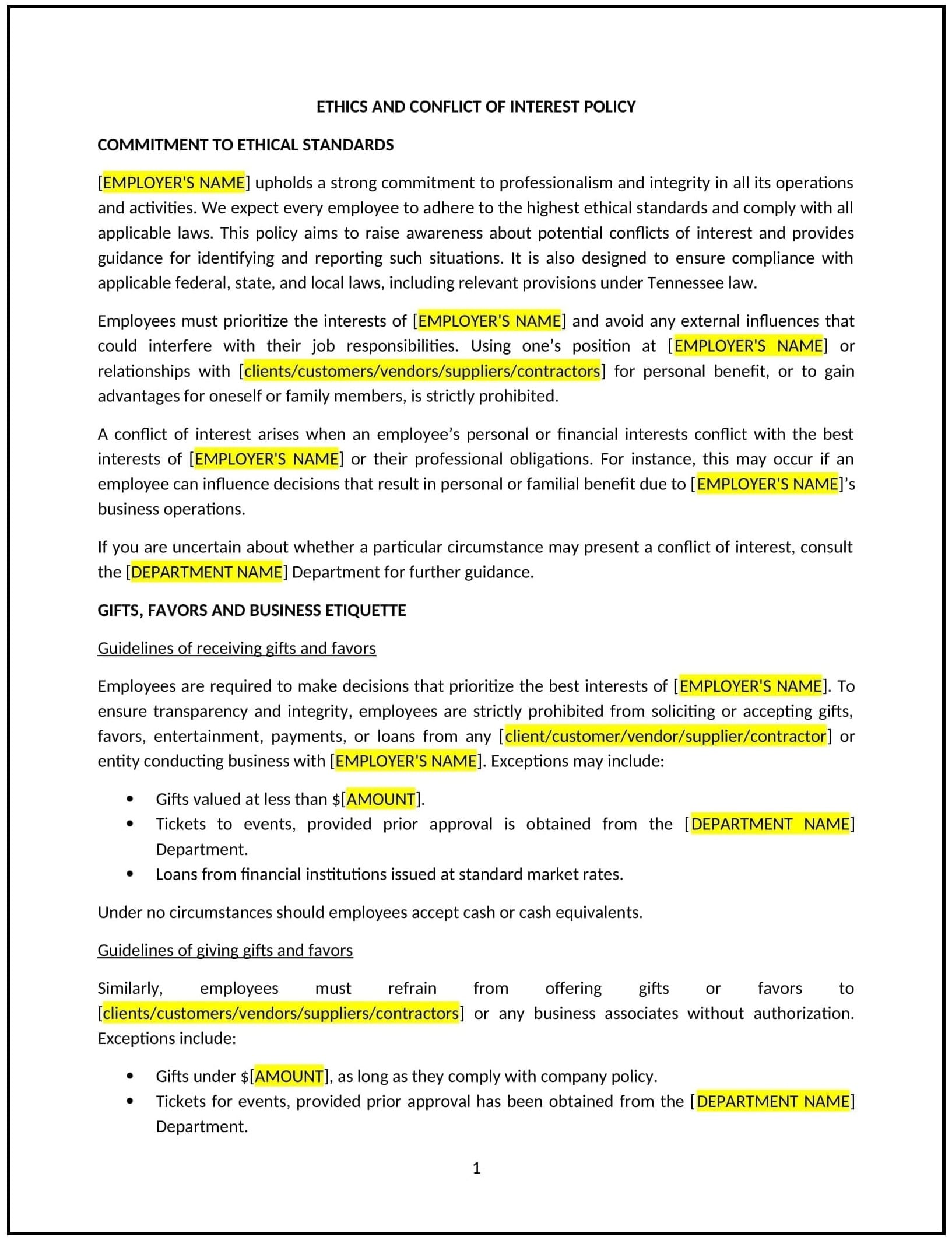
Ethics and conflict of interest policy (Tennessee): Free template
Promotes ethical decision-making and transparency by addressing potential conflicts of interest.
- Policies
- Tennessee
Ethics and conflict of interest policy (Tennessee)
This ethics and conflict of interest policy is designed to help Tennessee businesses establish guidelines for maintaining ethical standards and addressing conflicts of interest. It outlines procedures for identifying, disclosing, and resolving conflicts to ensure transparency and integrity.
By adopting this policy, businesses can promote ethical behavior, reduce risks, and build trust with stakeholders.
How to use this ethics and conflict of interest policy (Tennessee)
- Define conflicts of interest: Clarify what constitutes a conflict, such as personal relationships or financial interests.
- Set disclosure procedures: Provide steps for employees to disclose potential conflicts.
- Address resolution methods: Outline how conflicts will be resolved, such as recusal or restructuring responsibilities.
- Train employees: Educate staff on ethical standards and identifying conflicts of interest.
- Review and update: Assess the policy annually to ensure it aligns with evolving business needs and ethical standards.
Benefits of using this ethics and conflict of interest policy (Tennessee)
This policy offers several advantages for Tennessee businesses:
- Promotes ethical behavior: Encourages employees to act with integrity and transparency.
- Reduces risks: Minimizes the potential for unethical actions or decisions.
- Builds trust: Demonstrates a commitment to ethical business practices.
- Enhances accountability: Provides clear guidelines for addressing conflicts of interest.
- Aligns with best practices: Supports a structured approach to ethical decision-making.
Tips for using this ethics and conflict of interest policy (Tennessee)
- Communicate the policy: Share the policy with employees and include it in the employee handbook.
- Provide training: Educate staff on ethical standards and identifying conflicts of interest.
- Monitor compliance: Regularly review disclosures and resolutions to ensure adherence.
- Address issues promptly: Take corrective action if conflicts are mishandled or undisclosed.
- Update regularly: Assess the policy annually to ensure it aligns with evolving business needs.
Frequently asked questions (FAQs)
Similar templates
Where deals go from offer to paid
