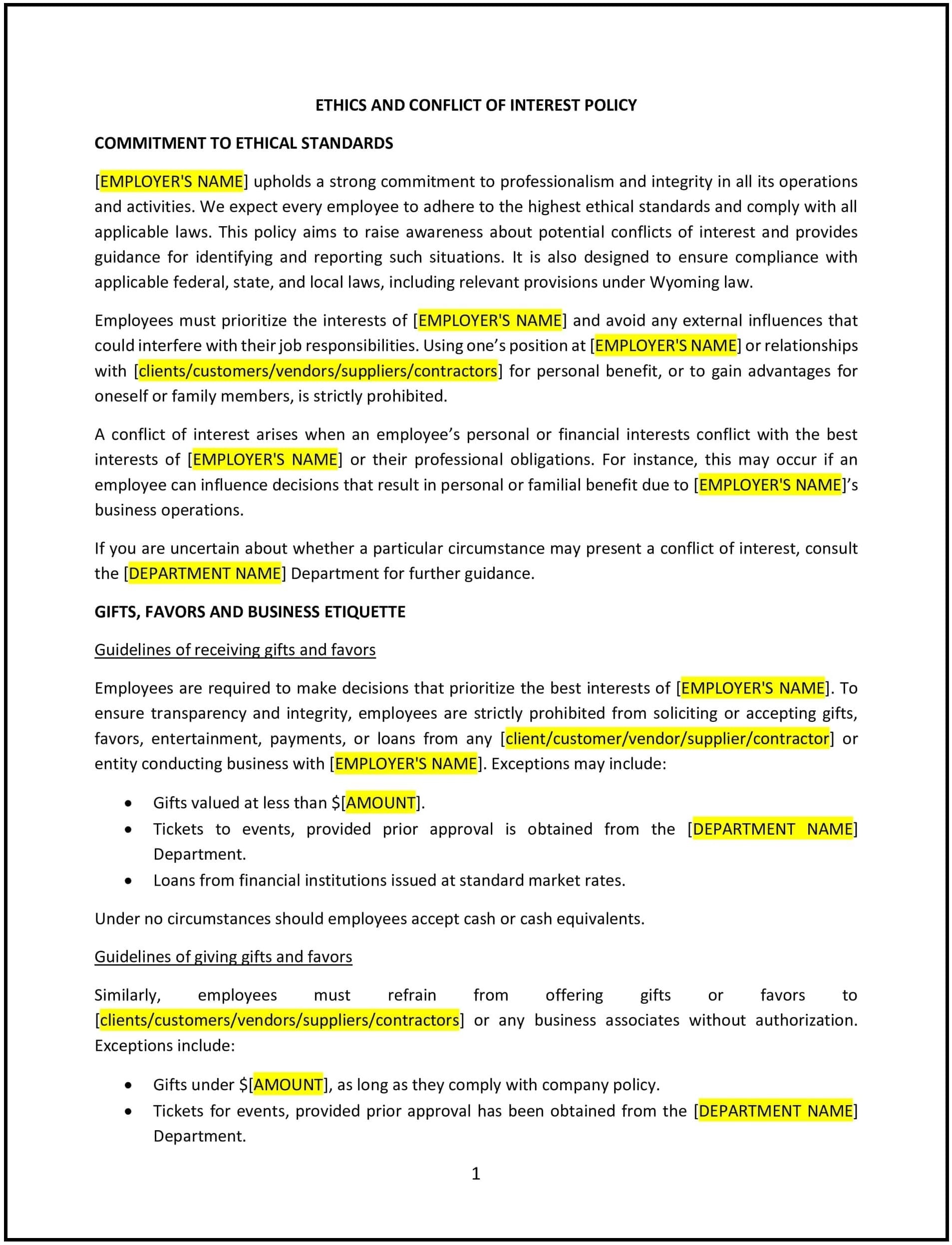
Ethics and conflict of interest policy (Wyoming): Free template
Promotes ethical behavior and discloses personal interests to prevent conflicts in Wyoming organizations.
- Policies
- Wyoming
Ethics and conflict of interest policy (Wyoming)
In Wyoming, an ethics and conflict of interest policy helps businesses establish clear guidelines for maintaining ethical behavior and avoiding conflicts of interest in the workplace. This policy is essential for promoting integrity, protecting organizational reputation, and supporting compliance with state and federal regulations.
This policy outlines expected standards of conduct, procedures for disclosing potential conflicts, and actions to address violations, fostering a transparent and trustworthy work environment.
How to use this ethics and conflict of interest policy (Wyoming)
- Define ethical standards: Clearly state the principles of ethical behavior expected from employees, such as honesty, fairness, and accountability.
- Identify conflicts of interest: Provide examples of conflicts of interest, such as financial interests, family relationships, or outside employment, that could interfere with an employee’s duties.
- Establish disclosure procedures: Include steps for employees to disclose potential conflicts of interest, such as submitting a written statement to their supervisor or HR.
- Outline reporting and investigation: Detail the process for reporting ethical concerns or conflicts of interest and how such reports will be investigated and resolved.
- Support compliance: Align the policy with Wyoming’s legal requirements and industry-specific regulations to support ethical business practices.
Benefits of using an ethics and conflict of interest policy (Wyoming)
An ethics and conflict of interest policy offers several advantages for Wyoming businesses:
- Promotes integrity: Encourages employees to act honestly and uphold the organization’s values.
- Supports compliance: Aligns with Wyoming laws and federal regulations, reducing legal and reputational risks.
- Protects organizational interests: Prevents conflicts of interest that could harm business operations or credibility.
- Improves decision-making: Ensures that employees prioritize the organization’s goals over personal interests.
- Fosters trust: Builds a culture of transparency and accountability among employees and stakeholders.
Tips for using an ethics and conflict of interest policy (Wyoming)
- Communicate expectations: Share the policy during onboarding and provide regular training to reinforce ethical standards.
- Encourage disclosures: Create a safe environment where employees feel comfortable disclosing potential conflicts without fear of retaliation.
- Monitor compliance: Regularly review business practices and employee activities to identify potential conflicts of interest.
- Update regularly: Revise the policy as needed to reflect changes in laws, organizational priorities, or industry standards.
- Provide examples: Include real-world scenarios to help employees understand and identify ethical dilemmas or conflicts of interest.
Frequently asked questions (FAQs)
Similar templates
Where deals go from offer to paid
