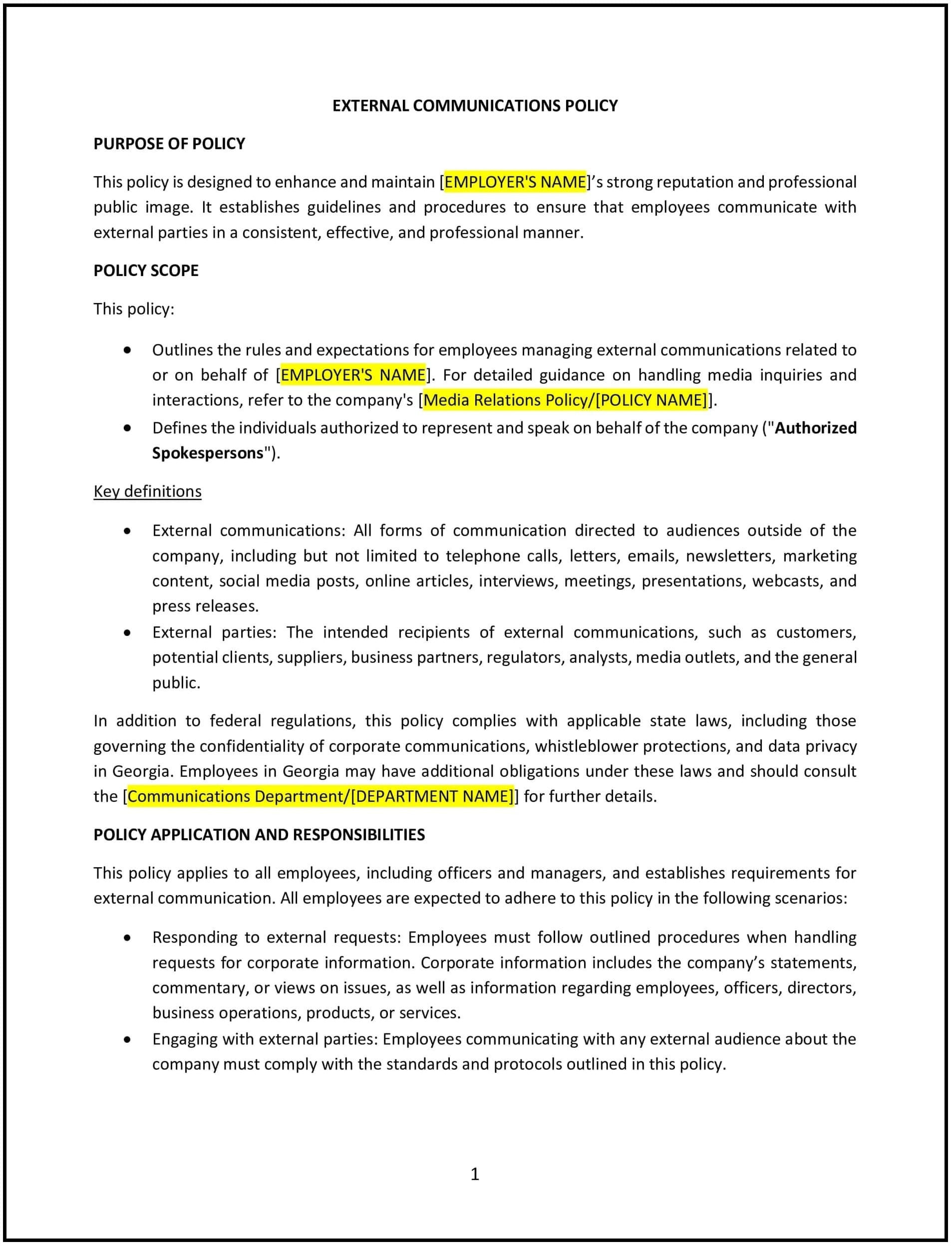
External communications policy (Georgia): Free template
Defines who speaks externally, message approval steps, and media protocols for consistent brand communication across Georgia.
- Policies
- Georgia
External communications policy (Georgia)
This external communications policy is designed to help Georgia businesses manage how information is shared with external audiences, including customers, media, and the public. The policy outlines procedures for approving communications, maintaining consistency, and safeguarding sensitive information.
By implementing this policy, businesses can protect their reputation, promote transparency, and ensure clear and consistent messaging.
How to use this external communications policy (Georgia)
- Define authorized spokespersons: Identify who is permitted to communicate with external audiences on behalf of the business, such as senior management or designated PR personnel.
- Establish approval processes: Require that all external communications, including press releases, social media posts, and public statements, be reviewed and approved before dissemination.
- Address media interactions: Provide guidelines for responding to media inquiries, including referring reporters to authorized spokespersons.
- Include confidentiality rules: Prohibit the sharing of sensitive or proprietary information with external audiences without prior approval.
- Set social media guidelines: Specify acceptable use of social media platforms for business purposes, ensuring posts align with company values and messaging.
- Train employees: Offer training on external communication protocols, including how to handle public interactions and inquiries effectively.
- Monitor communications: Regularly review public-facing content to ensure consistency with company messaging and standards.
- Review and update regularly: Periodically assess the policy to reflect changes in Georgia business practices, technology, or communication trends.
Benefits of using this external communications policy (Georgia)
Implementing this policy provides several advantages for Georgia businesses:
- Protects reputation: Clear guidelines reduce the risk of misinformation or unauthorized statements that could harm the business.
- Ensures consistency: A standardized approach to communications aligns messaging across all platforms and audiences.
- Safeguards sensitive information: Rules for confidentiality help prevent the unintentional disclosure of proprietary or critical data.
- Builds trust: Transparent and professional external communications enhance relationships with customers, media, and stakeholders.
- Reflects Georgia-specific practices: Tailoring the policy to local norms and regulations ensures its relevance and effectiveness.
Tips for using this external communications policy (Georgia)
- Communicate roles: Ensure employees know who is authorized to speak on behalf of the business and how to route inquiries.
- Use consistent branding: Align all external communications with the company’s brand voice, visual identity, and values.
- Respond promptly: Establish timelines for responding to media or public inquiries to maintain trust and professionalism.
- Monitor social media: Regularly review social media activity to ensure it aligns with company standards and messaging.
- Adapt to changes: Update the policy as needed to address new communication channels or emerging trends.
Frequently asked questions (FAQs)
Similar templates
Where deals go from offer to paid
