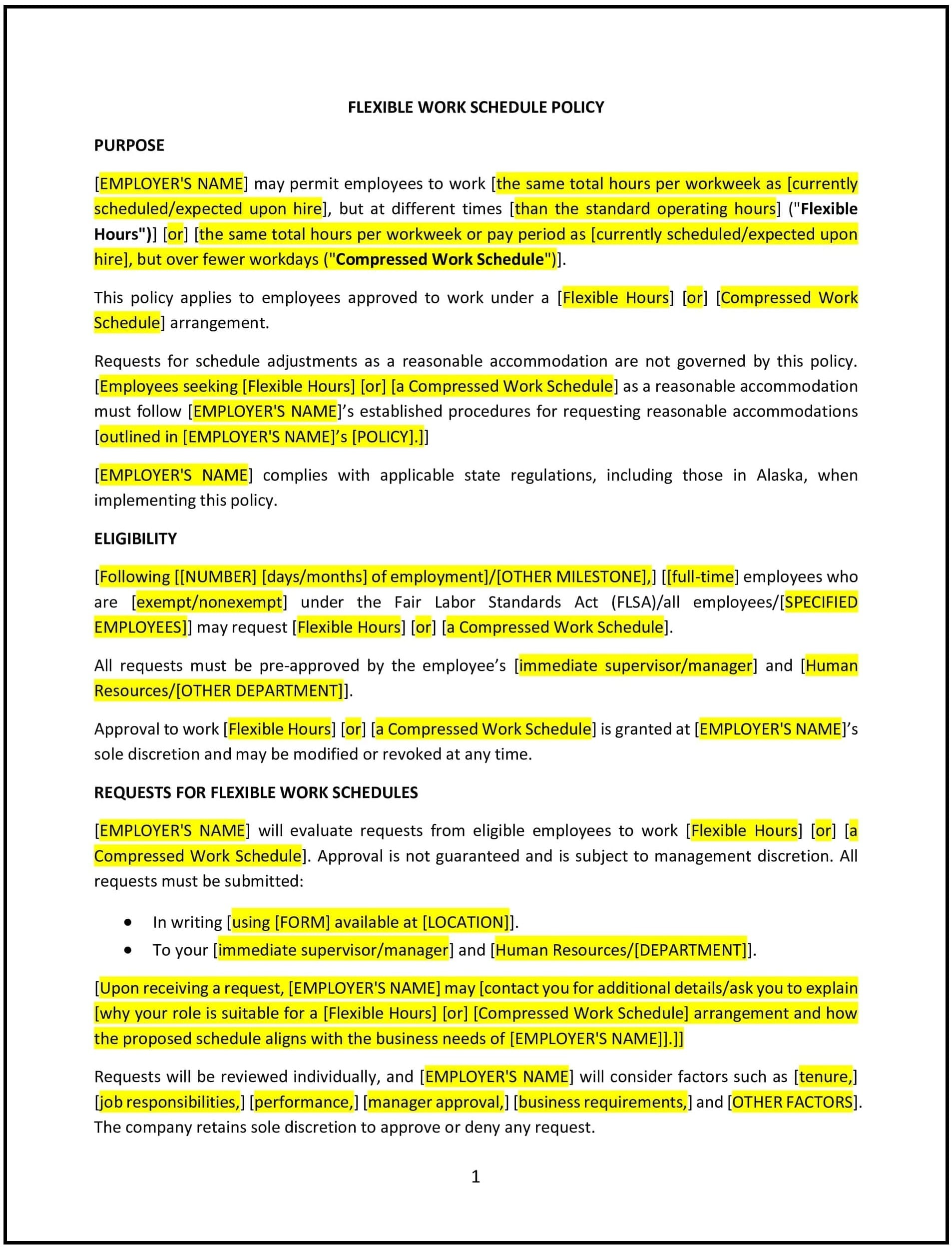
Flexible work schedule policy (Alaska): Free template
Outlines voluntary flexible work arrangements, including 4/10 schedules, ensuring compliance with Alaska labor laws.
- Policies
- Alaska
Flexible work schedule policy (Alaska)
In Alaska, a flexible work schedule policy provides employees with options to adjust their work hours or locations to better accommodate personal needs and improve work-life balance. This policy helps businesses attract and retain top talent, enhance employee satisfaction, and boost productivity.
By implementing this policy, businesses can foster a supportive and adaptable workplace while addressing the unique challenges of Alaska’s workforce, such as remote locations and seasonal work demands.
How to use this flexible work schedule policy (Alaska)
- Define eligibility: Specify which employees or roles are eligible for flexible work schedules based on job responsibilities and operational requirements.
- Outline schedule options: Provide details on available arrangements, such as flexible start and end times, compressed workweeks, or remote work options.
- Establish approval procedures: Include a clear process for employees to request flexible schedules, such as submitting a formal proposal and discussing it with their manager.
- Address accountability: Set expectations for maintaining productivity, meeting deadlines, and communicating effectively while on a flexible schedule.
- Communicate boundaries: Clarify any limitations, such as core hours when employees must be available or restrictions based on business needs.
Benefits of using a flexible work schedule policy (Alaska)
A flexible work schedule policy provides numerous benefits for businesses in Alaska. Here’s how it helps:
- Improves employee morale: Supports work-life balance, leading to higher job satisfaction and engagement among employees.
- Boosts retention: Attracts and retains top talent by offering work arrangements that align with employees’ personal needs.
- Increases productivity: Allows employees to work during their most productive hours, enhancing overall efficiency and output.
- Supports remote work: Addresses the logistical challenges of Alaska’s remote locations, enabling employees to contribute effectively from different settings.
- Enhances operational adaptability: Provides businesses with the flexibility to adjust schedules during seasonal peaks or unexpected disruptions.
Tips for using a flexible work schedule policy (Alaska)
- Tailor to industry needs: Customize the policy to reflect the unique demands of your business, such as seasonal work in tourism or field operations in resource extraction.
- Use technology: Leverage collaboration tools and project management software to support communication and accountability in flexible work arrangements.
- Monitor effectiveness: Regularly review the impact of flexible schedules on productivity, employee satisfaction, and operational efficiency.
- Provide training: Equip managers with the skills to oversee flexible schedules effectively, such as setting goals, tracking progress, and maintaining team cohesion.
- Update as needed: Revise the policy periodically to reflect changes in workforce needs, business operations, or technological advancements.
Frequently asked questions (FAQs)
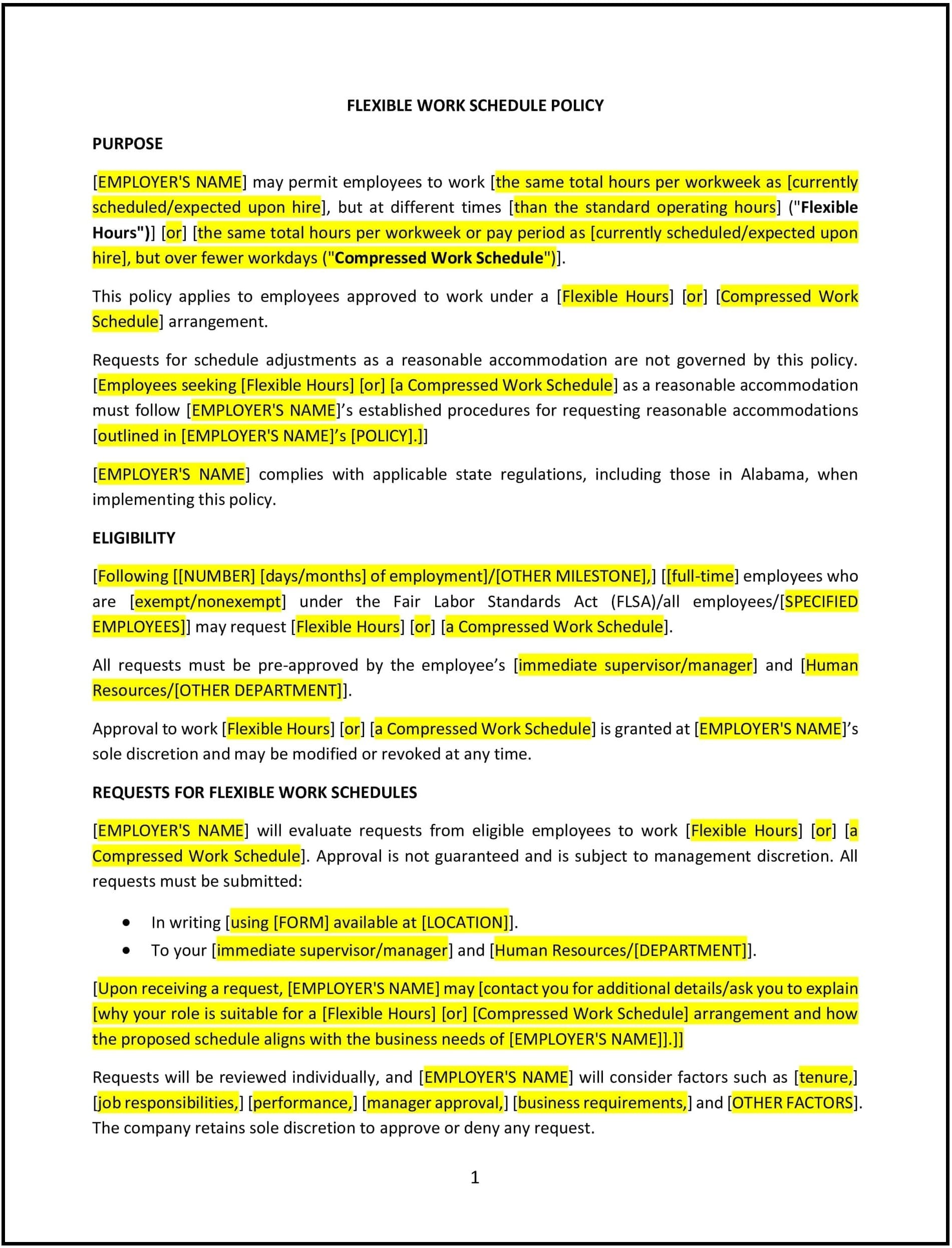
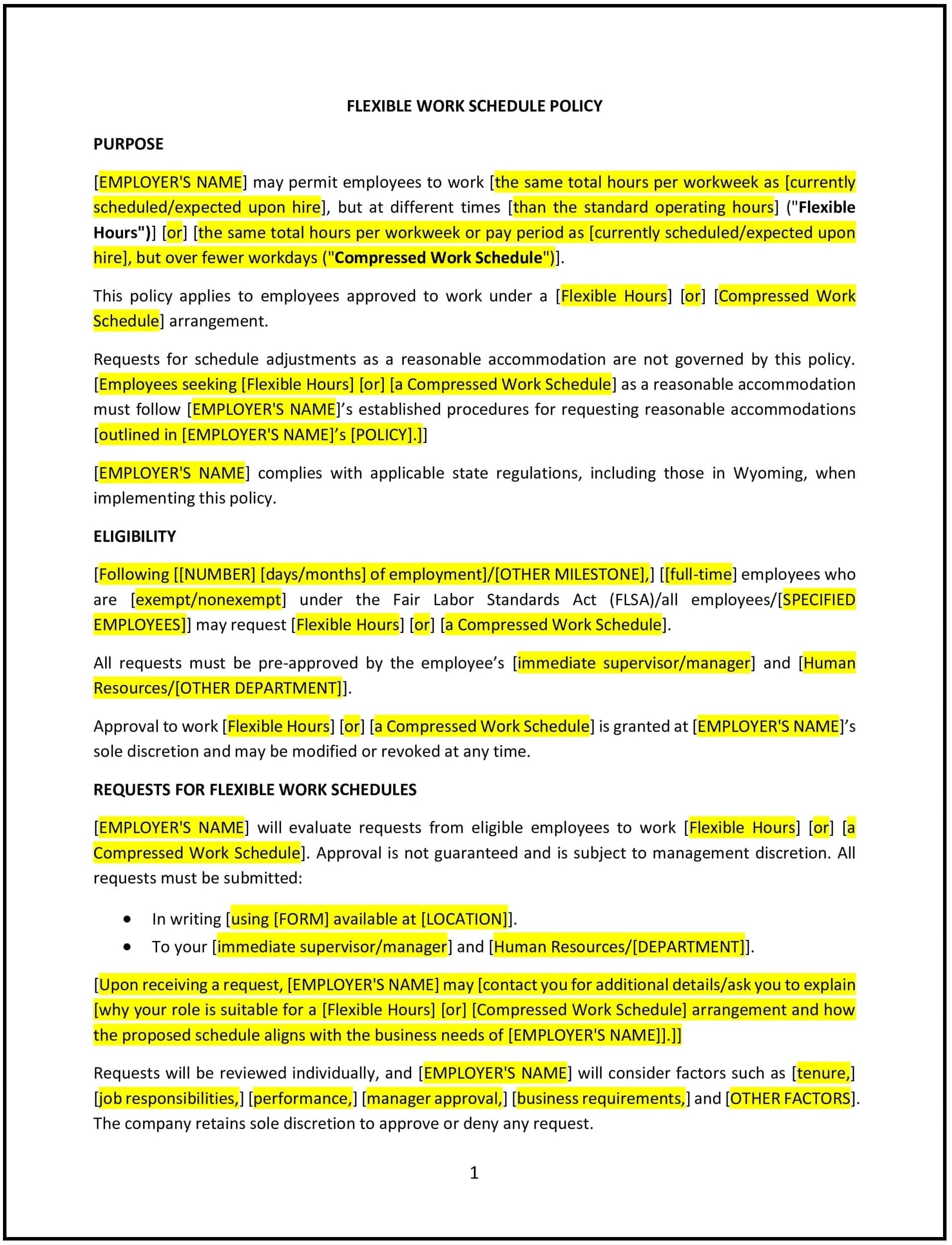
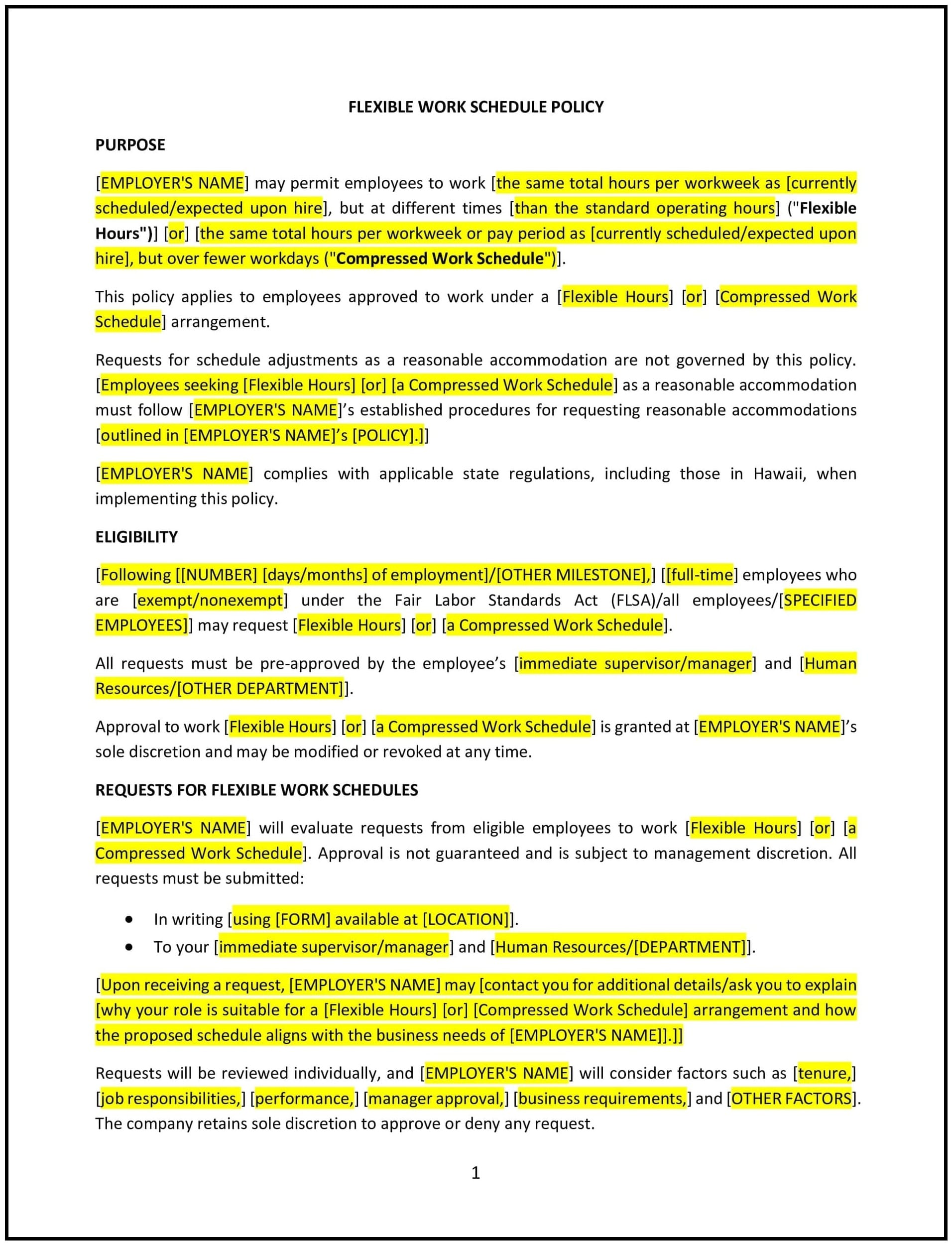
Similar templates
Where deals go from offer to paid
