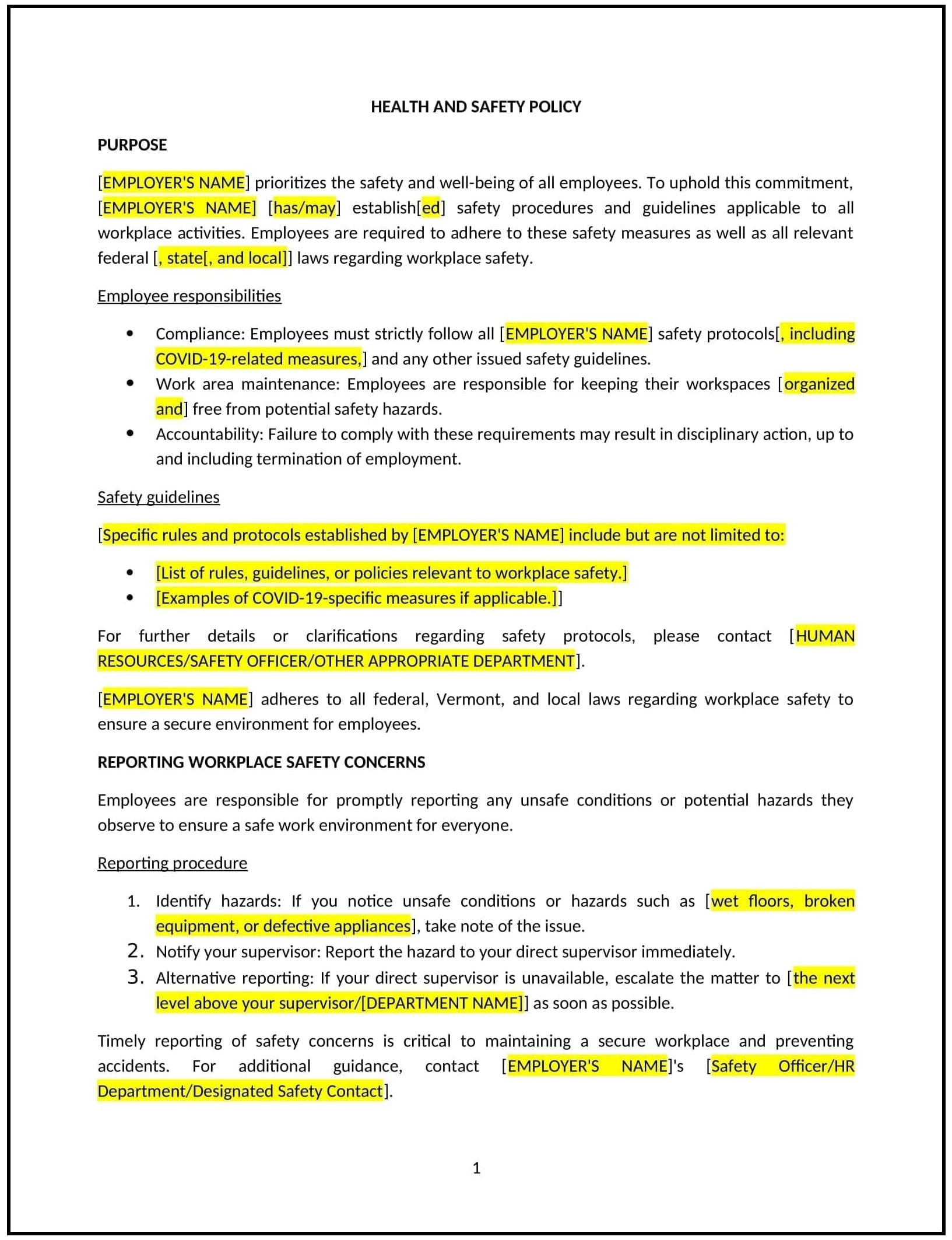
Health and safety policy (Vermont): Free template
Promotes a safe work environment through prevention, reporting, and training requirements under Vermont regulations.
- Policies
- Vermont
Health and safety policy (Vermont)
This health and safety policy is designed to help Vermont businesses maintain a safe working environment for employees, customers, and visitors. It outlines responsibilities, safety protocols, and compliance requirements to align with Vermont Occupational Safety and Health Administration (VOSHA) standards and other applicable regulations.
By adopting this policy, businesses can reduce workplace risks, protect employee well-being, and demonstrate a commitment to safety.
How to use this health and safety policy (Vermont)
- Define safety standards: Specify safety requirements and practices relevant to the workplace, such as hazard identification, equipment usage, and emergency preparedness.
- Assign responsibilities: Identify who is responsible for implementing and monitoring safety measures, such as managers, supervisors, or safety officers.
- Include training requirements: Detail mandatory training programs for employees, including orientation and ongoing safety education.
- Establish reporting procedures: Provide clear steps for reporting workplace hazards, accidents, or near-miss incidents to management or the safety team.
- Address emergency response: Outline protocols for emergencies such as fires, medical incidents, or natural disasters, including evacuation plans and first aid measures.
- Ensure compliance: Emphasize adherence to VOSHA standards and other Vermont-specific safety regulations.
- Monitor and update: Regularly review safety practices, conduct audits, and revise the policy as necessary to address changes in workplace conditions or laws.
Benefits of using this health and safety policy (Vermont)
This policy provides several benefits for Vermont businesses:
- Protects employees: Minimizes workplace hazards and reduces the risk of injuries or illnesses.
- Ensures compliance: Aligns with Vermont and federal safety regulations, reducing potential legal liabilities.
- Enhances productivity: Promotes a safe environment that enables employees to perform their tasks without disruptions.
- Builds trust: Demonstrates the company’s commitment to employee well-being and safety.
- Supports emergency preparedness: Provides clear guidelines for responding to and recovering from emergencies.
Tips for using this health and safety policy (Vermont)
- Communicate the policy: Share the policy with employees during onboarding and include it in the employee handbook or workplace notice boards.
- Conduct regular training: Ensure all employees receive safety training relevant to their roles and responsibilities.
- Encourage reporting: Foster a culture where employees feel comfortable reporting hazards or unsafe conditions without fear of retaliation.
- Inspect the workplace: Perform regular safety inspections and promptly address identified risks or issues.
- Update regularly: Revise the policy to reflect changes in Vermont laws, workplace practices, or emerging safety standards.
Frequently asked questions (FAQs)
Similar templates
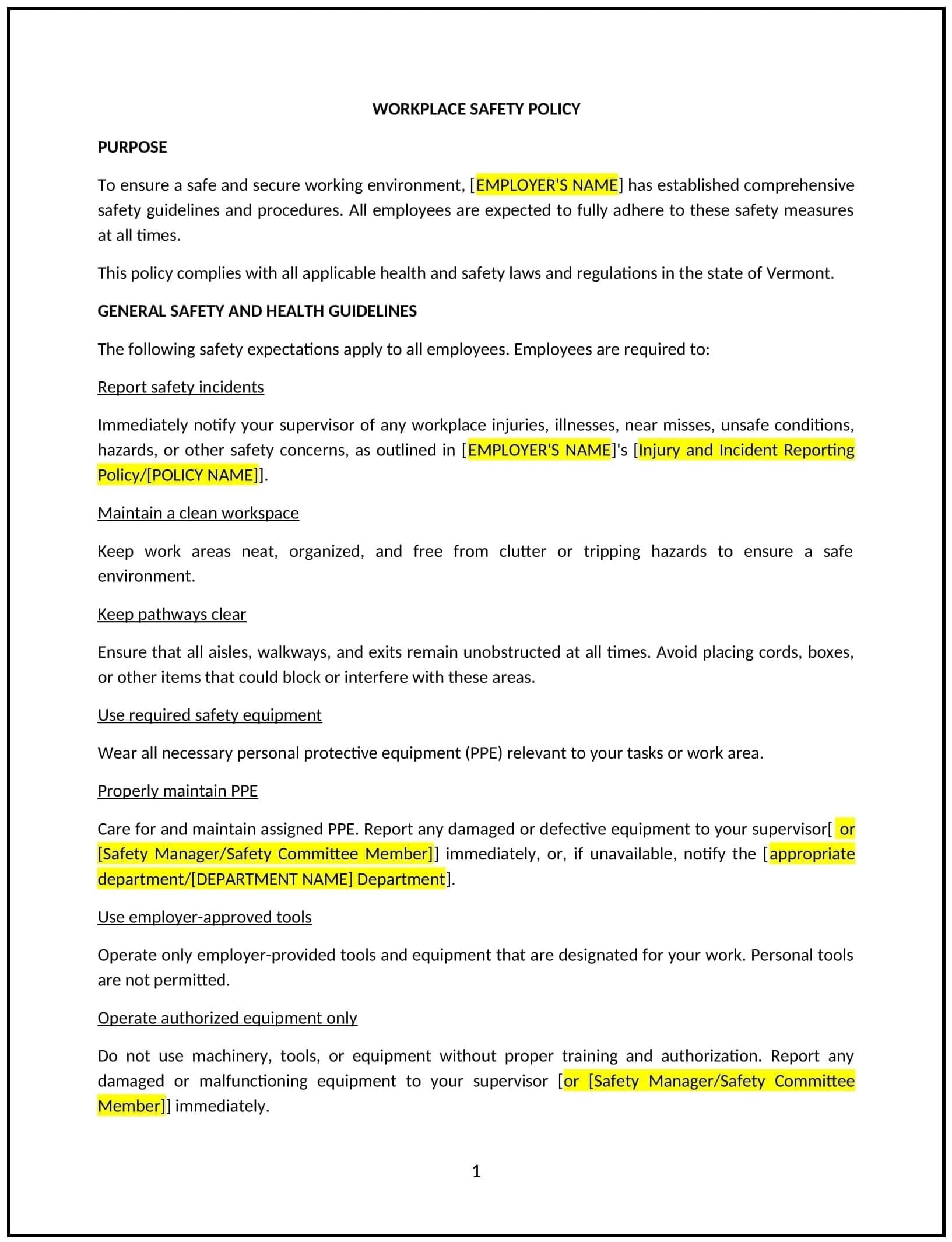
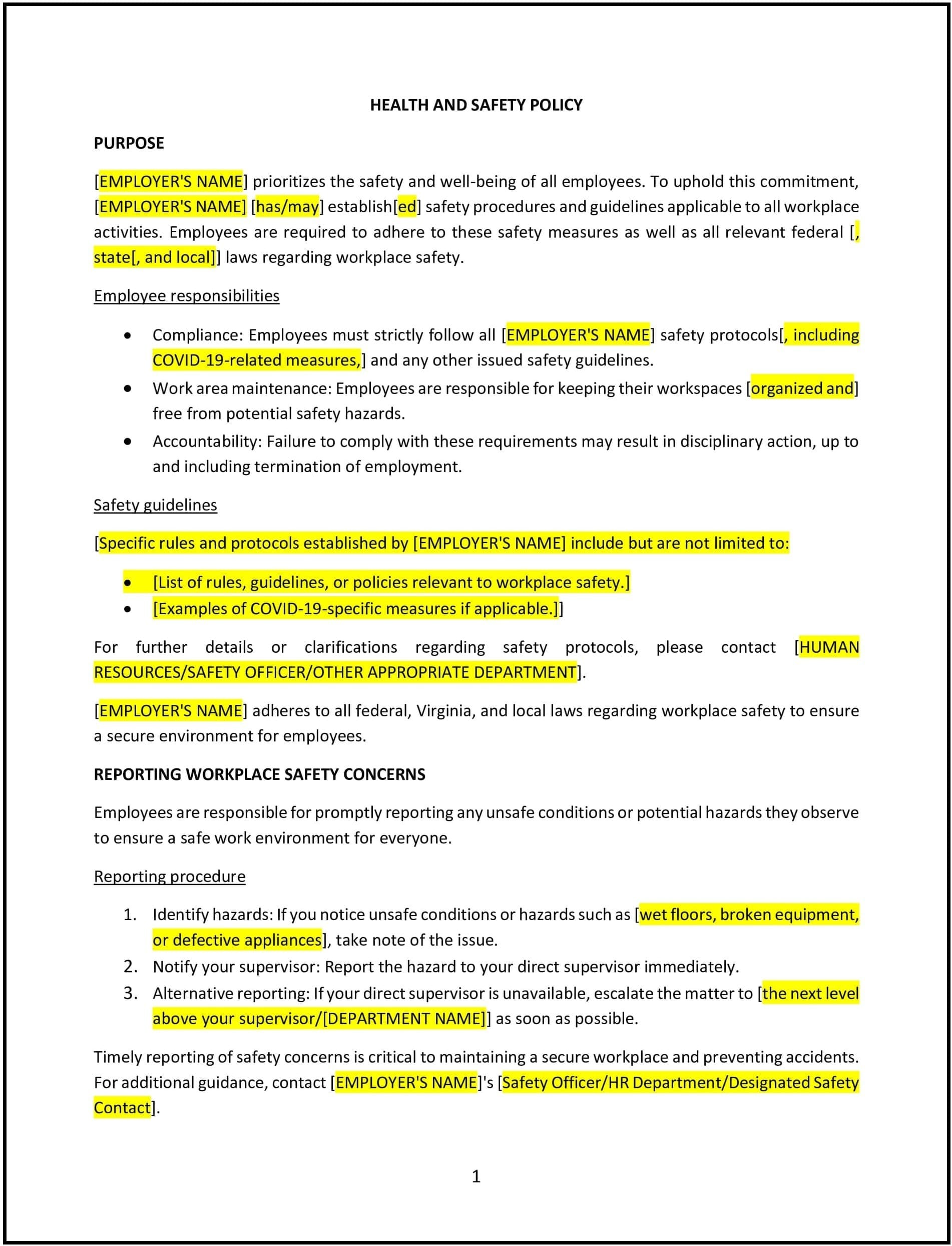
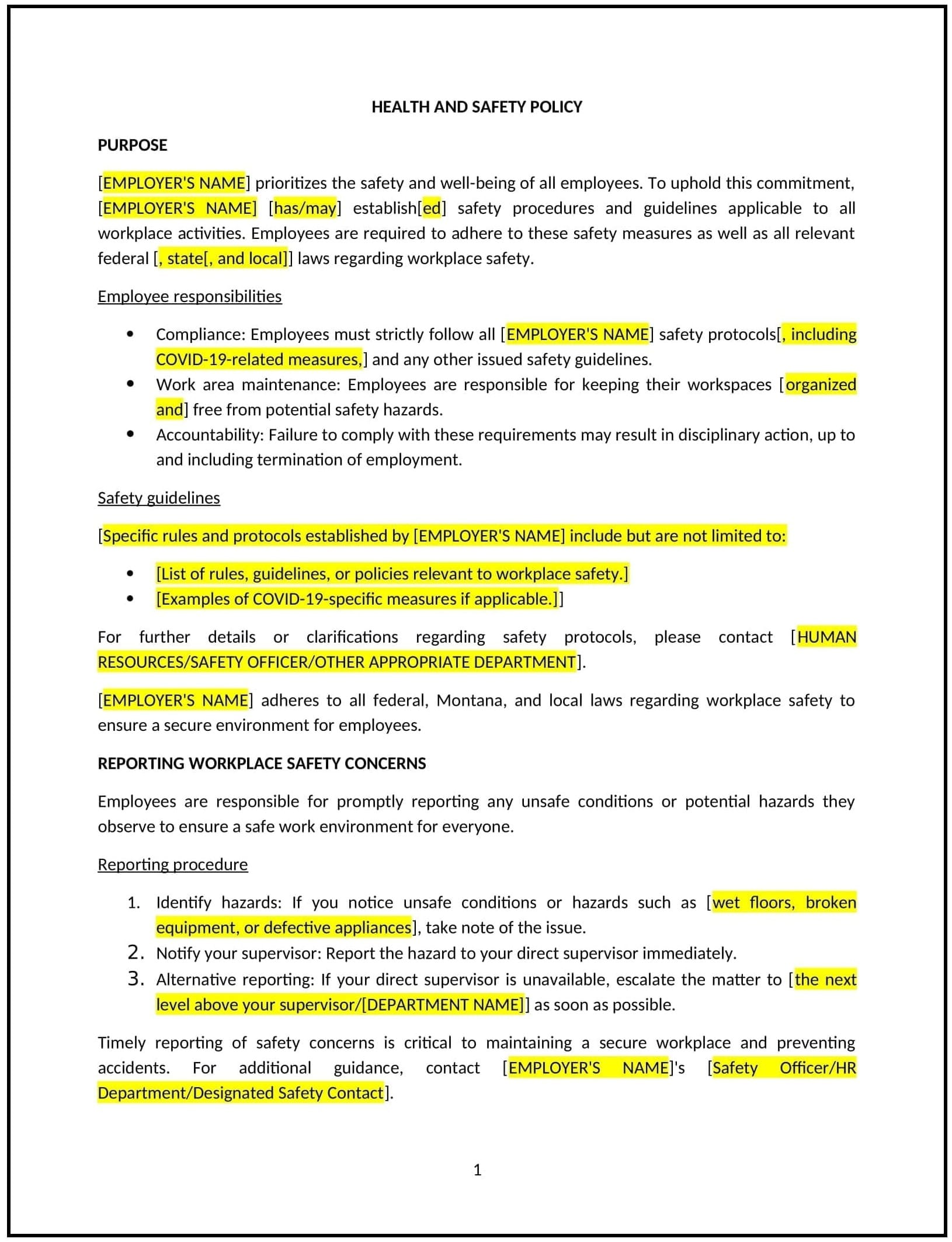
Where deals go from offer to paid
