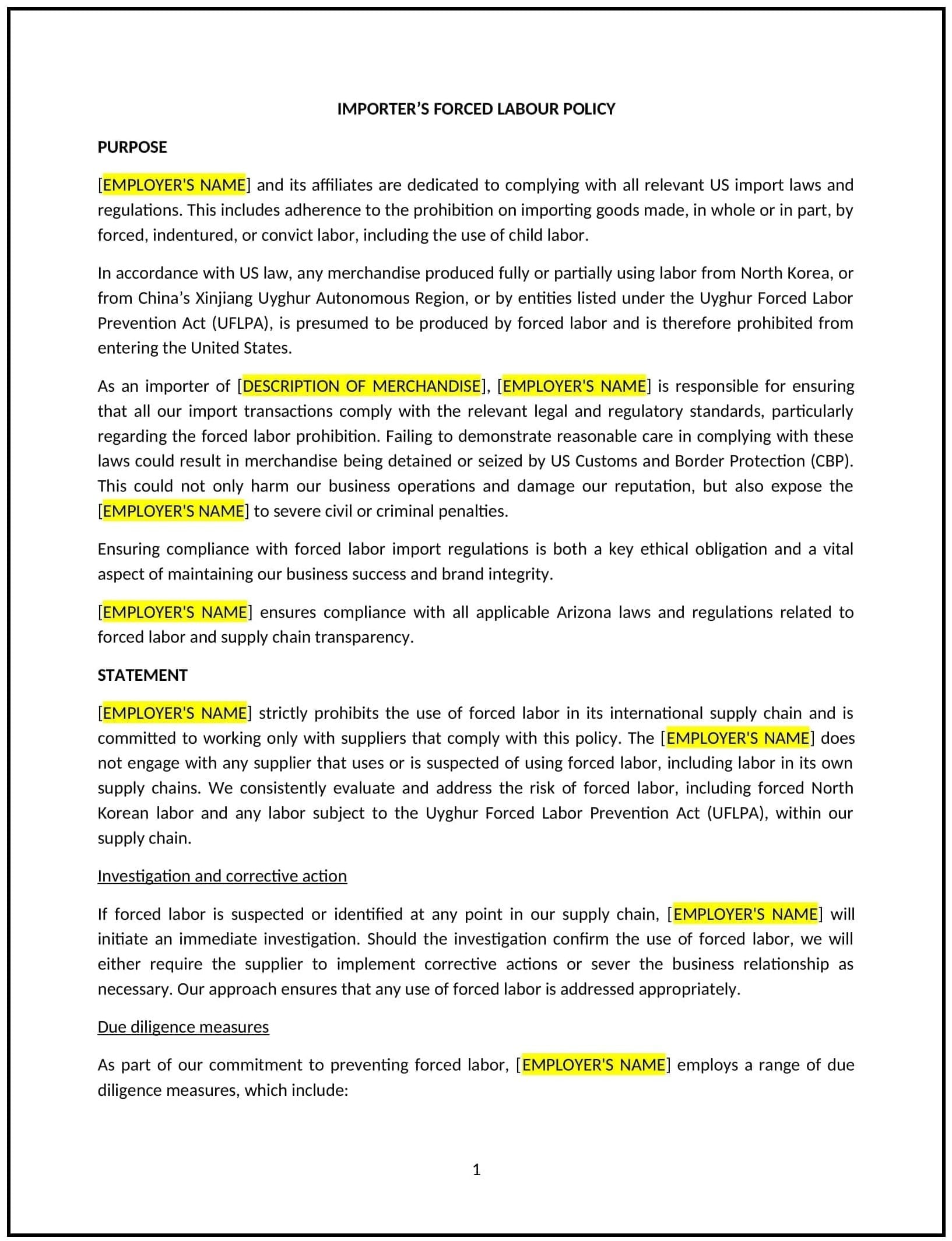
Importer's forced labour policy (Arizona): Free template
Sets due‑diligence steps for supply chains to prevent forced labor, meeting Arizona compliance expectations.
- Policies
- Arizona
Importer’s forced labor policy (Arizona)
In Arizona, an importer’s forced labor policy outlines the organization’s commitment to ensuring its supply chain and products are free from forced labor practices. This policy aligns with federal regulations, such as the U.S. Customs and Border Protection’s (CBP) enforcement of forced labor bans under the Trade Facilitation and Trade Enforcement Act (TFTEA), and supports ethical sourcing standards.
This policy establishes due diligence procedures, supplier accountability, and measures to address violations. By implementing this policy, Arizona businesses can promote transparency, compliance, and ethical trade practices.
How to use this importer’s forced labor policy (Arizona)
- Conduct supplier assessments: Require suppliers to provide documentation verifying compliance with labor laws and ethical sourcing standards.
- Include contract requirements: Ensure supplier agreements include clauses prohibiting the use of forced or child labor in their operations.
- Establish reporting channels: Provide employees, suppliers, and stakeholders with clear procedures for reporting suspected violations.
- Perform audits: Regularly audit suppliers to ensure adherence to the policy and identify potential risks in the supply chain.
- Address violations: Outline corrective actions, including terminating relationships with non-compliant suppliers or reporting violations to authorities.
Benefits of using an importer’s forced labor policy (Arizona)
This policy offers key advantages for Arizona businesses:
- Supports compliance: Aligns with federal laws and CBP regulations, reducing the risk of penalties or trade restrictions.
- Promotes ethical practices: Demonstrates the organization’s commitment to human rights and fair labor standards.
- Builds reputation: Enhances trust among customers, partners, and stakeholders by ensuring ethical sourcing.
- Reduces supply chain risks: Helps identify and mitigate risks associated with forced labor, protecting business operations.
- Increases accountability: Establishes clear expectations and responsibilities for suppliers and partners.
Tips for using an importer’s forced labor policy (Arizona)
- Address Arizona-specific considerations: Reflect the state’s key industries, such as agriculture or manufacturing, where supply chain transparency is critical.
- Use technology: Leverage tools like blockchain or supply chain management platforms to track and verify compliance.
- Partner with third-party auditors: Collaborate with external organizations to conduct independent supplier assessments and audits.
- Educate suppliers: Provide training on ethical sourcing and forced labor compliance to ensure alignment with the policy.
- Review regularly: Update the policy as laws and trade regulations evolve to maintain effectiveness and compliance.
Frequently asked questions (FAQs)
Similar templates
Where deals go from offer to paid
