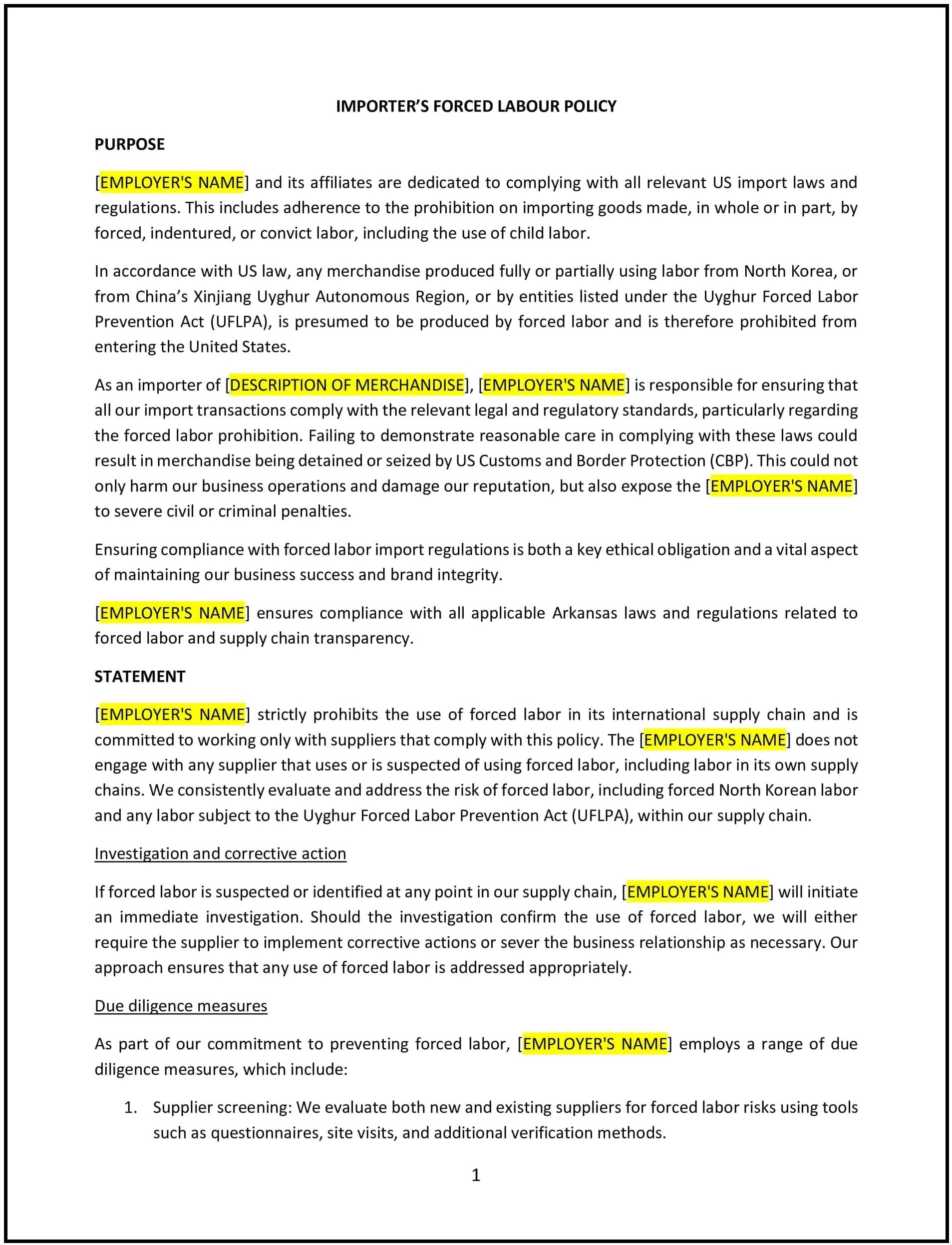
Importer's forced labour policy (Arkansas): Free template
Sets due‑diligence steps to ensure supply chains are free of forced labor entering Arkansas.
- Policies
- Arkansas
Importer's forced labour policy (Arkansas)
In Arkansas, an importer’s forced labor policy outlines a business’s commitment to ensuring that its supply chain is free from products and materials associated with forced labor. This policy supports ethical sourcing practices, protects the business’s reputation, and ensures compliance with federal and state regulations, such as the Uyghur Forced Labor Prevention Act (UFLPA).
This policy details the standards for supplier relationships, monitoring procedures, and corrective actions for non-compliance. By implementing this policy, Arkansas businesses can minimize legal risks, enhance supply chain transparency, and promote responsible business practices.
How to use this importer’s forced labor policy (Arkansas)
- Define prohibited practices: Clearly specify that the business does not tolerate forced labor or other human rights violations in its supply chain.
- Establish supplier standards: Require suppliers to adhere to ethical sourcing practices and provide certifications verifying the absence of forced labor in their operations.
- Conduct due diligence: Implement procedures for evaluating and monitoring suppliers, such as audits, risk assessments, and compliance checks.
- Address violations: Outline the steps the business will take if forced labor is identified, including terminating contracts and engaging in remediation efforts.
- Train employees: Provide training to procurement teams and other relevant staff on identifying and mitigating forced labor risks in the supply chain.
Benefits of using this importer’s forced labor policy (Arkansas)
This policy offers several advantages for Arkansas businesses:
- Protects reputation: Demonstrates the business’s commitment to ethical sourcing and human rights, fostering trust among stakeholders.
- Reduces legal risks: Ensures compliance with federal laws, such as the UFLPA, and mitigates the risk of penalties or import bans.
- Enhances supply chain transparency: Promotes accountability by requiring suppliers to disclose sourcing practices and labor conditions.
- Supports compliance: Aligns with Arkansas-specific import regulations and federal labor standards, ensuring lawful operations.
- Strengthens stakeholder relationships: Builds trust with customers, investors, and partners by upholding ethical practices.
Tips for using this importer’s forced labor policy (Arkansas)
- Address Arkansas-specific considerations: Include any state-level trade or import requirements that may impact supplier relationships or labor practices.
- Partner with ethical suppliers: Work with suppliers who demonstrate a commitment to fair labor practices and provide transparency in their operations.
- Leverage technology: Use supply chain management tools to monitor supplier compliance and track product origins effectively.
- Conduct regular audits: Schedule routine checks of supplier operations to ensure ongoing adherence to the policy.
- Review and update: Periodically update the policy to reflect changes in laws, industry standards, or business practices.
Frequently asked questions (FAQs)
Similar templates
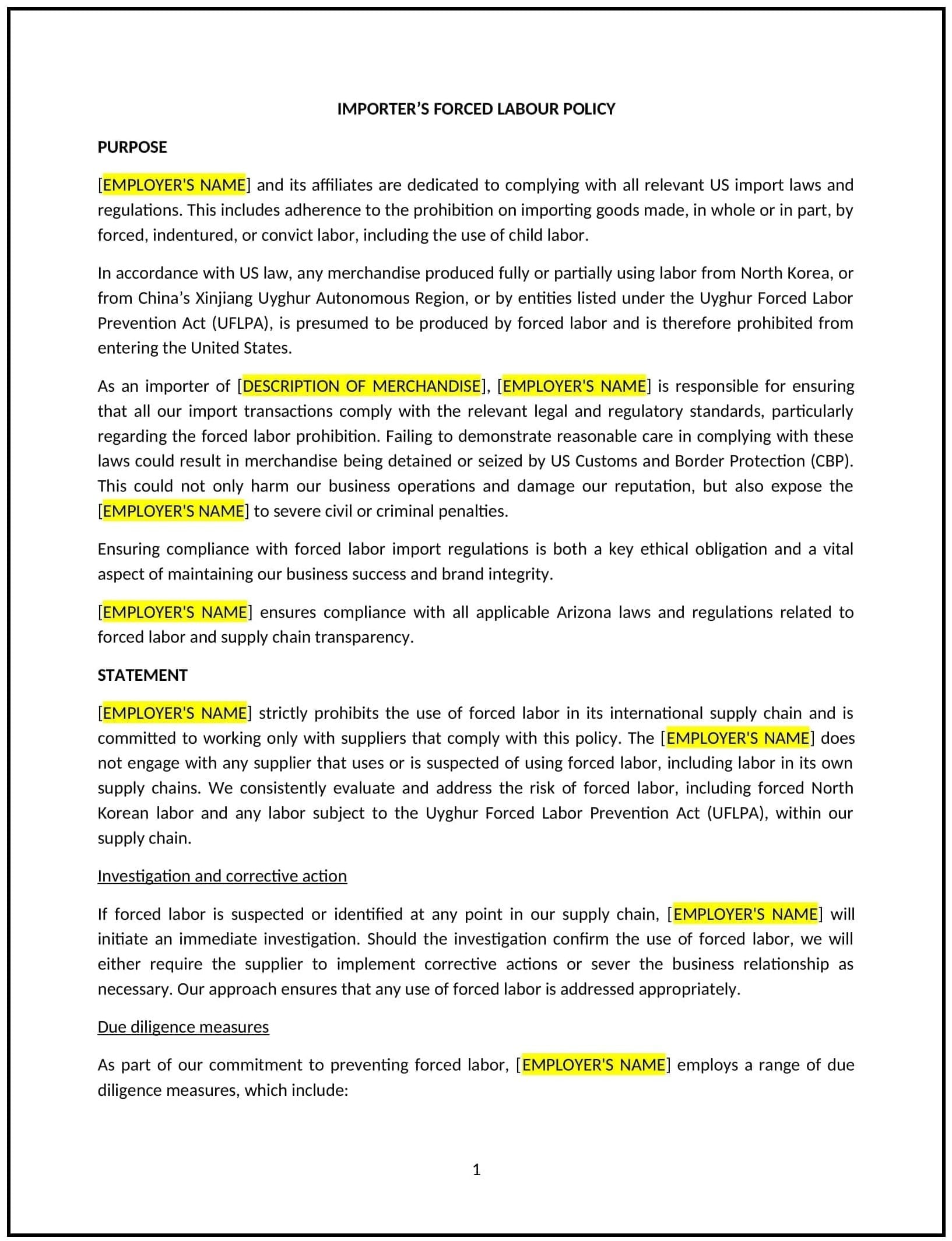
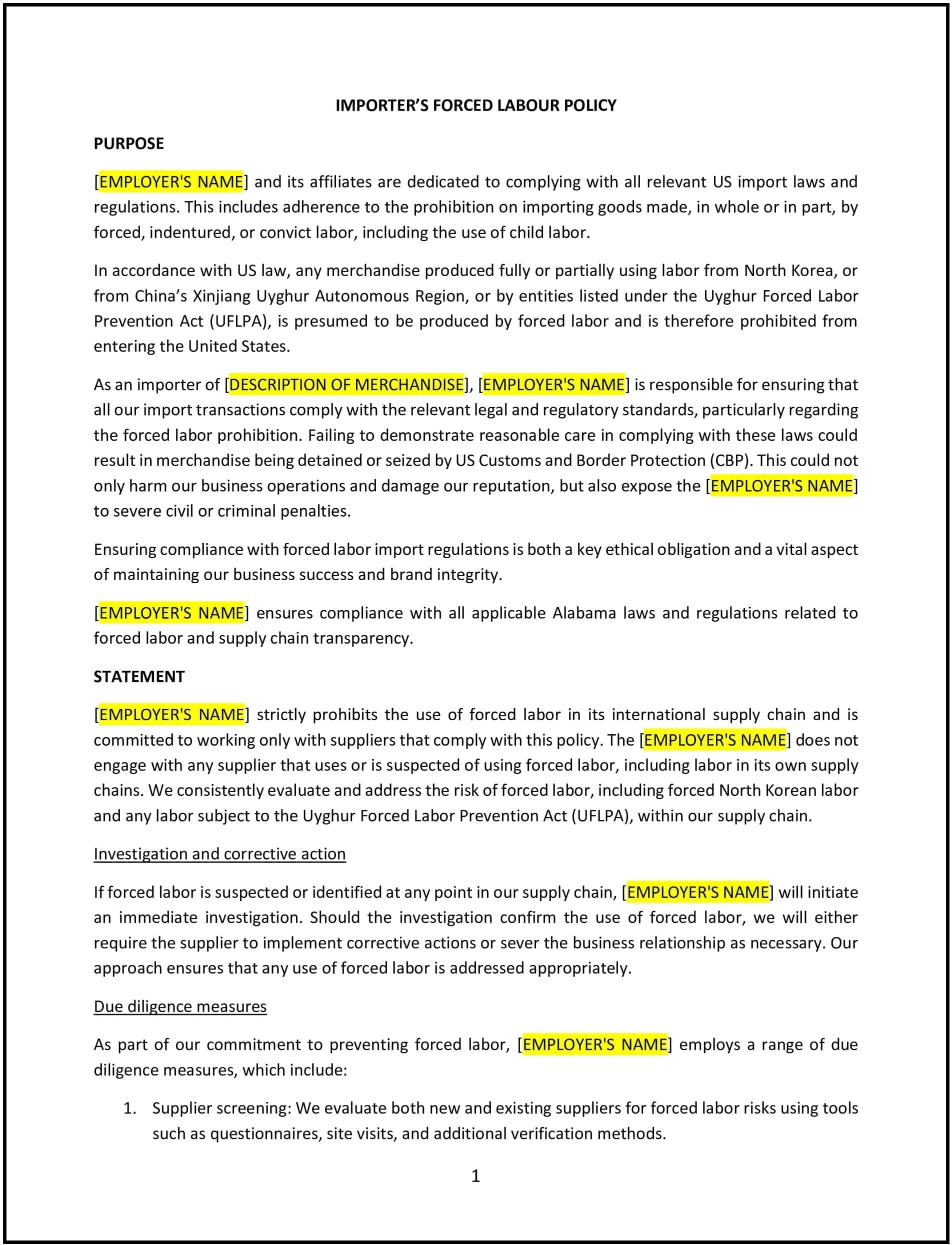
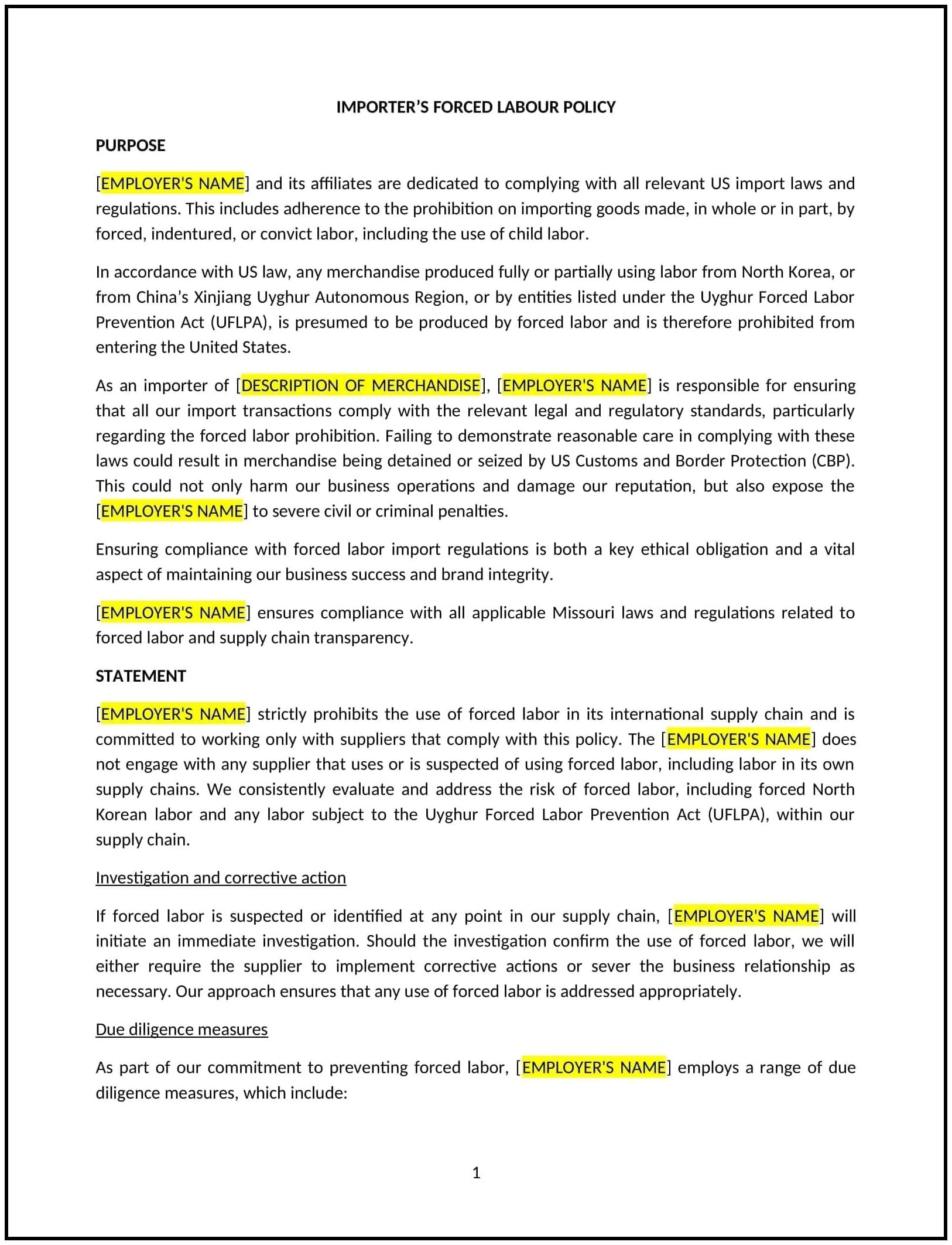
Where deals go from offer to paid
