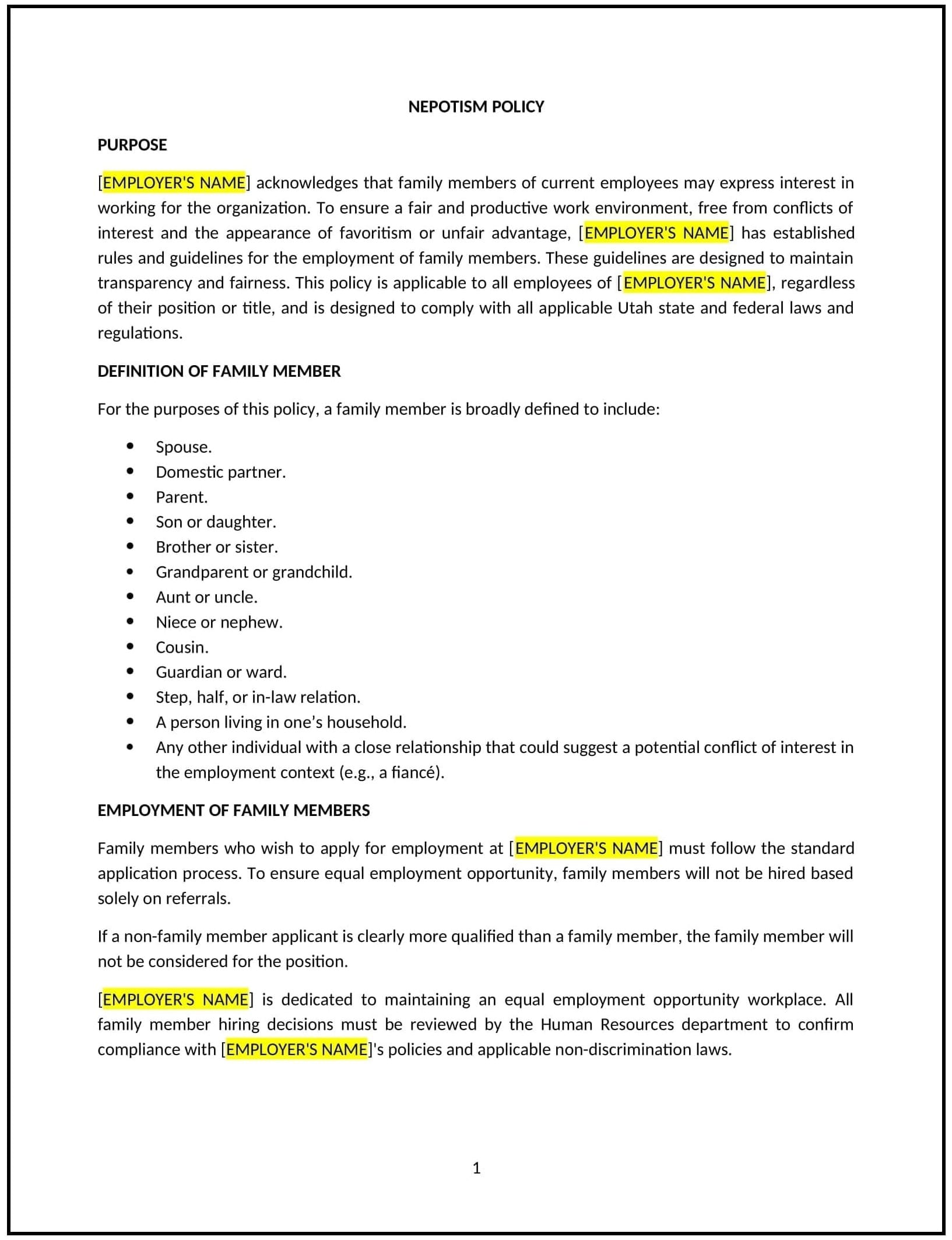
Nepotism policy (Utah): Free template
Prevents favoritism by setting boundaries around hiring or supervising family members in Utah workplaces.
- Policies
- Utah
Nepotism policy (Utah)
This nepotism policy is designed to help Utah businesses establish guidelines for hiring and managing employees who are related to each other. It outlines procedures for preventing favoritism, conflicts of interest, and disruptions to workplace dynamics.
By adopting this policy, businesses can promote fairness, maintain professionalism, and align with general best practices for workplace management.
How to use this nepotism policy (Utah)
- Define nepotism: Explain what constitutes nepotism, such as hiring or promoting family members.
- Establish hiring guidelines: Specify that family members may not be hired or supervised by relatives within the same department or team.
- Address conflicts of interest: Prohibit family members from making decisions that could benefit their relatives, such as promotions or pay raises.
- Ensure transparency: Require employees to disclose any familial relationships with colleagues.
- Train managers: Educate supervisors on identifying and addressing potential nepotism issues.
- Monitor compliance: Regularly review hiring and management practices to ensure adherence to the policy.
- Review and update: Assess the policy annually to ensure it aligns with evolving business needs and workplace dynamics.
Benefits of using this nepotism policy (Utah)
This policy offers several advantages for Utah businesses:
- Promotes fairness: Ensures all employees are treated equally, regardless of familial relationships.
- Maintains professionalism: Reduces the risk of favoritism or conflicts of interest in the workplace.
- Aligns with best practices: Provides a structured approach to managing nepotism.
- Enhances trust: Builds employee confidence in the business’s commitment to fairness and transparency.
- Reduces legal risks: Minimizes the potential for lawsuits or disputes related to favoritism.
Tips for using this nepotism policy (Utah)
- Communicate the policy: Share the policy with employees and include it in the employee handbook.
- Provide training: Educate managers on identifying and addressing potential nepotism issues.
- Monitor compliance: Regularly review hiring and management practices to ensure adherence to the policy.
- Address issues promptly: Take corrective action if nepotism or favoritism is identified.
- Update regularly: Assess the policy annually to ensure it aligns with evolving business needs and workplace dynamics.
Frequently asked questions (FAQs)
Similar templates
Where deals go from offer to paid
