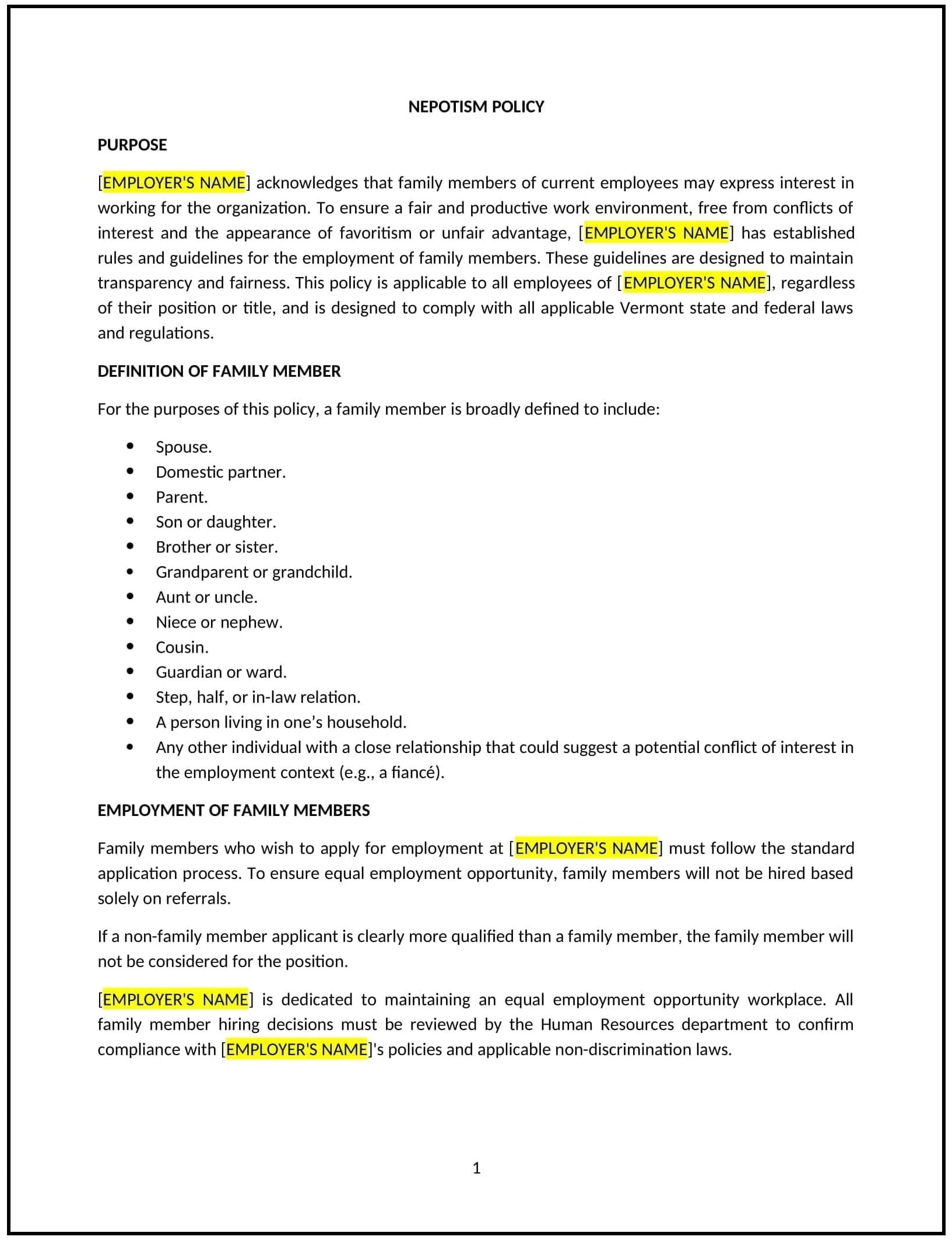
Nepotism policy (Vermont): Free template
Prevents favoritism by setting boundaries on hiring and supervising family members in Vermont organizations.
- Policies
- Vermont
Nepotism policy (Vermont)
This nepotism policy is designed to help Vermont businesses maintain fairness and transparency in hiring, promotions, and workplace relationships. It sets guidelines for managing employment decisions involving family members to minimize conflicts of interest and strengthen compliance with Vermont employment laws.
By adopting this policy, businesses can promote equitable practices, protect workplace integrity, and reduce favoritism-related risks.
How to use this nepotism policy (Vermont)
- Define nepotism: Specify what constitutes nepotism, such as favoritism in hiring, promotions, or other workplace decisions involving family members or close relations.
- Include disclosure requirements: Require employees to disclose any relationships with coworkers, managers, or candidates that may create conflicts of interest.
- Address hiring practices: Prohibit employees from being directly involved in hiring decisions for family members or close relations.
- Outline supervisory restrictions: Prevent employees from supervising or having direct authority over family members to avoid potential conflicts or biases.
- Establish reporting procedures: Provide steps for reporting nepotism concerns or violations of this policy.
- Emphasize fairness: Reinforce the company’s commitment to fair and objective decision-making in all employment matters.
- Monitor compliance: Regularly review workplace practices to ensure alignment with Vermont laws and the company’s commitment to equity.
Benefits of using this nepotism policy (Vermont)
This policy provides several benefits for Vermont businesses:
- Promotes fairness: Ensures all employment decisions are based on merit rather than personal relationships.
- Reduces conflicts of interest: Prevents biases that can arise from familial or close relationships in the workplace.
- Enhances compliance: Aligns with Vermont labor laws and workplace equity standards.
- Builds trust: Demonstrates the company’s commitment to impartial and transparent practices.
- Supports accountability: Establishes clear guidelines for addressing nepotism concerns and violations.
Tips for using this nepotism policy (Vermont)
- Communicate the policy: Share the policy with employees during onboarding and include it in the employee handbook or internal systems.
- Provide training: Educate managers and HR staff on identifying and addressing potential nepotism issues.
- Document disclosures: Maintain records of reported relationships and actions taken to address potential conflicts.
- Encourage reporting: Create a safe and confidential process for employees to raise nepotism-related concerns.
- Update regularly: Revise the policy to reflect changes in Vermont laws, workplace practices, or industry standards.
Frequently asked questions (FAQs)
Similar templates
Where deals go from offer to paid
