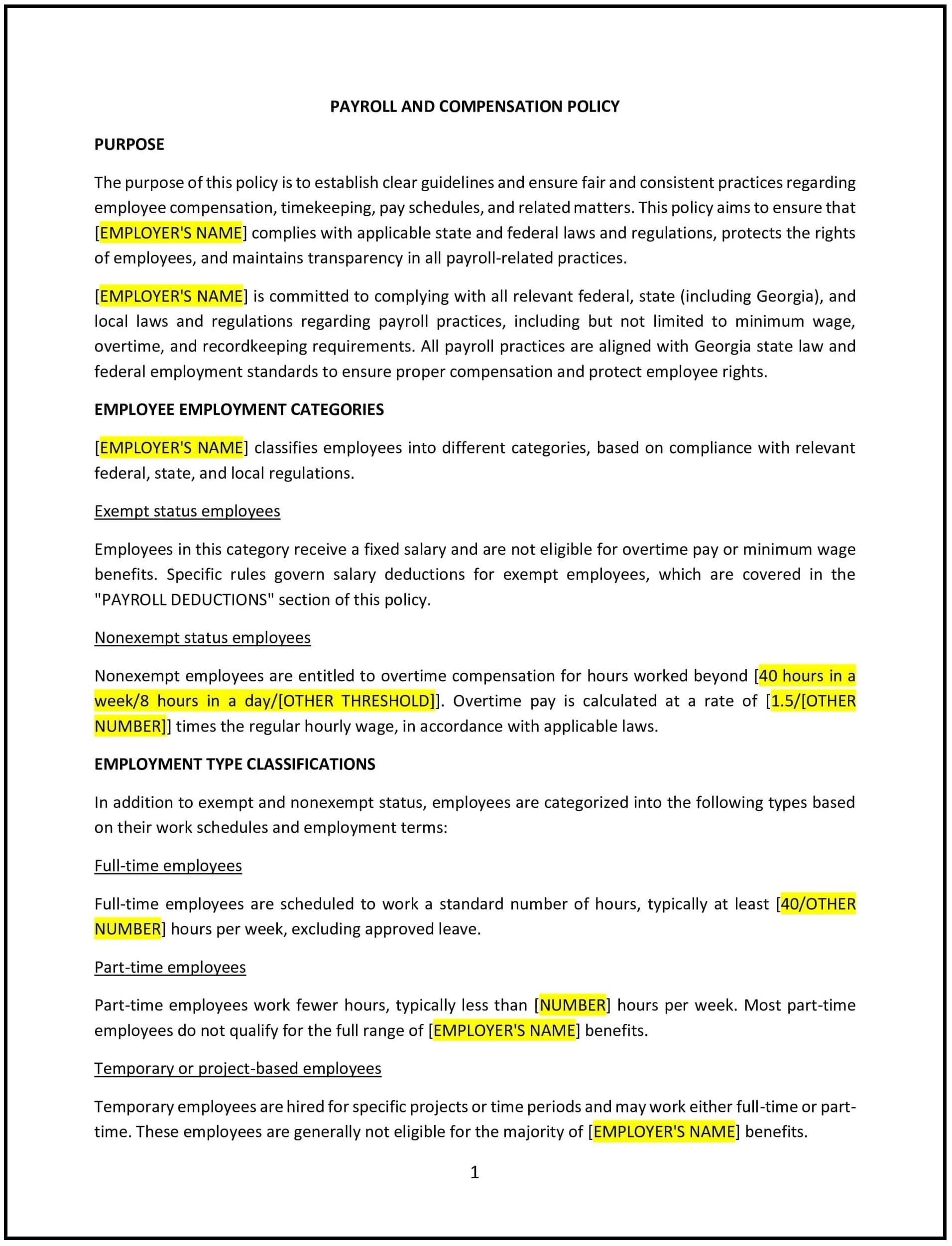
Payroll and compensation policy (Georgia): Free template
Defines wage calculation, pay schedules, deductions, and overtime to ensure compliance with Georgia labor laws.
- Policies
- Georgia
Payroll and compensation policy (Georgia)
This payroll and compensation policy is designed to help Georgia businesses manage employee pay structures, schedules, and related processes effectively. The policy outlines guidelines for wage determination, payment methods, and reporting procedures to promote transparency and consistency.
By implementing this policy, businesses can ensure employees are paid accurately, on time, and in alignment with organizational goals.
How to use this payroll and compensation policy (Georgia)
- Define compensation structure: Clearly outline salary, hourly wages, bonuses, and other forms of employee compensation.
- Establish pay schedules: Specify pay periods, such as weekly, bi-weekly, or monthly, and the corresponding payment dates.
- Provide payment methods: Offer options for direct deposit, physical checks, or electronic transfers, based on business and employee preferences.
- Address overtime and additional pay: Clearly state how overtime, commissions, or other variable payments are calculated and processed.
- Include tax and deduction information: Outline how taxes, insurance premiums, and other authorized deductions are applied.
- Explain reporting procedures: Encourage employees to report payroll discrepancies promptly and outline the steps to resolve issues.
- Maintain confidentiality: Emphasize that payroll information is confidential and will only be shared on a need-to-know basis.
- Review and update regularly: Periodically assess the policy to reflect changes in Georgia-specific labor laws or organizational practices.
Benefits of using this payroll and compensation policy (Georgia)
Implementing this policy provides several advantages for Georgia businesses:
- Promotes accuracy: Clear guidelines reduce errors in payroll processing and compensation calculations.
- Enhances transparency: Employees have a clear understanding of their pay structure and schedules.
- Supports trust: Consistent and timely payments build trust between employees and the organization.
- Reduces disputes: Well-documented procedures help resolve payroll issues efficiently.
- Reflects Georgia-specific practices: Tailoring the policy to local labor laws and business needs ensures its relevance.
Tips for using this payroll and compensation policy (Georgia)
- Use reliable payroll software: Implement systems that automate calculations, tax deductions, and direct deposits to reduce errors.
- Train managers: Ensure supervisors understand the policy and can answer employee questions or escalate concerns.
- Communicate changes: Inform employees promptly about updates to pay structures, schedules, or deductions.
- Monitor compliance: Regularly audit payroll processes to ensure they align with the policy and state requirements.
- Address feedback: Use employee input to improve payroll systems and resolve recurring issues.
Frequently asked questions (FAQs)
Similar templates
Where deals go from offer to paid
