Personnel records policy (Kentucky): Free template
Outlines how employee files are maintained, accessed, and protected to ensure privacy and compliance.
- Policies
- Kentucky
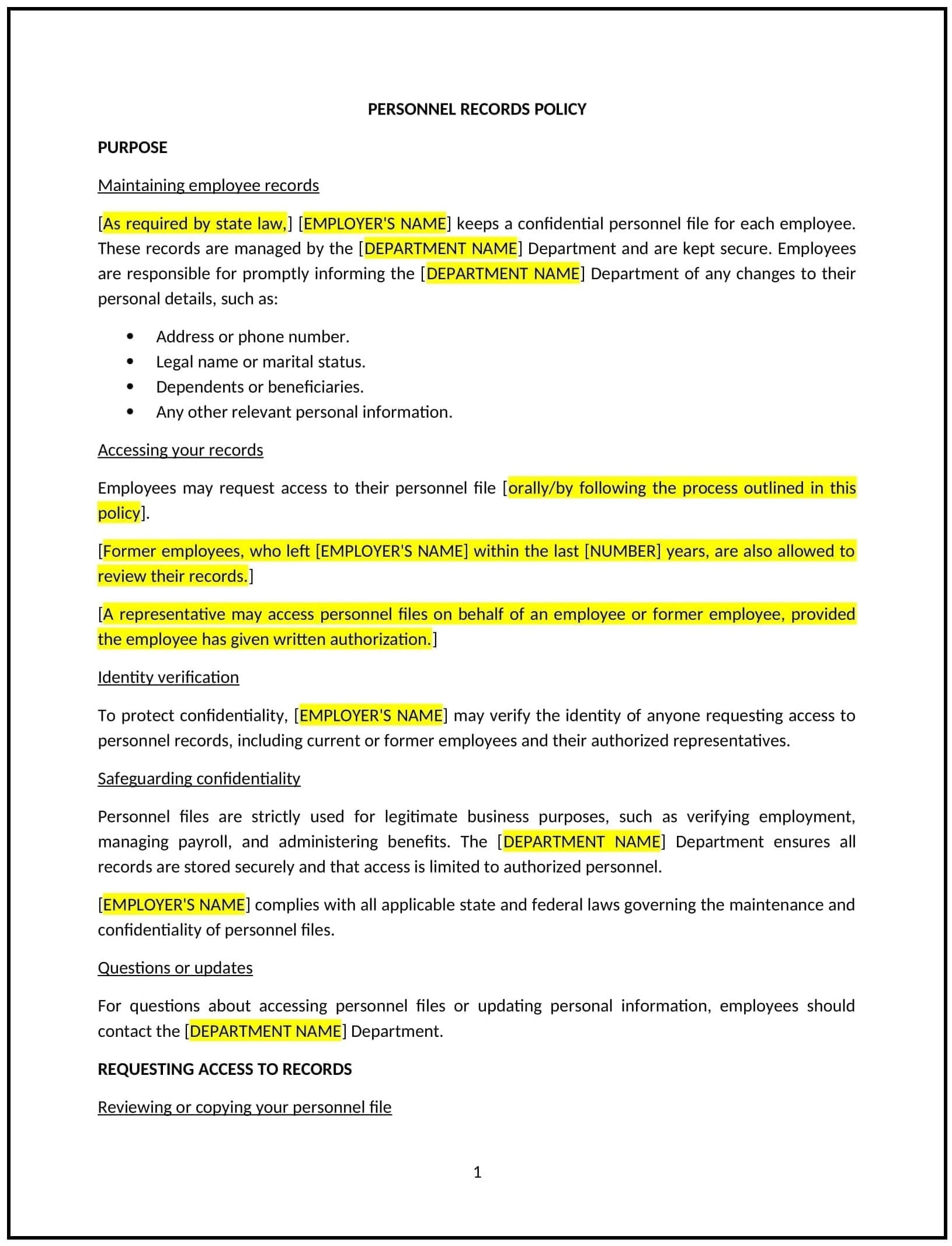
Personnel records policy (Kentucky)
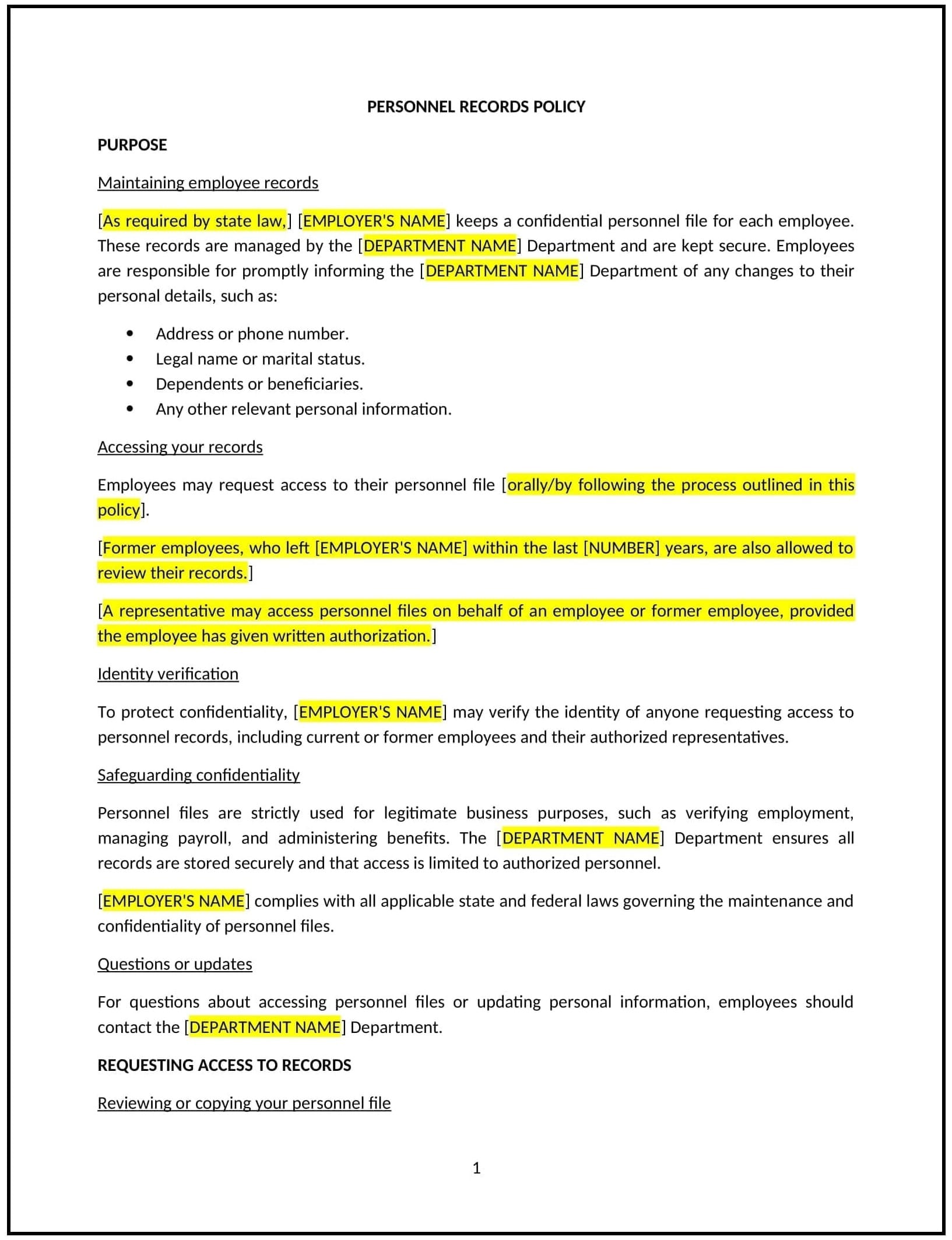
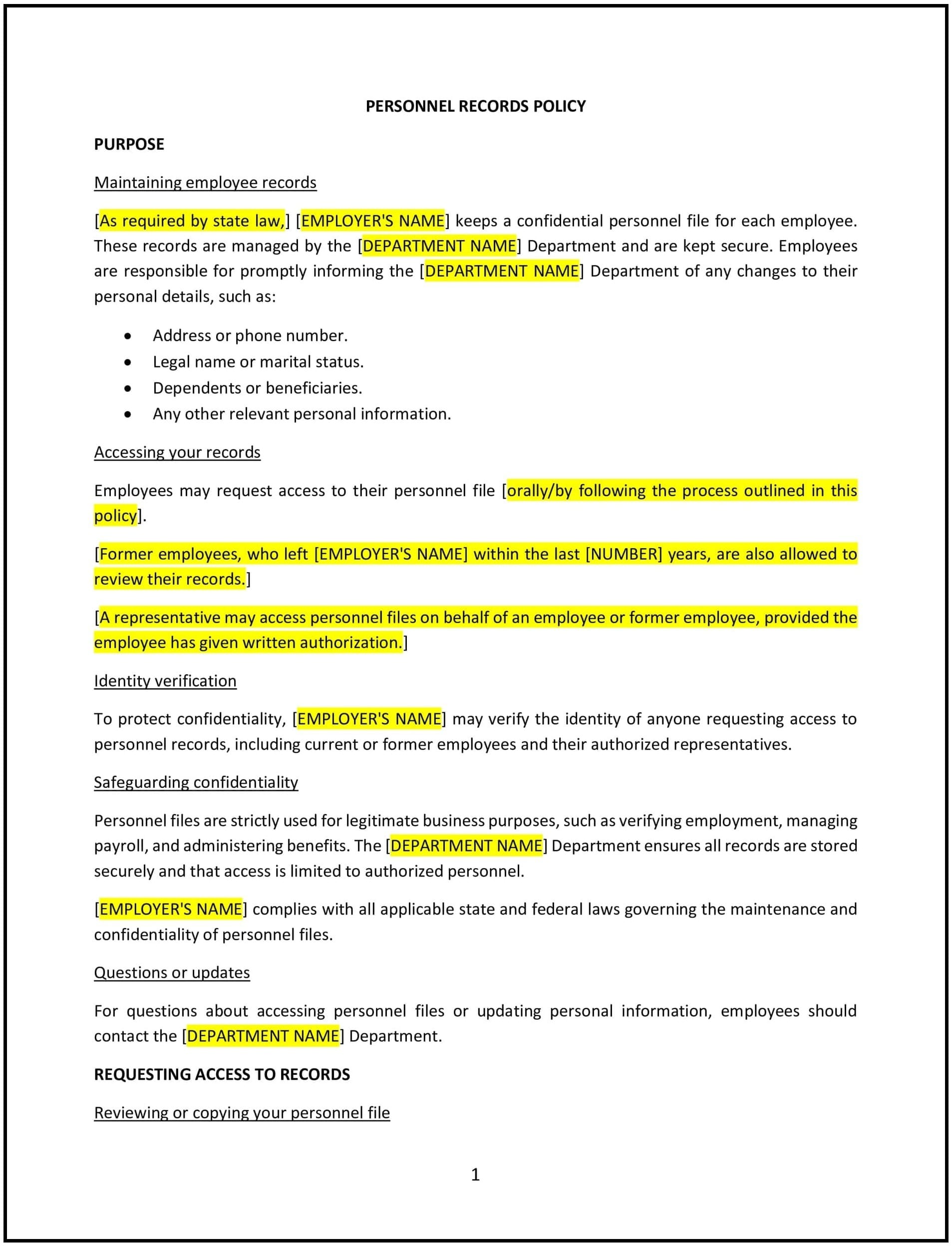
A personnel records policy outlines the guidelines Kentucky businesses use to manage, store, and access employee records. This policy ensures that records are maintained securely and accurately, while also defining employees’ rights to access their information.
By adopting this policy, businesses can protect sensitive data, maintain transparency, and ensure consistent record-keeping practices.
How to use this personnel records policy (Kentucky)
- Define personnel records: Specify what types of records are included, such as employment applications, performance reviews, payroll information, disciplinary actions, and benefits enrollment.
- Set access guidelines: Outline who can access personnel records, including employees, HR staff, and authorized personnel, and under what circumstances.
- Establish storage requirements: Provide guidelines for securely storing records, whether in physical files or digital formats, to protect confidentiality and prevent unauthorized access.
- Outline employee rights: Clearly state employees’ rights to view or request copies of their personnel records, as permitted by Kentucky law.
- Address record retention: Specify how long personnel records will be retained, aligning with Kentucky state laws and federal regulations.
- Include confidentiality measures: Detail the steps businesses take to protect the confidentiality of personnel records, including access controls and data encryption.
- Provide procedures for updates: Explain how employees can update their records, such as submitting changes to contact information, tax forms, or benefit selections.
Benefits of using this personnel records policy (Kentucky)
This policy provides several key benefits for Kentucky businesses:
- Enhances compliance: Ensures that record-keeping practices align with Kentucky laws and federal regulations.
- Protects sensitive information: Safeguards employee data through secure storage and confidentiality measures.
- Improves transparency: Clearly defines employees’ rights to access and update their records, fostering trust.
- Promotes consistency: Establishes standardized procedures for managing and retaining personnel records.
- Reduces legal risks: Minimizes the risk of disputes or penalties related to record-keeping errors or violations.
Tips for using this personnel records policy (Kentucky)
- Communicate the policy: Share the policy with employees during onboarding and provide periodic reminders of their rights and responsibilities.
- Train HR staff: Ensure HR personnel understand proper record-keeping procedures and confidentiality standards.
- Regularly audit records: Conduct routine audits to verify the accuracy, security, and compliance of personnel records.
- Stay up to date: Keep track of changes in Kentucky laws or federal regulations related to personnel records and adjust the policy as needed.
- Provide clear processes: Make it easy for employees to access or update their records by offering clear instructions and timely support.
Frequently asked questions (FAQs)
Similar templates
Where deals go from offer to paid
