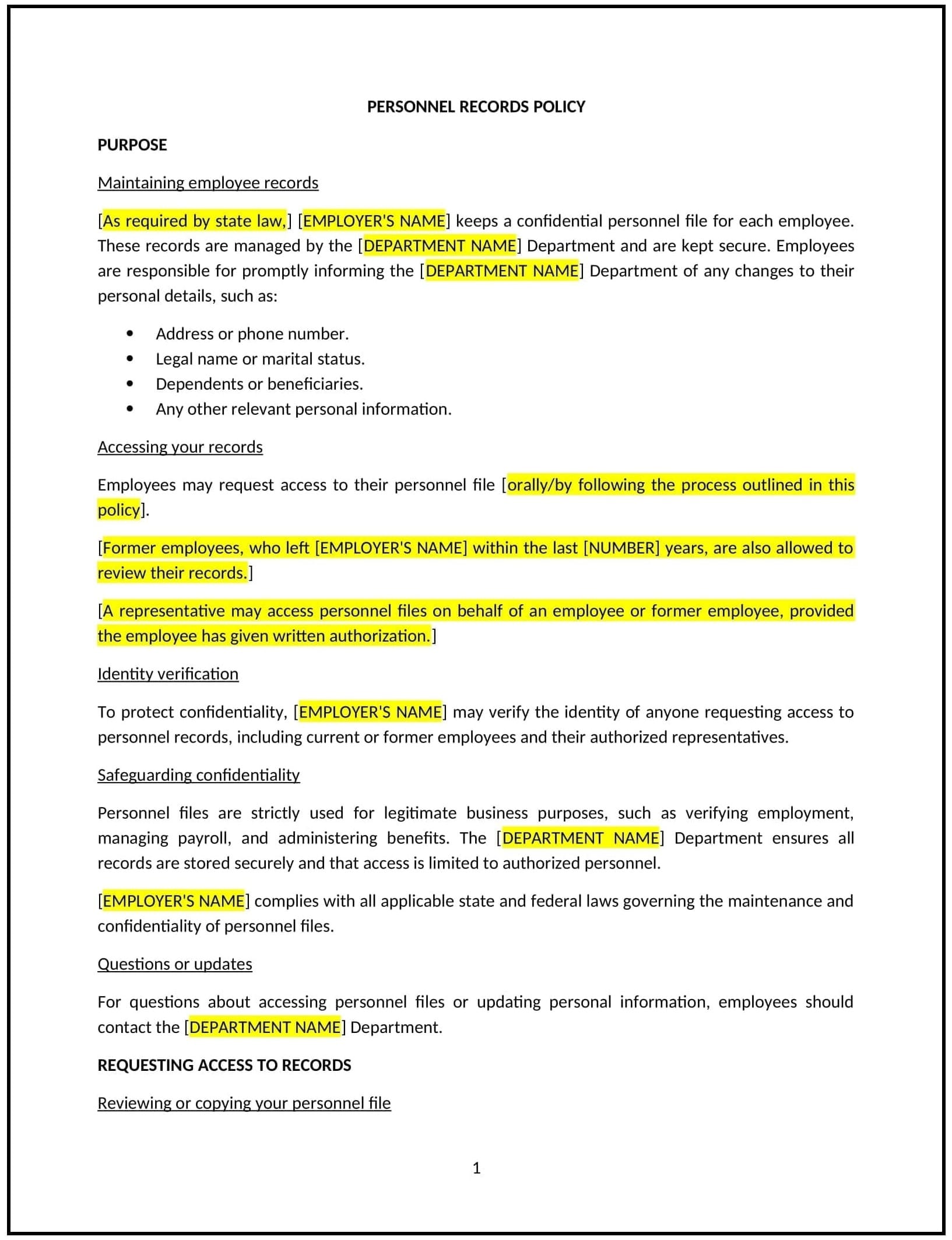
Personnel records policy (Tennessee): Free template
Describes how employee records are maintained, accessed, and protected to ensure privacy and compliance.
- Policies
- Tennessee
Personnel records policy (Tennessee)
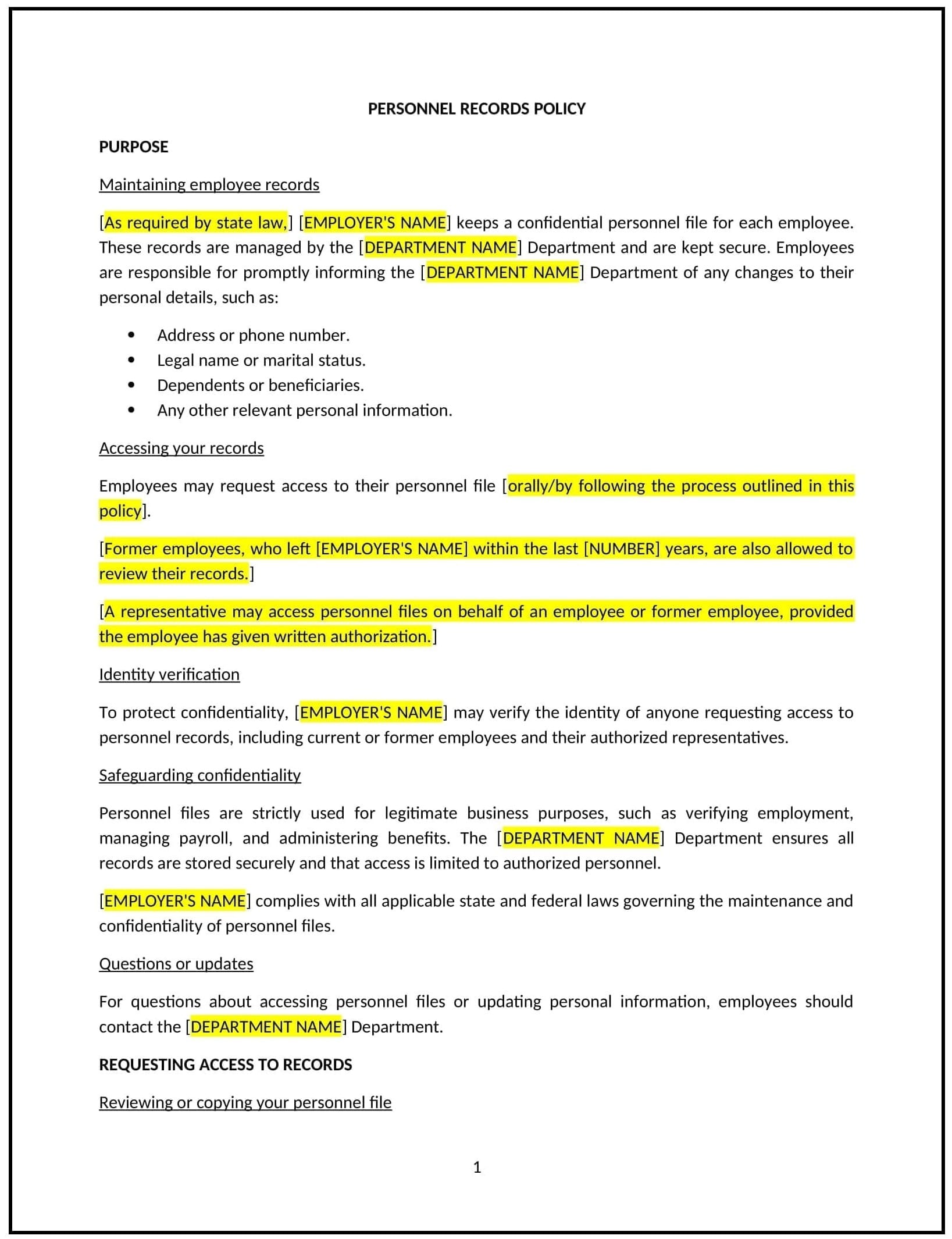
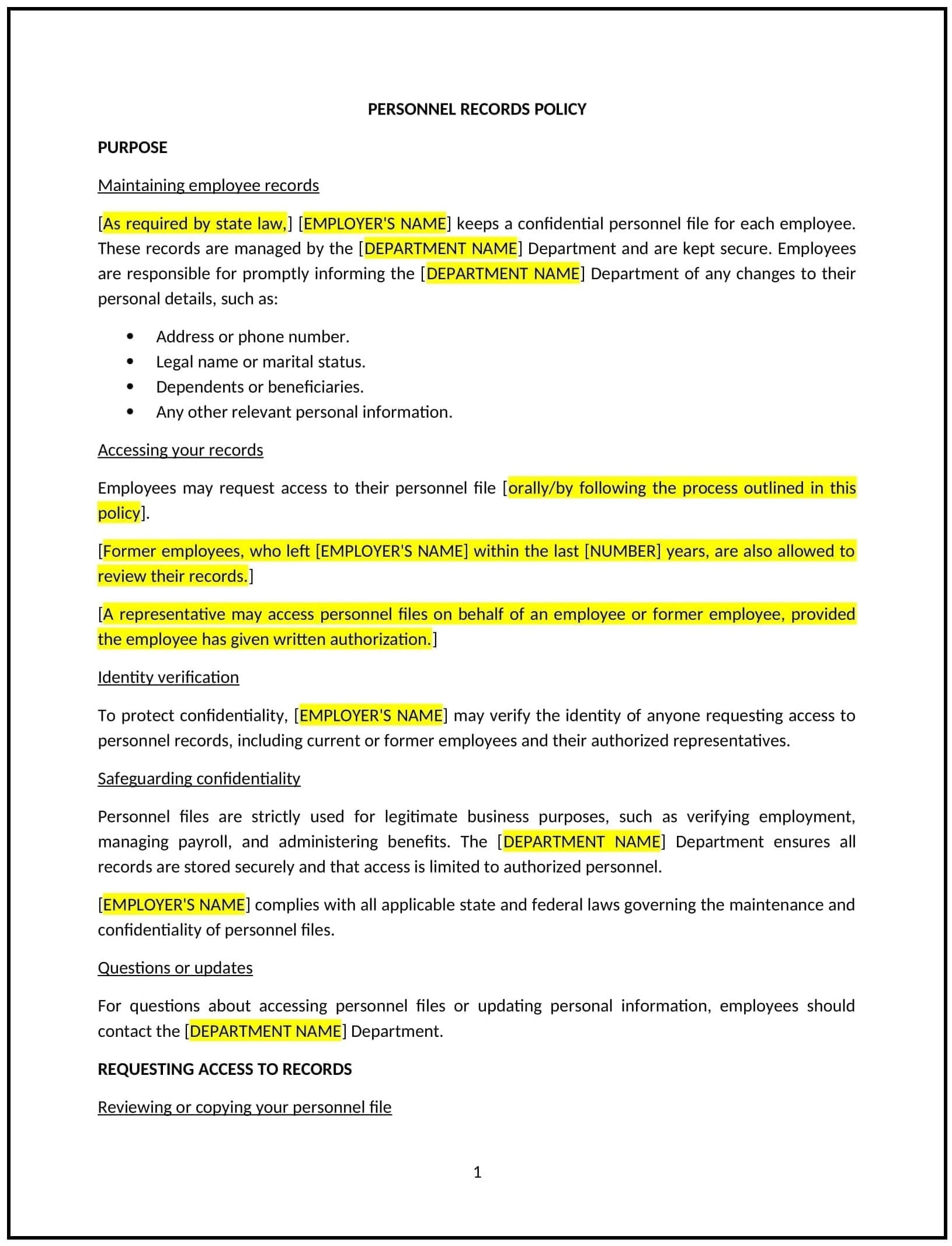
This personnel records policy is designed to help Tennessee businesses establish guidelines for managing employee records, such as hiring documents, performance reviews, and payroll information. It outlines procedures for maintaining accurate, secure, and confidential personnel records.
By adopting this policy, businesses can ensure compliance with state and federal laws, protect employee privacy, and maintain organized records.
How to use this personnel records policy (Tennessee)
- Define personnel records: Clarify what constitutes personnel records, such as resumes, performance evaluations, or payroll data.
- Set storage procedures: Outline how records will be stored securely, such as in locked filing cabinets or encrypted digital systems.
- Address access controls: Specify who can access personnel records and under what circumstances.
- Establish retention periods: Explain how long records will be retained, based on legal and business requirements.
- Train employees: Educate HR staff on proper record-keeping practices and confidentiality requirements.
- Review and update: Assess the policy annually to ensure it aligns with evolving business needs and legal standards.
Benefits of using this personnel records policy (Tennessee)
This policy offers several advantages for Tennessee businesses:
- Ensures compliance: Helps businesses comply with state and federal record-keeping laws.
- Protects employee privacy: Maintains confidentiality of sensitive employee information.
- Enhances organization: Provides a structured approach to managing personnel records.
- Reduces risks: Minimizes the potential for legal disputes or data breaches.
- Aligns with best practices: Supports a structured approach to record-keeping.
Tips for using this personnel records policy (Tennessee)
- Communicate the policy: Share the policy with employees and include it in the employee handbook.
- Provide training: Educate HR staff on proper record-keeping practices and confidentiality requirements.
- Monitor compliance: Regularly review record-keeping practices to ensure adherence.
- Address issues promptly: Take corrective action if records are mishandled or confidentiality is breached.
- Update regularly: Assess the policy annually to ensure it aligns with evolving business needs.
Frequently asked questions (FAQs)
Similar templates
Where deals go from offer to paid
