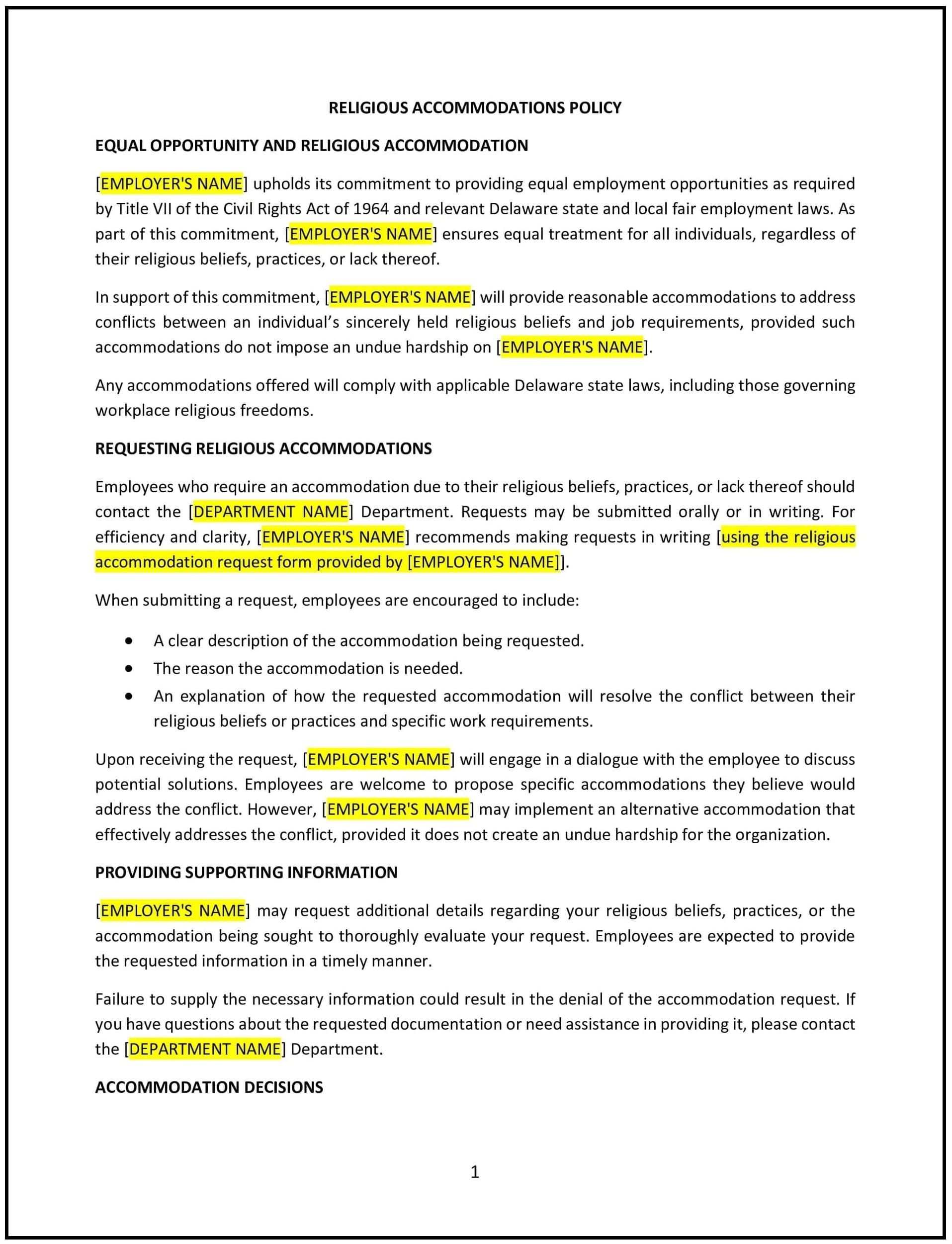
Religious accommodations policy (Delaware): Free template
Provides process for requesting religious accommodations and employer responses under Delaware and federal law.
- Policies
- Delaware
Religious accommodations policy (Delaware)
A religious accommodations policy helps Delaware businesses provide a framework for supporting employees’ religious practices while maintaining compliance with Delaware and federal anti-discrimination laws, such as Title VII of the Civil Rights Act. This policy outlines procedures for requesting accommodations, evaluating requests, and fostering inclusivity.
By implementing this policy, businesses can create a respectful workplace, ensure legal compliance, and support employees’ religious needs.
How to use this religious accommodations policy (Delaware)
- Define accommodations: Specify examples of religious accommodations, such as schedule adjustments, dress code modifications, or prayer spaces.
- Establish request procedures: Outline steps for employees to request accommodations, including submitting written requests and providing necessary documentation.
- Evaluate requests: Detail how the company will review and respond to requests, considering the reasonableness and potential impact on business operations.
- Provide training: Equip managers and HR personnel with knowledge about religious accommodations and anti-discrimination laws to handle requests fairly.
- Ensure confidentiality: Emphasize that requests and related information will be kept confidential and shared only with relevant personnel.
- Monitor and adjust: Regularly assess accommodations to ensure they meet employee needs and align with business operations.
Benefits of using this religious accommodations policy (Delaware)
This policy offers several benefits for Delaware businesses:
- Ensures compliance: Aligns with Delaware and federal anti-discrimination laws, reducing the risk of legal disputes.
- Promotes inclusivity: Supports a diverse workforce by accommodating employees’ religious practices and fostering respect.
- Enhances employee satisfaction: Demonstrates the company’s commitment to meeting employees’ religious needs, improving morale and retention.
- Reduces conflicts: Provides a structured process for managing accommodation requests, minimizing misunderstandings.
- Protects company reputation: Positions the business as an inclusive and respectful employer, appealing to both employees and customers.
Tips for using this religious accommodations policy (Delaware)
- Communicate the policy clearly: Ensure all employees understand their rights and the procedures for requesting accommodations.
- Train staff: Provide managers and HR personnel with training on religious accommodation laws and best practices.
- Encourage open dialogue: Foster a culture where employees feel comfortable discussing religious needs without fear of judgment or retaliation.
- Document decisions: Maintain records of accommodation requests, evaluations, and outcomes to ensure transparency and compliance.
- Review regularly: Update the policy to reflect changes in Delaware laws, federal regulations, or workplace needs.
Frequently asked questions (FAQs)
Similar templates

Where deals go from offer to paid
