Religious accommodations policy (Pennsylvania): Free template
Provides a framework for employees to request accommodations for religious practices while respecting workplace operations.
- Policies
- Pennsylvania
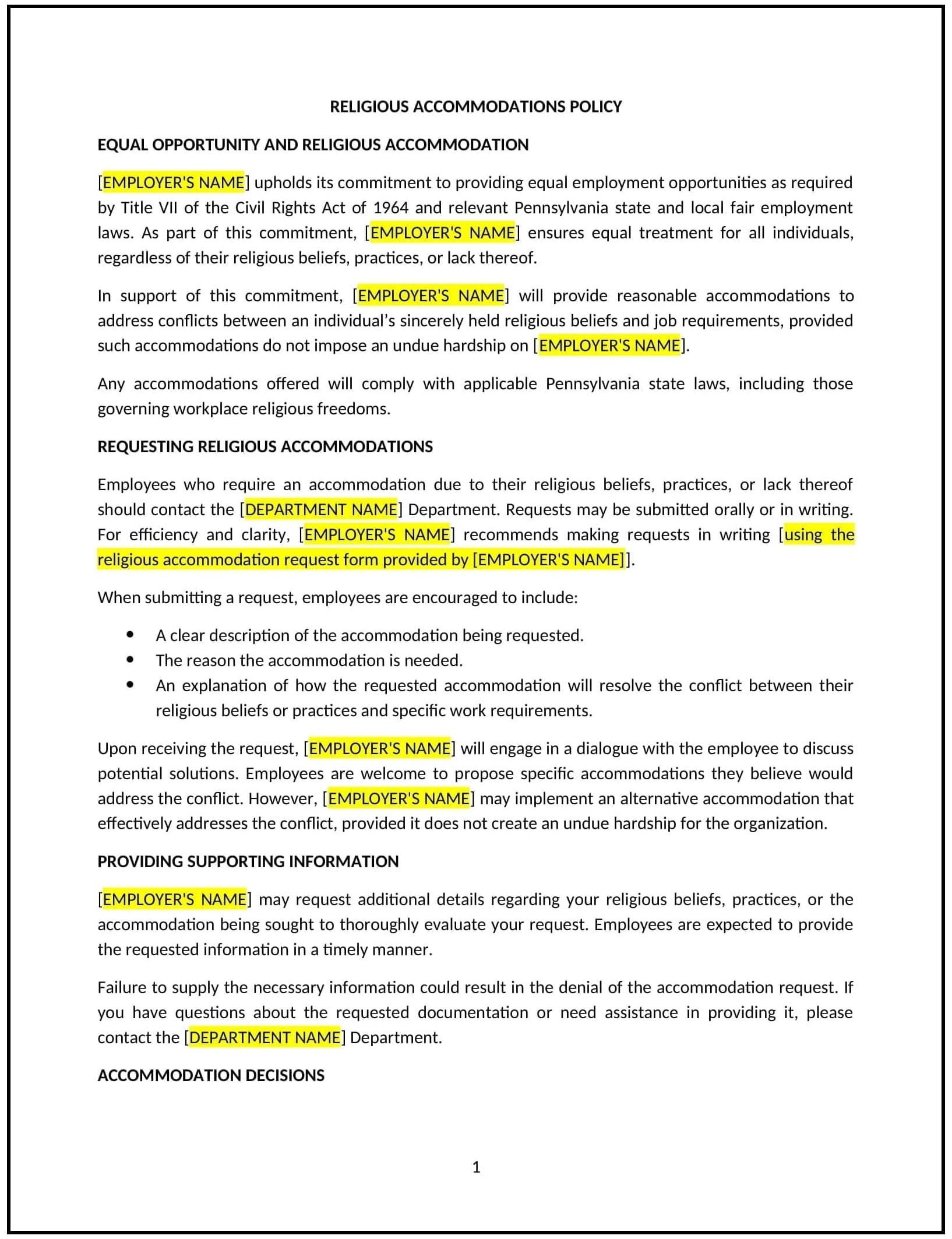
Religious accommodations policy (Pennsylvania)
This religious accommodations policy is designed to help businesses in Pennsylvania provide a fair and inclusive workplace by addressing employees’ religious needs. Whether accommodating religious practices, attire, or scheduling, this template ensures businesses comply with Title VII of the Civil Rights Act and Pennsylvania-specific labor laws while fostering a respectful work environment.
By using this template, businesses can support diversity, enhance employee satisfaction, and reduce potential conflicts related to religious accommodations.
How to use this religious accommodations policy (Pennsylvania)
- Define religious accommodations: Clearly explain what constitutes religious accommodations, such as flexible scheduling, prayer breaks, or exemptions from dress codes.
- Include the request process: Outline steps for employees to request accommodations, including documentation requirements and submission procedures.
- Evaluate undue hardship: Specify how the company will assess whether an accommodation would pose an undue hardship on business operations.
- Address anti-discrimination: Emphasize the organization’s commitment to preventing discrimination and retaliation related to religious practices.
- Reflect Pennsylvania-specific considerations: Tailor the policy to align with local labor laws, workplace diversity initiatives, or industry-specific needs.
Benefits of using a religious accommodations policy (Pennsylvania)
A well-structured religious accommodations policy supports inclusivity and compliance. Here's how it helps:
- Promotes inclusivity: Encourages a workplace culture that respects and values employees’ diverse religious practices.
- Reduces discrimination risks: Ensures compliance with Pennsylvania and federal anti-discrimination laws, minimizing legal exposure.
- Enhances employee satisfaction: Demonstrates the organization’s commitment to supporting employees’ religious needs.
- Encourages transparency: Provides clear guidelines for requesting and managing religious accommodations.
- Reflects local needs: Considers Pennsylvania-specific workforce dynamics, such as diverse cultural practices and industry trends.
Tips for using a religious accommodations policy (Pennsylvania)
- Communicate the policy: Share the policy with employees to ensure they understand their rights and the process for requesting accommodations.
- Train managers: Equip supervisors with the knowledge to handle religious accommodation requests fairly and respectfully.
- Document requests: Maintain thorough records of accommodation requests and the company’s responses to ensure accountability and compliance.
- Evaluate regularly: Review accommodations periodically to ensure they remain effective and aligned with business operations.
- Review periodically: Update the policy as needed to reflect changes in Pennsylvania laws, workplace practices, or employee needs.
Frequently asked questions (FAQs)
Similar templates
Where deals go from offer to paid
