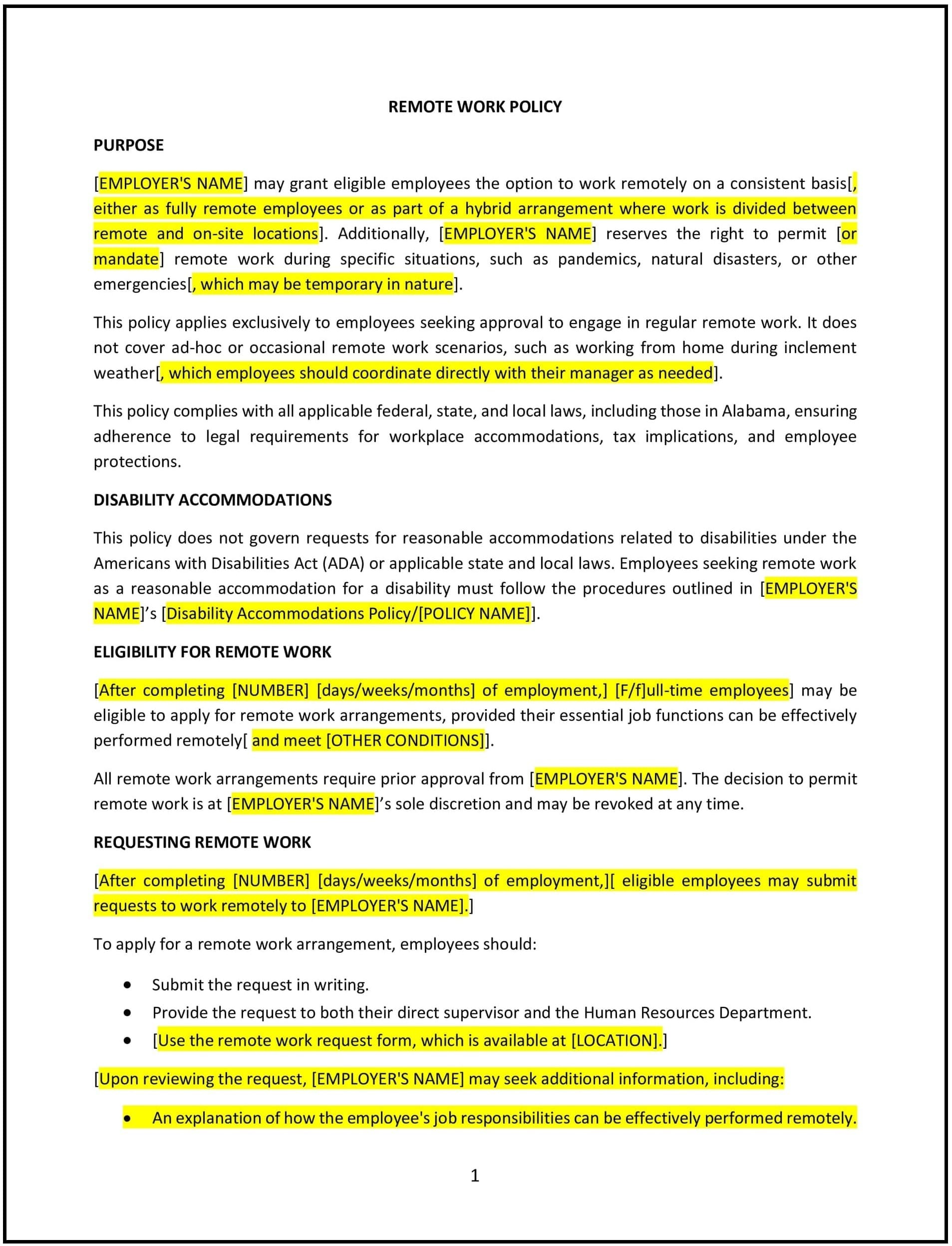
Remote work policy (Alabama): Free template
Covers expectations for remote work arrangements, including eligibility, communication, and compliance with Alabama workplace standards.
- Policies
- Alabama
Remote work policy (Alabama)
A remote work policy establishes guidelines for employees working from locations outside the traditional office. For SMBs in Alabama, this policy provides clarity on expectations, eligibility, and responsibilities while ensuring productivity and alignment with company goals.
This policy outlines procedures for requesting remote work arrangements, maintaining communication, and addressing equipment or security needs, supporting both employee flexibility and operational efficiency.
How to use this remote work policy (Alabama)
- Define remote work: Specify the types of remote work arrangements allowed, such as full-time, part-time, or occasional work-from-home days.
- Set eligibility criteria: Outline which roles or employees qualify for remote work based on job requirements, performance, or other criteria.
- Establish work expectations: Clarify working hours, availability, and communication standards to ensure productivity and alignment with team goals.
- Address equipment and resources: Provide guidelines for the use, maintenance, and support of company equipment or personal devices used for work.
- Include security protocols: Detail measures to safeguard company data, such as using secure connections, passwords, and approved software.
Benefits of using a remote work policy (Alabama)
A remote work policy promotes flexibility and productivity while protecting company interests. Here’s how it helps:
- Supports work-life balance: Allows employees to work in a more flexible environment, improving job satisfaction and retention.
- Ensures accountability: Establishes clear expectations for performance and communication, minimizing misunderstandings.
- Protects company assets: Provides guidelines for equipment use and data security to reduce risks of breaches or misuse.
- Enhances recruitment: Attracts top talent by offering remote work options in a competitive job market.
- Reduces overhead: Lowers costs associated with office space and utilities by supporting remote arrangements.
Tips for implementing a remote work policy (Alabama)
- Provide training: Offer training on remote work best practices, including time management, communication tools, and cybersecurity.
- Use collaboration tools: Implement software for video conferencing, project management, and team communication to support remote workflows.
- Monitor performance: Set measurable goals and regular check-ins to track progress and address challenges in real-time.
- Address ergonomics: Provide guidance or resources for setting up comfortable and productive home workspaces.
- Review arrangements periodically: Assess remote work arrangements to ensure they meet both employee needs and business objectives.
Frequently asked questions (FAQs)
Similar templates
Where deals go from offer to paid
