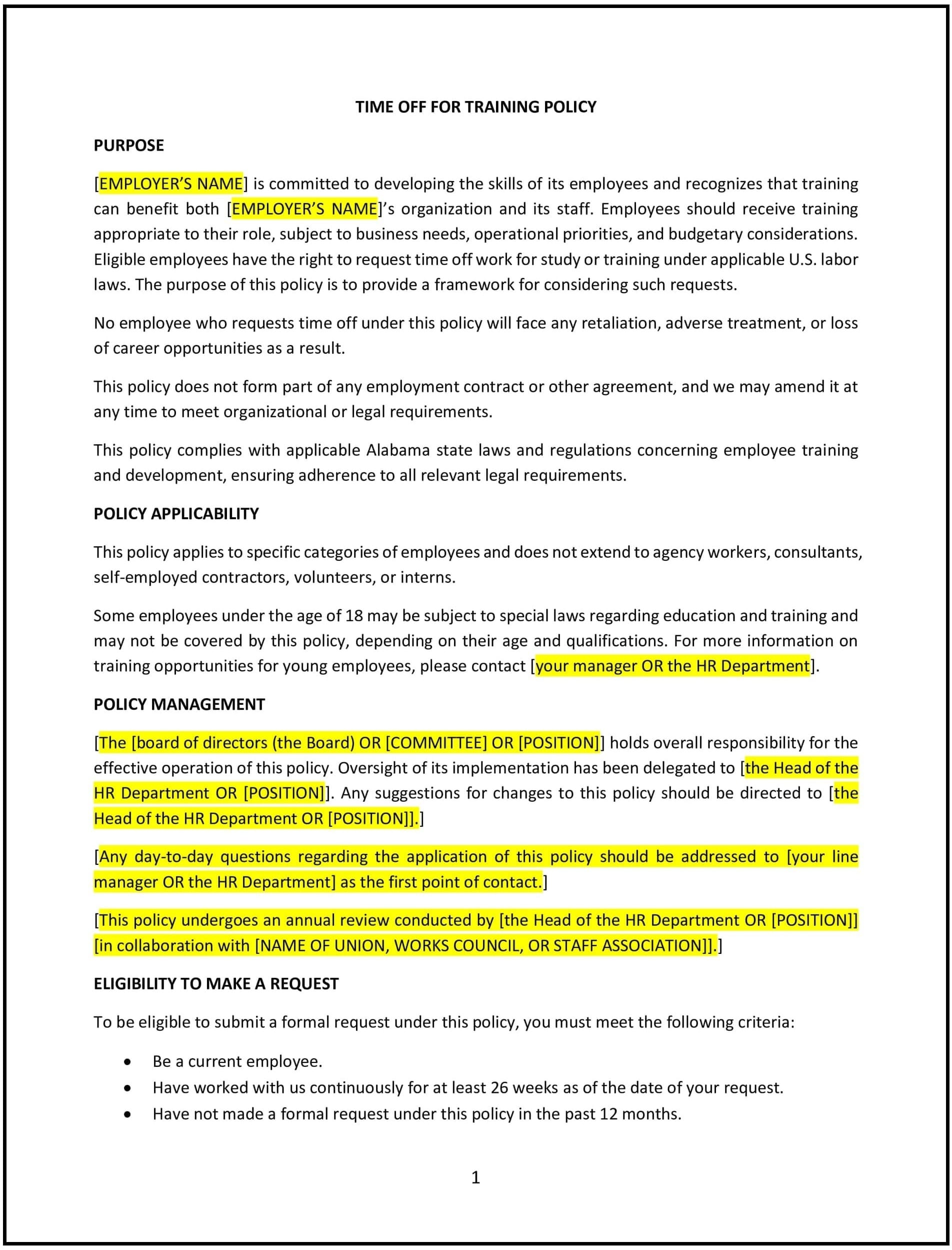
Time off for training policy (Alabama): Free template
Supports employee development by explaining how and when training-related leave can be requested in Alabama.
- Policies
- Alabama
Time off for training policy (Alabama)
A time off for training policy provides employees with a clear framework for requesting and attending professional development opportunities during work hours. For SMBs in Alabama, this policy fosters skill-building, aligns with company goals, and ensures a structured approach to managing employee training schedules.
This policy outlines eligibility, the approval process, and expectations for employees participating in training programs, helping businesses invest in their workforce while maintaining operational efficiency.
How to use this time off for training policy (Alabama)
- Define training opportunities: Specify what types of training qualify for time off, such as workshops, certifications, seminars, or continuing education programs relevant to job roles.
- Set eligibility criteria: Clarify which employees or roles are eligible for training-related time off, considering tenure, performance, and alignment with company objectives.
- Outline the approval process: Provide steps for employees to formally request time off for training, including submitting program details and expected outcomes to their manager or HR.
- Address payment considerations: State whether training time is paid, unpaid, or partially reimbursed, depending on the company’s policy and the nature of the training.
- Establish expectations: Emphasize employees’ responsibility to apply learned skills on the job and share insights with their team where appropriate.
Benefits of using a time off for training policy (Alabama)
A time off for training policy benefits both employees and the business by supporting professional growth and improving workplace capabilities. Here’s how it helps:
- Encourages development: Promotes employee skill-building and career advancement, enhancing job satisfaction.
- Aligns with company goals: Ensures training opportunities directly contribute to the company’s operational and strategic objectives.
- Increases retention: Demonstrates investment in employees’ professional growth, fostering loyalty and reducing turnover.
- Maintains consistency: Establishes clear guidelines to manage training requests without disrupting business operations.
- Enhances productivity: Equips employees with new skills and knowledge that benefit their roles and the company as a whole.
Tips for implementing a time off for training policy (Alabama)
- Communicate opportunities: Share information about eligible training programs during team meetings, onboarding, or through internal communications.
- Monitor participation: Track employee attendance in training programs to measure engagement and effectiveness.
- Review alignment: Evaluate whether proposed training aligns with both the employee’s role and the company’s goals before granting approval.
- Offer flexibility: Where feasible, accommodate employees by adjusting schedules or workloads to facilitate their participation.
- Collect feedback: After training, gather input from employees about the program’s value and its impact on their performance.
Frequently asked questions (FAQs)
Similar templates
Where deals go from offer to paid
