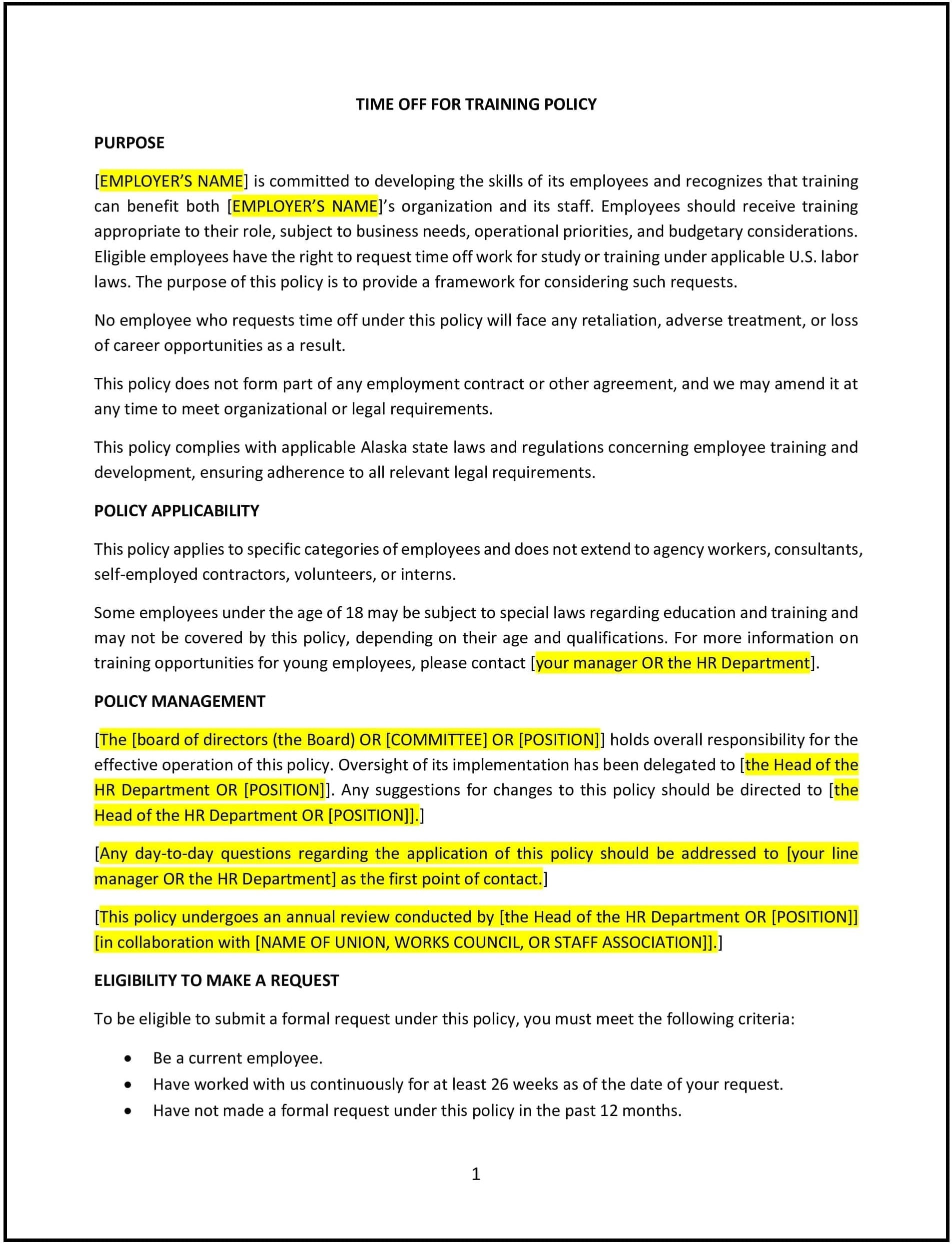
Time off for training policy (Alaska): Free template
Allows employees to take leave for job-related training, supporting development under Alaska workplace standards.
- Policies
- Alaska
Time off for training policy (Alaska)
In Alaska, a time off for training policy provides guidelines for granting employees leave to attend job-related training programs, workshops, or certifications. This policy ensures employees can enhance their skills and knowledge while maintaining clear expectations for eligibility, documentation, and scheduling.
By implementing this policy, businesses can support professional development and improve overall workforce competency.
How to use this time off for training policy (Alaska)
- Define eligible training: Specify the types of training programs covered under the policy, such as professional certifications, technical workshops, or industry-specific seminars.
- Establish request procedures: Provide a clear process for employees to request time off for training, including submitting formal requests with details about the program.
- Clarify leave status: Indicate whether time off for training is paid, unpaid, or requires the use of accrued paid time off.
- Include reimbursement policies: If applicable, outline how the company will reimburse employees for training expenses, such as registration fees or travel costs.
- Address scheduling: Require employees to coordinate training schedules with their managers to minimize disruptions to daily operations.
Benefits of using a time off for training policy (Alaska)
A time off for training policy offers several advantages for businesses in Alaska. Here’s how it helps:
- Enhances workforce skills: Encourages employees to develop new skills that benefit both the individual and the organization.
- Boosts employee retention: Demonstrates a commitment to employee growth, fostering loyalty and job satisfaction.
- Promotes operational efficiency: Ensures employees are well-prepared to meet job demands through relevant training programs.
- Encourages compliance: Helps businesses meet industry-specific training requirements or certifications.
- Supports succession planning: Prepares employees for future roles and responsibilities within the organization.
Tips for using a time off for training policy (Alaska)
- Tailor to industry needs: Include guidelines for training relevant to Alaska’s key industries, such as oil, gas, fishing, or tourism.
- Include virtual training: Address time off for remote or virtual training programs to accommodate modern learning formats.
- Monitor training outcomes: Require employees to share what they’ve learned or apply new skills to their roles after completing training.
- Balance operational needs: Coordinate training schedules to ensure minimal disruption to business activities.
- Update regularly: Revise the policy to reflect changes in training needs, business goals, or industry standards.
Frequently asked questions (FAQs)
Similar templates
Where deals go from offer to paid
