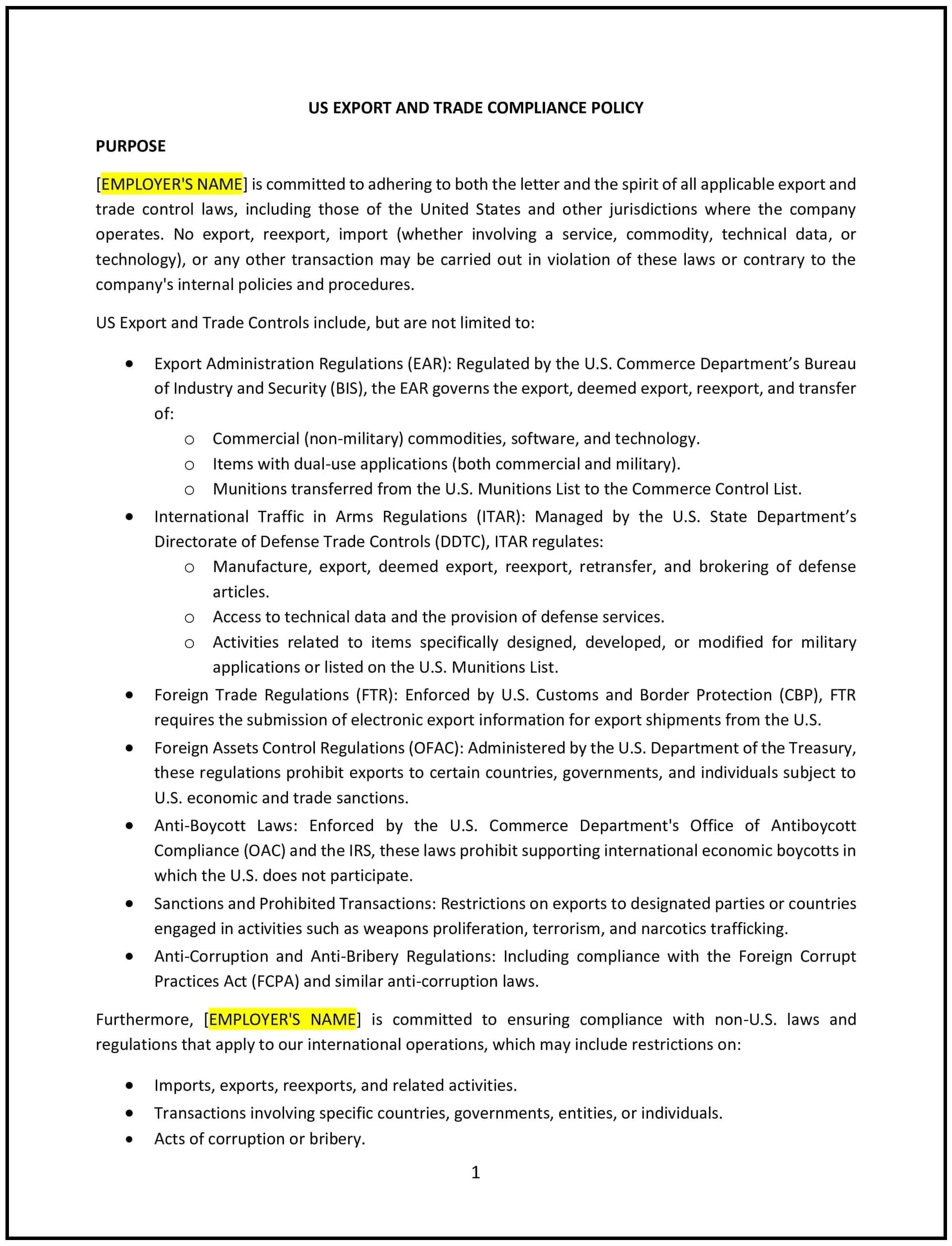
US export and trade compliance policy (Delaware): Free template
Covers export controls, sanctions, and record‑keeping requirements to keep Delaware business activities legally compliant.
- Policies
- Delaware
US export and trade compliance policy (Delaware)
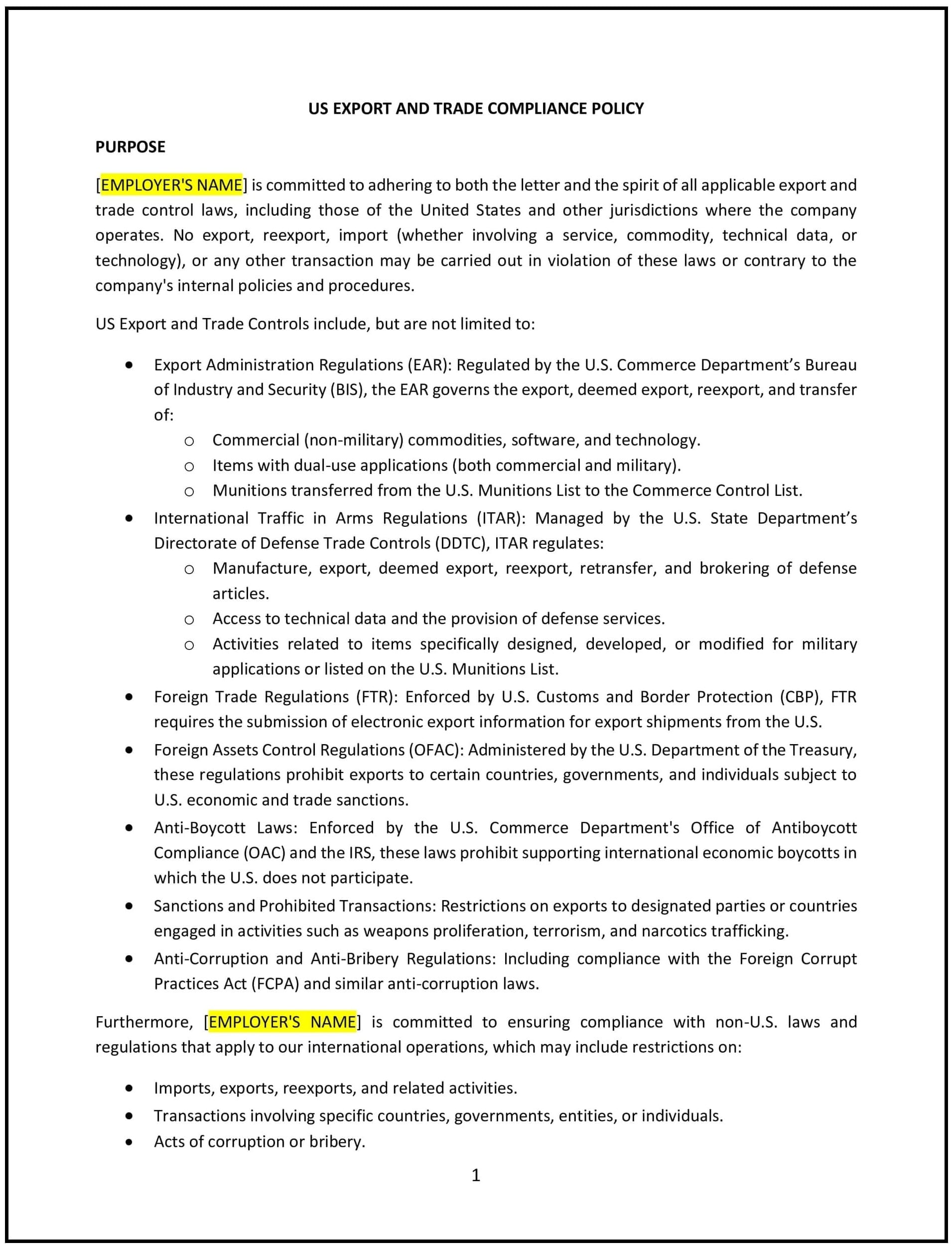
A US export and trade compliance policy helps Delaware businesses adhere to federal laws and regulations governing the export of goods, technology, and services. This policy outlines procedures for ensuring compliance with the Export Administration Regulations (EAR), International Traffic in Arms Regulations (ITAR), and other relevant laws, reducing the risk of penalties and safeguarding the company’s reputation.
By implementing this policy, businesses can maintain lawful trade practices, protect sensitive information, and minimize operational risks.
How to use this US export and trade compliance policy (Delaware)
- Define export compliance: Clearly outline the laws and regulations the company must follow, such as EAR, ITAR, and sanctions administered by the Office of Foreign Assets Control (OFAC).
- Classify goods and technology: Establish procedures for determining the export classification of products, technology, or services to identify applicable controls.
- Screen transactions: Require screening of customers, partners, and transactions against denied-party lists to ensure compliance with US export laws.
- Address licensing requirements: Detail the process for obtaining export licenses when required and maintaining accurate records of all applications and approvals.
- Train employees: Provide regular training to ensure employees understand their roles in maintaining export and trade compliance.
- Monitor compliance: Conduct regular audits of export activities to identify and address potential risks or violations.
Benefits of using this US export and trade compliance policy (Delaware)
This policy offers several benefits for Delaware businesses:
- Ensures compliance: Reduces the risk of fines, penalties, or sanctions by adhering to federal export and trade regulations.
- Protects sensitive information: Prevents unauthorized export of controlled technology or data, safeguarding intellectual property.
- Promotes operational integrity: Establishes clear guidelines for lawful trade practices, enhancing efficiency and accountability.
- Reduces reputational risks: Demonstrates the company’s commitment to ethical and lawful business operations.
- Improves global trade capabilities: Facilitates smooth international transactions by ensuring compliance with all relevant laws.
Tips for using this US export and trade compliance policy (Delaware)
- Communicate the policy clearly: Ensure all employees, especially those involved in international trade, understand the requirements and procedures for compliance.
- Use compliance tools: Leverage software solutions to screen transactions, classify goods, and track compliance activities.
- Provide regular training: Update employees on changes in export regulations and ensure they are familiar with compliance procedures.
- Maintain documentation: Keep detailed records of all export transactions, licenses, and compliance reviews to demonstrate adherence to regulations.
- Review regularly: Update the policy as needed to reflect changes in US export laws, international trade practices, or company operations.
Frequently asked questions (FAQs)
Similar templates
Where deals go from offer to paid
