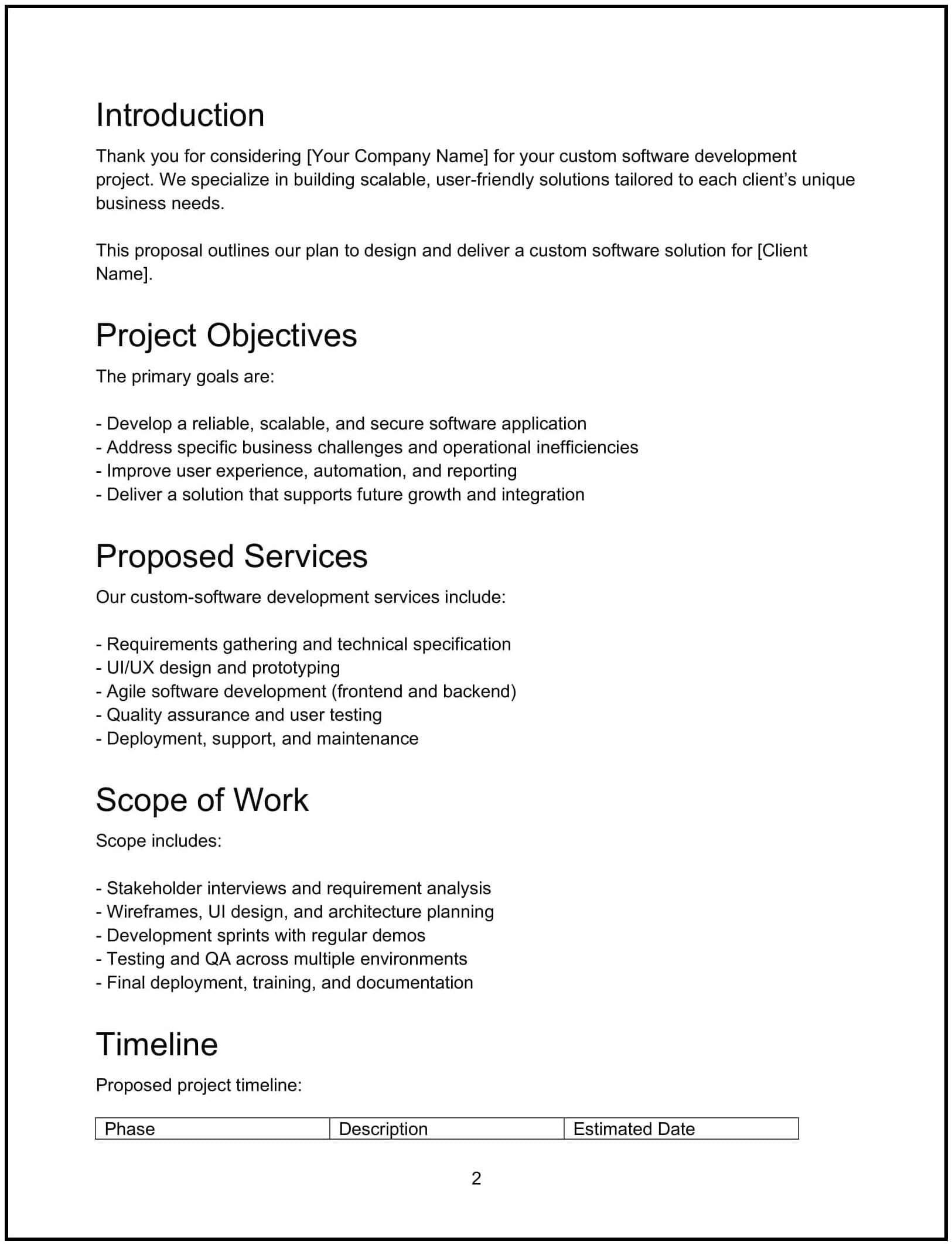
Custom software development proposal: Free template
Proposes a custom software development plan, detailing project requirements, technical architecture, development phases, and maintenance support to deliver tailored digital solutions.
- Proposal
Customize this free custom software development proposal with Cobrief
Open this free custom software development proposal in Cobrief and start editing it instantly using AI. You can adjust the tone, structure, and content based on your development approach, the client’s requirements, and project scope. You can also use AI to review your draft—spot gaps, tighten language, and improve clarity before sending.
Once you're done, send, download, or save the proposal in one click—no formatting or setup required.
This template is fully customizable and built for real-world use—ideal for pitching web applications, mobile apps, enterprise software, integrations, or internal business tools. Whether you're a freelance developer, agency, or software consultancy, this version gives you a structured head start and removes the guesswork.
What is a custom software development proposal?
A custom software development proposal outlines your plan, deliverables, timeline, and costs for building tailored software solutions. It’s usually sent after initial discovery or requirements-gathering to confirm project scope, align expectations, and clearly communicate the software-building process.
This proposal helps clients understand exactly what will be developed, how it will be built, the technologies involved, and the steps from initial prototype through final deployment and support.
A strong custom software development proposal helps you:
- Define project scope and technical requirements clearly
- Set realistic expectations around timelines and costs
- Demonstrate your expertise and structured process
- Establish trust and clarity from the start of the project
Use this template when clarity, professionalism, and thoroughness are essential.
Why use Cobrief to edit your proposal
Cobrief helps you quickly build and refine professional, AI-assisted proposals—all directly from your browser.
- Edit the proposal directly in your browser: No setup or formatting required—just click and start customizing.
- Rewrite sections with AI: Instantly improve clarity, simplify technical details, or enhance your proposal's readability.
- Run a one-click AI review: Quickly identify unclear, overly technical, or incomplete sections and receive suggestions.
- Apply AI suggestions instantly: Review and accept individual AI suggestions, or apply all improvements across the proposal in one click.
- Share or export instantly: Send your proposal through Cobrief or download a clean PDF or DOCX file in seconds.
With Cobrief, you get polished proposals faster and more confidently.
When to use this proposal
This custom software development proposal is perfect for scenarios like:
- Proposing a new web or mobile application build: Clarify scope, tech stack, and timeline.
- Offering system integration or software modernization services: Outline integration points and migration strategy.
- Responding to an RFP or detailed client brief: Show clear alignment with requirements, timelines, and outcomes.
- Pitching internal business tools or productivity software: Define user needs, features, and project milestones clearly.
Use this proposal to communicate exactly what your client can expect from their custom software project.
What to include in a custom software development proposal
Each section helps your client clearly understand the technical and practical aspects of the project:
- Executive summary: Summarize the client's challenge and how your software solution addresses it—emphasize tangible outcomes like efficiency, scalability, or user experience improvements.
- Scope of work: Define software deliverables, features, and functionalities clearly. Include key modules, user roles, integrations, and any known constraints.
- Technology stack: Clearly state the programming languages, frameworks, databases, and tools you'll use, ensuring alignment with client preferences or requirements.
- Project timeline: Break the project into clear phases (e.g., discovery, prototyping, development, testing, deployment) with key milestone dates.
- Pricing: Clearly explain your fee structure, whether fixed-price, hourly, or phased. Specify payment milestones and what's included at each stage.
- Terms and conditions: Include straightforward details around revisions, scope adjustments, intellectual property ownership, payment terms, and project cancellation.
- Next steps: Offer a clear call to action—such as “Reply to confirm” or “Click to schedule a project kickoff.”
How to write an effective custom software development proposal
Your proposal must be clear, technically credible, and strategically persuasive. Here’s how to make it effective:
- Keep language accessible: Write clearly, even when describing complex technical details.
- Clarify all deliverables: Specify exactly what software features, integrations, or modules you'll build.
- Be realistic about timelines: Avoid overly optimistic timelines—leave room for testing and revisions.
- Explain your methodology clearly: Show clients how you manage development stages, quality control, and communication.
- Make it easy to scan: Use headings, bullet points, short paragraphs, and diagrams if necessary.
- Always close with a clear next step: Guide the client confidently toward the next action.
Frequently asked questions (FAQs)
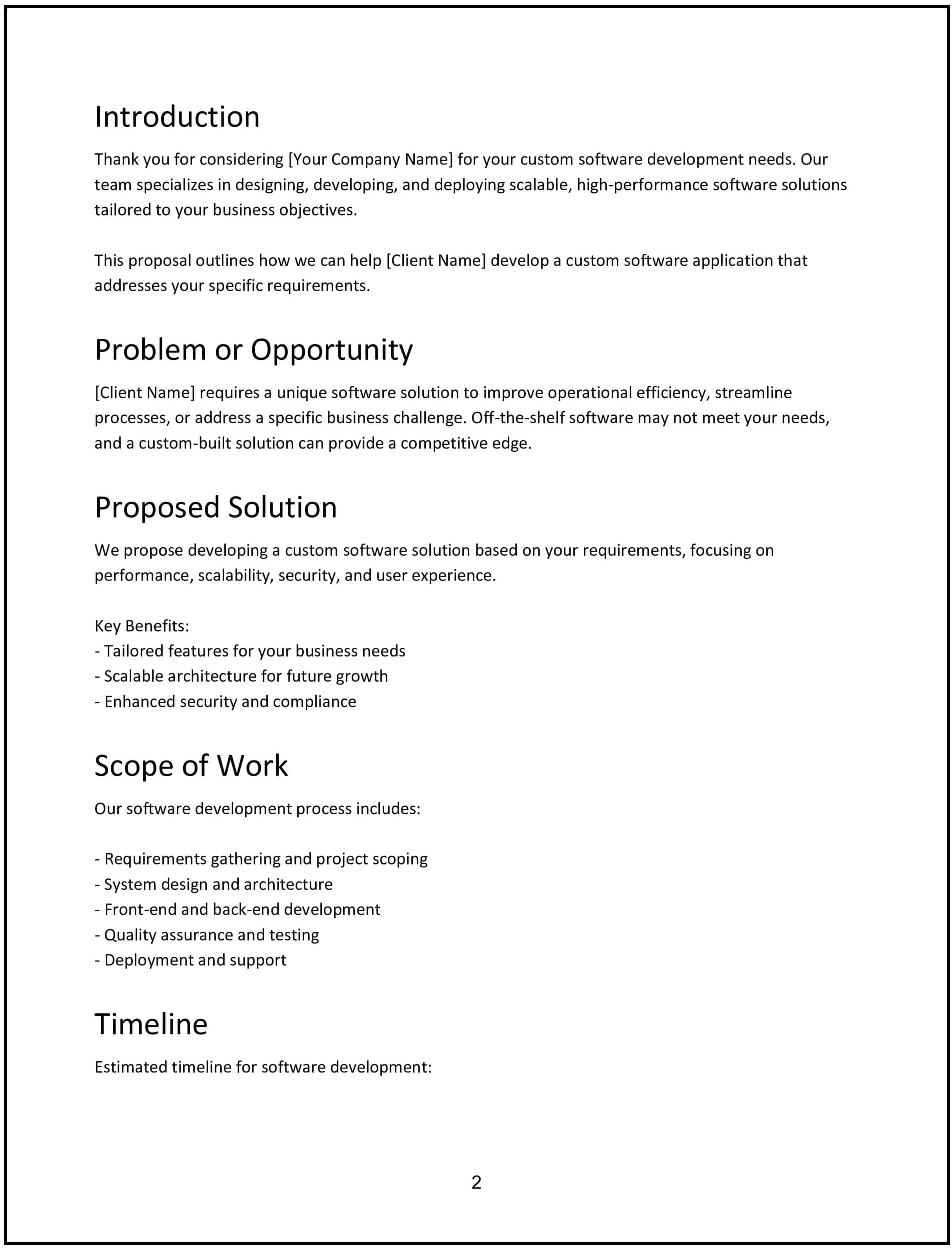
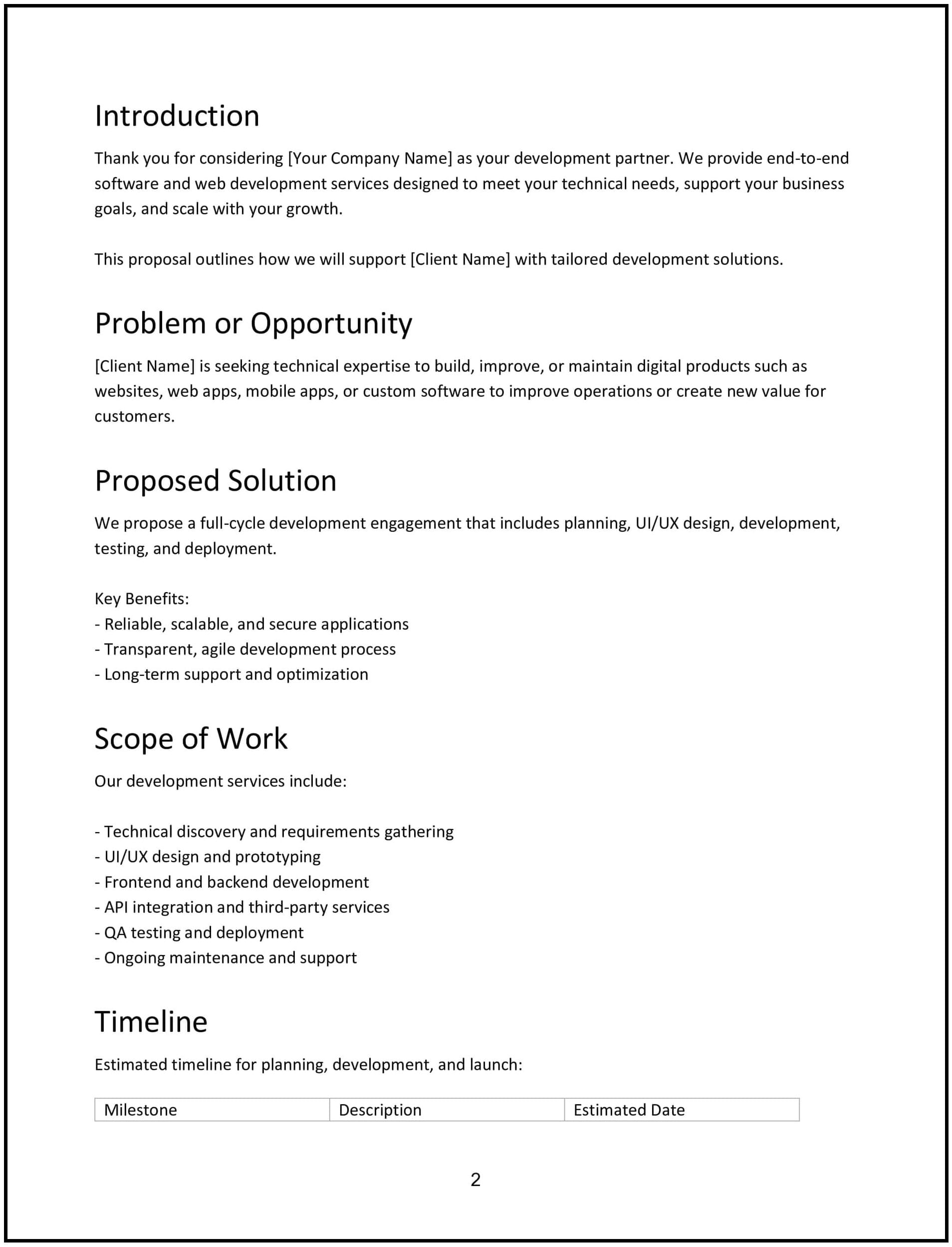
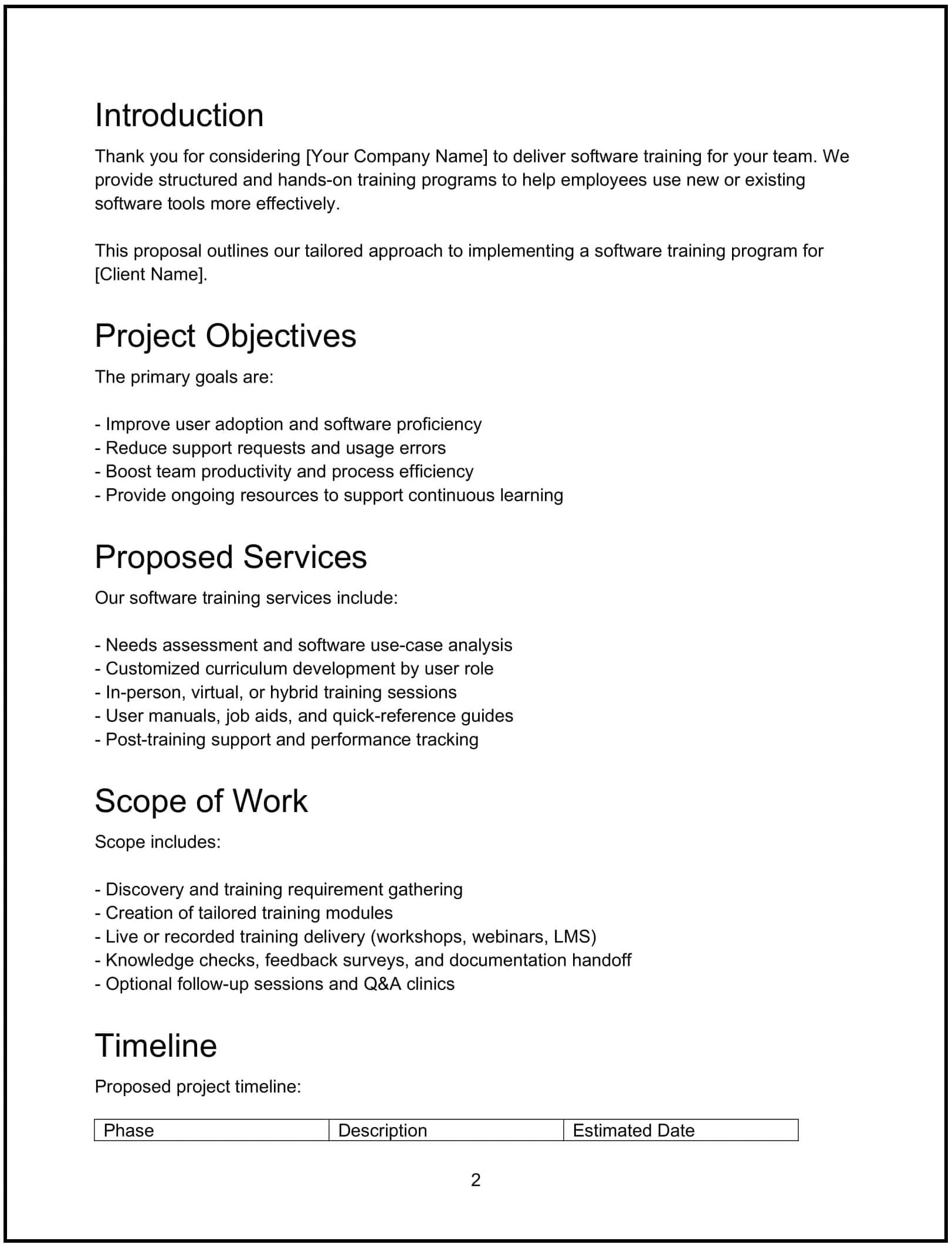
Similar templates
Where deals go from offer to paid
