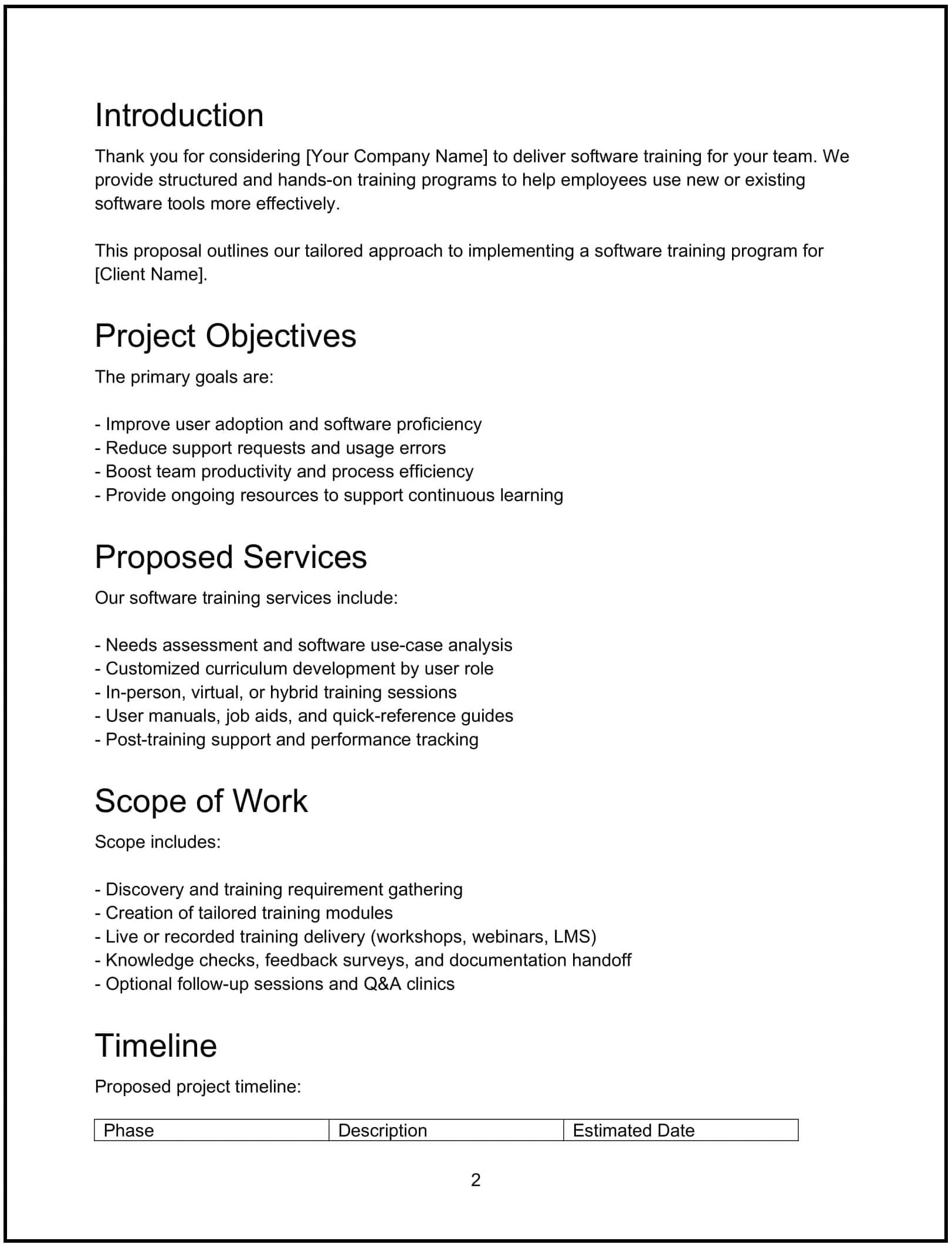
Software training proposal: Free template
Proposes a software training program, outlining training modules, delivery methods, user onboarding, and support resources to ensure effective adoption and skill development.
- Proposal
Customize this free software training proposal with Cobrief
Open this free software training proposal in Cobrief and start editing it instantly using AI. You can adjust the tone, structure, and content based on the client’s platform, user base, rollout timeline, or integration complexity. You can also use AI to review your draft — spot gaps, tighten language, and improve clarity before sending.
Once you're done, send, download, or save the proposal in one click — no formatting or setup required.
This template is fully customizable and built for real-world use — ideal for pitching software onboarding or enablement sessions to IT teams, department heads, ops leads, or transformation managers. Whether you're training on a third-party tool or internal platform, this version gives you a structured head start and removes the guesswork.
What is a software training proposal?
A software training proposal outlines your plan to help teams learn and adopt a specific platform or tool. It typically includes audience analysis, training goals, delivery method, curriculum design, hands-on support, and post-training resources.
This type of proposal is commonly used:
- When a new system is being rolled out across a team or company
- To support digital transformation, IT upgrades, or SaaS migrations
- When adoption is lagging due to lack of user confidence or clarity
- As part of onboarding, role-specific enablement, or admin certification programs
It helps clients accelerate adoption, reduce support tickets, and maximize the ROI of the software investment.
A strong proposal helps you:
- Tailor content to user roles, workflows, and pain points
- Deliver training in formats that match availability and tech comfort
- Reinforce learning with real examples and practice environments
- Offer post-session support to reduce drop-off and frustration
Why use Cobrief to edit your proposal
Cobrief helps you move fast with structured, clear proposals and built-in AI tools that streamline edits and formatting.
- Edit the proposal directly in your browser: No layout headaches — just focus on scope and messaging.
- Rewrite sections with AI: Adjust tone instantly for IT teams, department leads, or training managers.
- Run a one-click AI review: Let AI catch scope creep, unclear outcomes, or missing follow-ups.
- Apply AI suggestions instantly: Accept edits line by line or across the full document.
- Share or export instantly: Send via Cobrief or download a polished PDF or DOCX version.
You’ll go from first draft to signed scope faster — with more confidence and less admin.
When to use this proposal
Use this software training proposal when:
- A client is deploying new software across teams or departments
- Users are struggling to adopt or understand a new platform
- An internal tool or system needs structured rollout support
- You're offering admin-level enablement, certification, or custom configurations
- Training is part of a broader IT transformation or operational change
It’s especially useful when leadership has bought the tool — but the team hasn’t bought in yet.
What to include in a software training proposal
Use this template to walk the client through your plan — from discovery to follow-up — in structured, plain-smart language.
- Project overview: Frame the problem — low adoption, new system, user frustration — and how your training resolves it.
- Training goals: Define what users will be able to do after the sessions — both functionally and confidently.
- Audience and segmentation: Clarify which teams or roles are being trained (e.g. general users, admins, power users), and whether sessions will vary by group.
- Curriculum structure: Break down content by topic or session — setup, navigation, task flows, reporting, integrations, etc.
- Delivery format: Detail whether training is live, virtual, recorded, hybrid — and the cadence or duration.
- Materials and tools: Include guides, recordings, walkthrough decks, sandbox environments, or cheat sheets.
- Reinforcement and follow-up: Explain how users will get support post-training — office hours, helpdesk, or refresher content.
- Optional add-ons: Offer role-based certification, admin coaching, or embedded support if in scope.
- Timeline and phases: Break into discovery, content prep, delivery, and support — with time estimates.
- Pricing: Offer fixed-fee, per-session, or per-user pricing. Break out add-ons like certification or custom content if applicable.
- Next steps: End with a clear CTA — such as confirming user groups, scheduling a kickoff, or sharing platform access.
How to write an effective software training proposal
This proposal should feel practical, confidence-building, and aligned to business outcomes — especially for teams facing new tools.
- Match training to workflows: Don’t teach generic features — show how they solve the team’s actual work.
- Make it low-friction: If the team is busy, break content into short, high-impact blocks or recordings.
- Balance functionality with confidence: Teach “how it works” and “how to use it without breaking anything.”
- Anticipate friction points: Highlight the 2–3 things that usually confuse users and how you’ll solve for them.
- Include optional follow-ups: Clients often need lightweight post-training support but forget to ask for it up front.
Frequently asked questions (FAQs)
Similar templates
Where deals go from offer to paid
