Employee misconduct on social media: Free checklist
Start a new document with this content. Open the editor to build from scratch — paste in what you need and keep writing.
Employee misconduct on social media checklist
In today's digital age, social media plays a significant role in workplace dynamics. Employees often express their thoughts and experiences online, which can sometimes lead to misconduct. This checklist serves as a practical tool for employers to navigate the complexities of employee behavior on social media. It outlines essential considerations and best practices to help assess incidents of misconduct effectively, ensuring compliance with labor laws while maintaining a fair and respectful workplace.
By using this checklist, employers can address potential issues proactively, protect employee rights, and foster a positive organizational culture.
How to use this employee misconduct on social media checklist
This employee misconduct on social media checklist serves as a practical tool for addressing and managing incidents related to employee behavior online. Here’s how to use it effectively:
- Review each section: Start by carefully examining all the sections of the checklist to understand the key factors involved in assessing social media misconduct.
- Follow the steps systematically: Work through each item in the checklist sequentially, ensuring that you address all relevant aspects before making any decisions or taking action.
- Document your process: Keep records of your findings and the steps you took while using the checklist. This documentation will be valuable for reference and may be necessary for legal compliance.
- Use it during investigations: Apply the checklist as a guide during any investigations into social media misconduct, helping you to stay organized and thorough in your approach.
- Implement for policy development: Utilize the insights gained from the checklist to inform the development or revision of your social media policies, ensuring they align with best practices and legal standards.
- Regularly revisit and update: Make it a habit to regularly review and update the checklist to reflect changes in laws, company policies, or social media trends, keeping your approach relevant and effective.
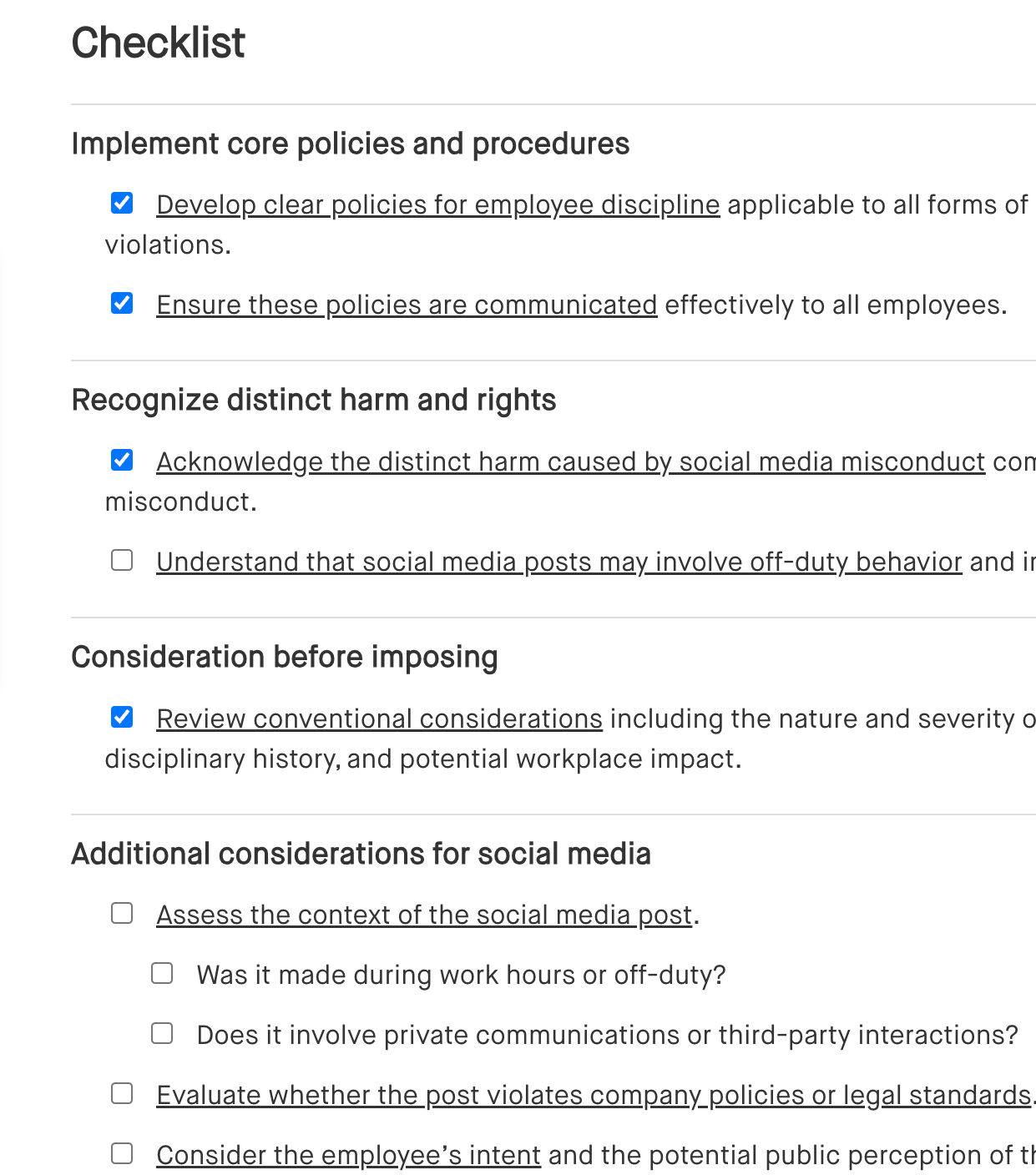
Checklist
Implement core policies and procedures
[ ] Develop clear policies for employee discipline applicable to all forms of misconduct, including social media violations.
[ ] Ensure these policies are communicated effectively to all employees.
Recognize distinct harm and rights
[ ] Acknowledge the distinct harm caused by social media misconduct compared to traditional workplace misconduct.
[ ] Understand that social media posts may involve off-duty behavior and implicate different employee rights.
Consideration before imposing
[ ] Review conventional considerations including the nature and severity of the violation, the employee’s prior disciplinary history, and potential workplace impact.
Additional considerations for social media
[ ] Assess the context of the social media post.
[ ] Was it made during work hours or off-duty?
[ ] Does it involve private communications or third-party interactions?
[ ] Evaluate whether the post violates company policies or legal standards.
[ ] Consider the employee’s intent and the potential public perception of their actions.
Documentation and fair process
[ ] Document all findings and considerations leading to disciplinary action.
[ ] Ensure a fair, consistent, and transparent disciplinary process.
Identify why a social media post is objectionable
[ ] Assess whether the post is merely offensive or causes economic harm to the employer.
[ ] Review whether comments violate company policies including social media and discrimination policies.
Survey any similar situations
[ ] Review past incidents of social media misconduct.
[ ] Document how each situation was addressed by the employer.
Evaluate whether the National Labor Relations Act applies to the conduct
[ ] Understand protections under the NLRA that may apply to employee social media activity.
[ ] Social media postings may be protected concerted activity even if disloyal or profane.
[ ] Disciplining such postings could risk an unfair labor practice (ULP) and violate Section 7 rights.
[ ] Begin evaluating the likelihood that NLRA protections apply.
[ ] Whether the employer is covered by the NLRA.
[ ] Whether the employee is covered by the NLRA.
Is the employer covered by the NLRA
[ ] Assess whether the employer is exempt from NLRA coverage.
[ ] Review NLRA terms for coverage.
[ ] Analyze US Supreme Court precedent on NLRA coverage.
[ ] Check NLRB regulations regarding exemptions.
Consider NLRB jurisdiction
[ ] Identify whether the NLRB will exercise jurisdiction over the employer.
[ ] Declines jurisdiction: Assess whether the NLRB chooses not to assert jurisdiction.
[ ] Exercising jurisdiction: Evaluate if NLRB jurisdiction applies under specific thresholds.
[ ] Discretionary standards: Consider NLRB standards based on interstate commerce thresholds.
Is the individual an employee covered by the NLRA?
[ ] Determine if the employee is protected under the NLRA.
[ ] Confirm whether the individual is a protected employee.
[ ] Identify if the individual is excluded (e.g., supervisor, manager, independent contractor).
Evaluate the nature of the post
[ ] Assess whether the post qualifies as protected concerted activity under the NLRA.
[ ] Does it concern employment terms and conditions?
[ ] Does it seek to initiate or prepare for group action?
[ ] Does it bring group employment complaints to management's attention?
[ ] Does it enlist support from fellow employees?
[ ] Does it stem from or logically grow out of prior concerted activity?
[ ] Does it discuss self-organization or mutual concerns related to employment?
Distinguish personal complaints
[ ] Ensure the post is not merely a personal grievance, even if others may benefit or have an interest in the subject.
Did the employee forfeit NLRA protection through the posting
[ ] Review NLRB factors that determine forfeiture of protection.
[ ] Timing and location of the conduct.
[ ] Audience of the conduct.
[ ] Witnesses to the conduct.
[ ] Degree of harm to the employer.
Determine applicable tests
[ ] Assess which NLRB test applies and whether the post would be deemed unprotected.
[ ] Undermining supervisor authority.
[ ] Disparaging the employer’s products or services.
[ ] Defaming the employer or its agents.
[ ] Rendering the employee unfit for work.
Understand protection limits
[ ] Acknowledge the limits of NLRA protection. A concerted post is unlikely to be unprotected unless it involves unlawful acts or significant employer harm.
Does the employer have a written social media policy
[ ] Determine if a written social media policy exists and assess the following.
[ ] If the policy is well-known by employees.
[ ] If the employee has acknowledged receipt of the policy.
[ ] If the policy is consistently enforced.
Evaluate policy clarity
[ ] Analyze the policy for overbroad or vague terms.
[ ] Defamation.
[ ] Disparagement.
[ ] Disclosure of confidential information.
[ ] Inappropriate discussions.
[ ] Assess misconduct and discipline.
[ ] Evaluate whether misconduct violates a valid social media policy and what discipline is permitted or required.
[ ] Consider whether lawful grounds exist to discipline, even if the policy is arguably overbroad.
Review state-specific lawful off-duty conduct laws
[ ] Assess whether social media activity is protected by off-duty conduct laws.
[ ] Ensure disciplinary actions do not violate these laws.
Consider how the employer accessed the social media post
[ ] Be aware of state restrictions on accessing employee social media.
[ ] Evaluate whether access was lawful to avoid potential legal violations.
Consider anti-discrimination, harassment and retaliation laws
[ ] Be aware of federal protections against workplace discrimination and retaliation.
[ ] Title VII of the Civil Rights Act of 1964 (Title VII).
[ ] Title I and Title V of the Americans with Disabilities Act (ADA).
[ ] Age Discrimination in Employment Act (ADEA).
[ ] Genetic Information Nondiscrimination Act (GINA).
[ ] Uniformed Services Employment and Reemployment Rights Act (USERRA).
[ ] Section 1981 of the Civil Rights Act of 1866 (42 U.S.C. § 1981).
[ ] Equal Pay Act (EPA).
[ ] Consider whether the social media post relates to protected activities.
[ ] Complaints of unlawful discrimination, harassment, or retaliation.
[ ] Whistleblowing under SOX or Dodd-Frank.
[ ] Whistleblowing under OSH Act protections.
[ ] Wage rights under the FLSA.
Consider options for disciplinary measures
[ ] Assess appropriate disciplinary action.
[ ] Extent of harm caused by the post.
[ ] The employer’s responsibility to maintain a safe and respectful workplace.
[ ] Existing social media and discipline policies.
[ ] The employee’s posting rights.
[ ] Risk of waiving rights by not disciplining.
[ ] How the employer discovered the post.
Consider options for getting the employee to remove the social media post
[ ] Recognize NLRB protection risks when requesting post removal.
[ ] Attempting removal may be seen as interference or retaliation under NLRA.
[ ] Acknowledge risks under other legal protections (e.g., privacy, whistleblower laws).
[ ] Recognize risks if access to post was improper.
[ ] Weigh costs and benefits of post removal actions.
[ ] Requesting removal.
[ ] Issuing a cease-and-desist letter.
[ ] Pursuing injunctive or legal claims.
Consider litigation risks
[ ] Evaluate litigation risks of disciplinary action.
[ ] Terminating or disciplining an employee over a post.
[ ] Not acting against discriminatory or harassing posts.
[ ] Failing to act against trade secret disclosure.
Benefits of using an employee misconduct on social media checklist
An employee misconduct on social media checklist helps you navigate the complexities of online behavior while maintaining a fair workplace environment. Here’s how it helps:
- Ensure consistent handling: By providing a structured framework for assessing misconduct, you create uniformity in how cases are addressed, reducing the risk of discrimination and bias in disciplinary actions.
- Enhance legal compliance: The checklist guides you in adhering to labor laws, such as the NLRA, protecting both your organization and employees from potential legal issues related to retaliation or wrongful termination.
- Offer clear guidelines: It outlines specific steps for evaluating social media posts, helping you make informed decisions about appropriate responses and disciplinary measures tailored to each situation.
- Facilitate open communication: By clarifying employee rights and employer responsibilities, the checklist fosters a culture of transparency, encouraging employees to express concerns without fear of unjust repercussions.
- Proactively manage risks: Using the checklist enables you to identify potential social media issues early, allowing you to take preventive measures that protect your company’s reputation and maintain a positive workplace atmosphere.
Frequently asked questions (FAQs)
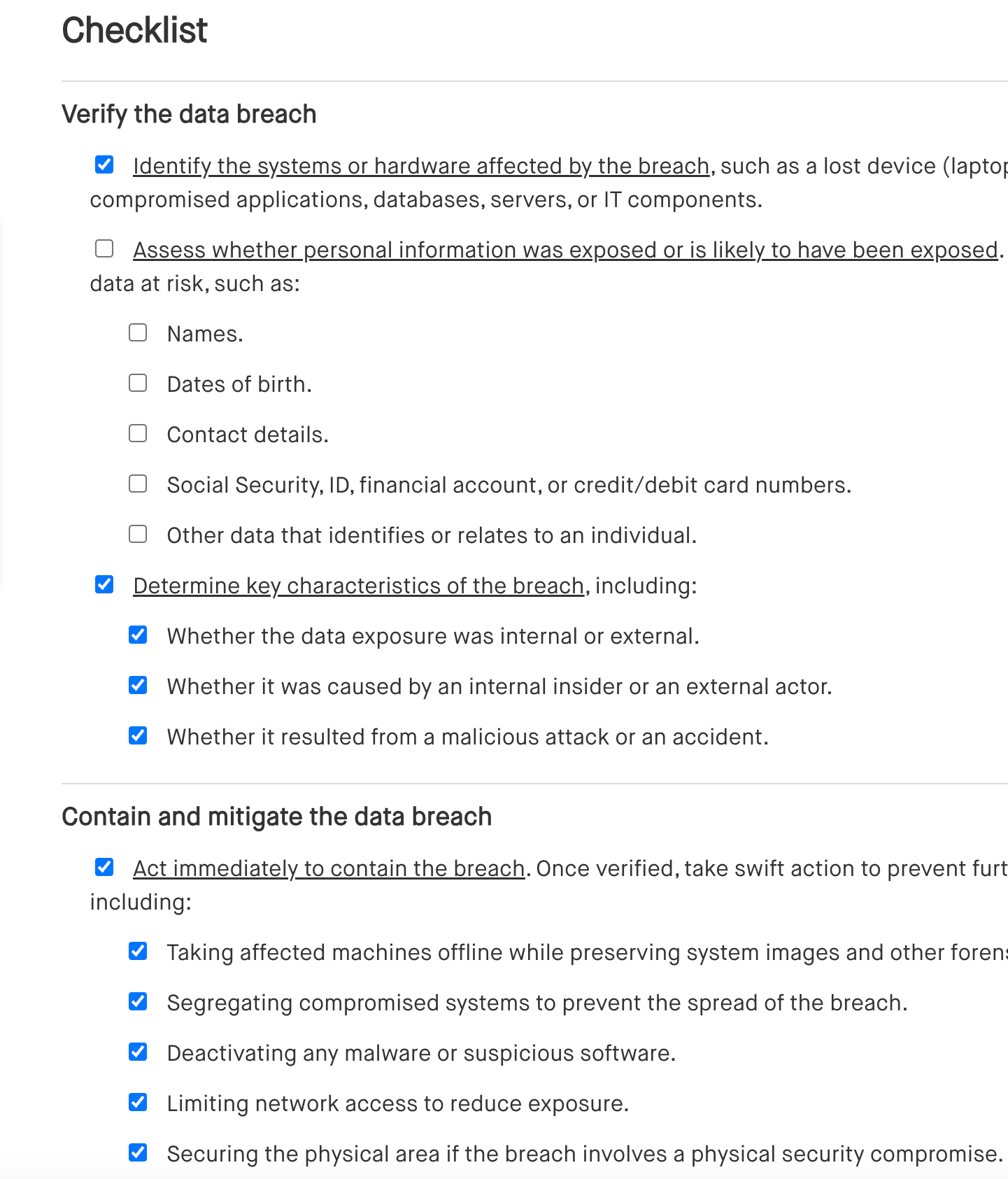
Details the critical steps to take in response to a data breach, including notification, investigation, containment, and implementing corrective actions.
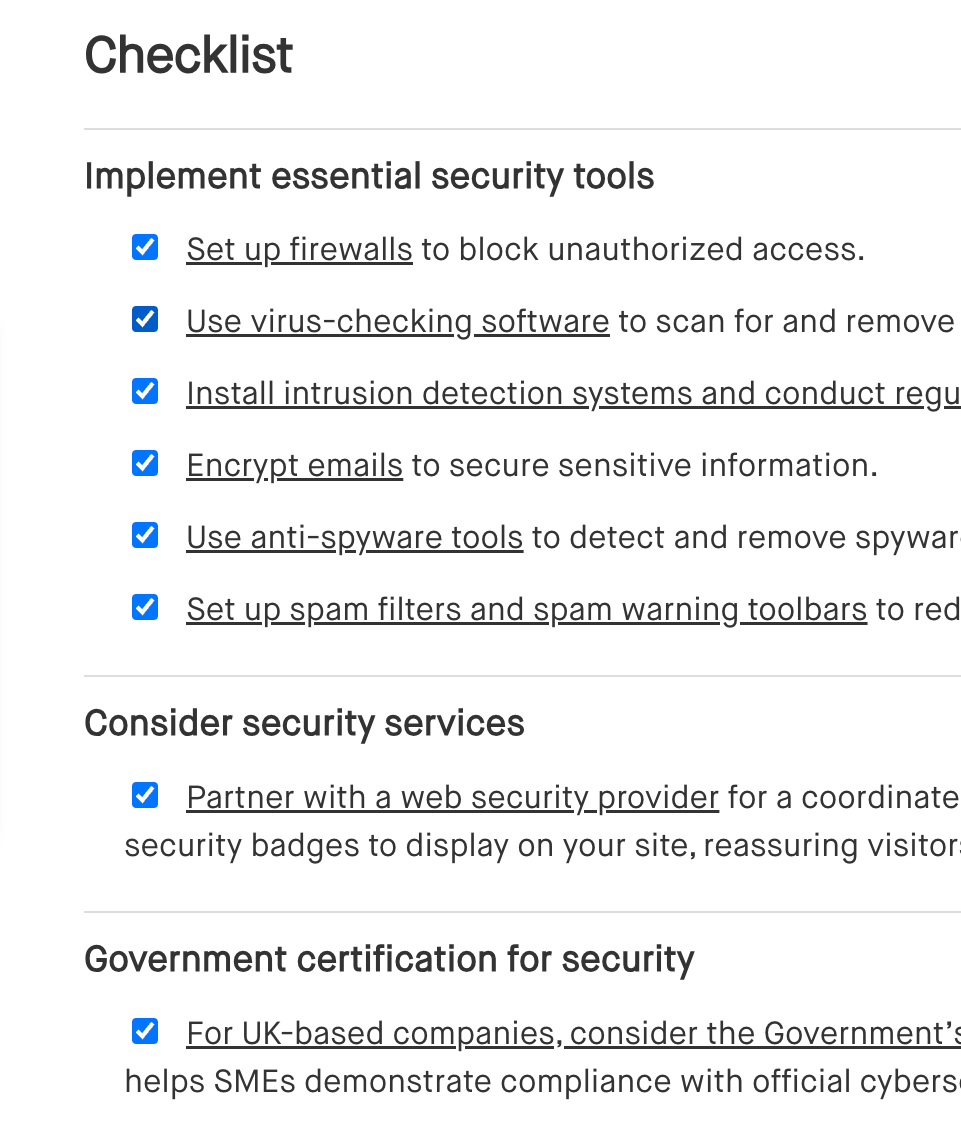
Outlines essential measures to safeguard your website from attacks, focusing on security protocols, regular updates, and proactive threat monitoring.
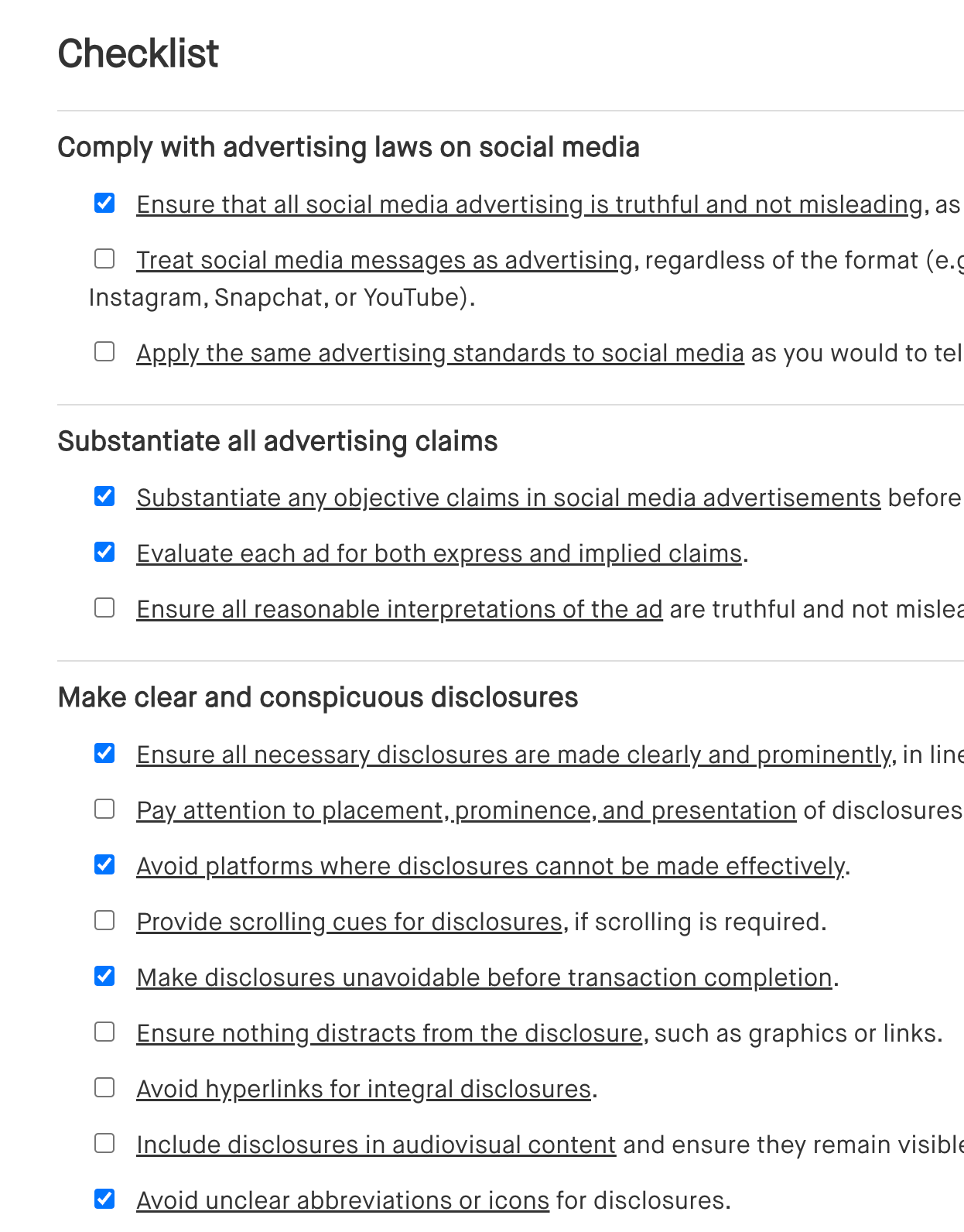
Outlines the essential steps for planning and executing advertising and promotions on social media, promoting compliance, effective targeting, and tracking of results.