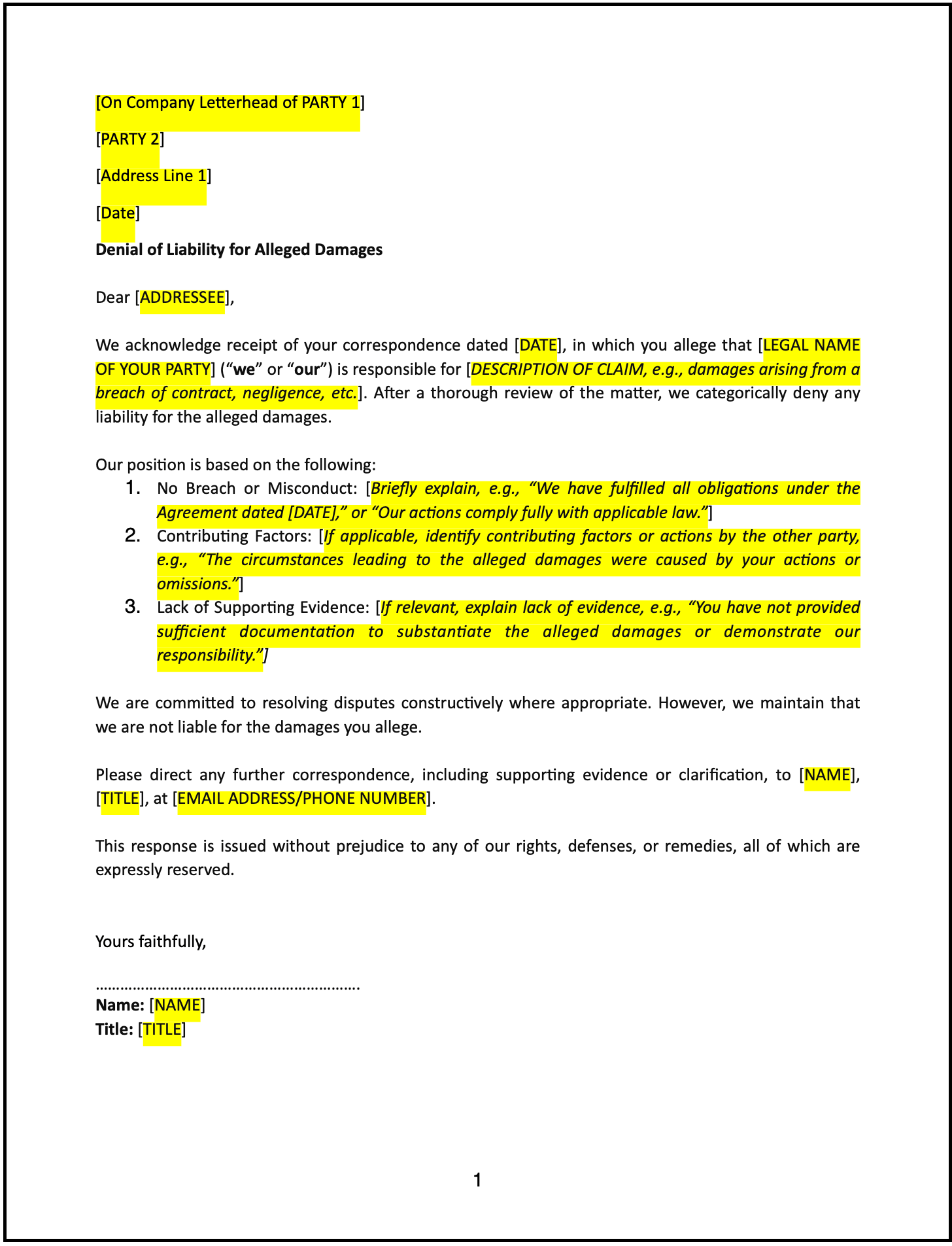
Denial of liability for alleged damages letter: Free template
Denies liability for alleged damages, providing reasons for the denial and outlining any relevant clauses or facts that absolve the sender from responsibility.
- Letters
Denial of liability for alleged damages letter
A denial of liability for alleged damages letter is a formal way to refute claims and allegations while maintaining professionalism and asserting your position. This letter provides a structured approach to communicate your denial, explain your reasoning, and clarify your stance.
How to use this denial of liability for alleged damages letter
- Open with acknowledgment: Begin by referencing the claim or allegation and confirming receipt of the correspondence or notice.
- State your position: Clearly deny liability for the alleged damages, ensuring your stance is unambiguous.
- Provide reasoning: Outline the basis for your denial, such as lack of evidence, factual inaccuracies, or contractual terms.
- Reference applicable laws or agreements: Cite any relevant statutes, contracts, or policies that support your position.
- Maintain a professional tone: Ensure the letter is respectful, clear, and focused on factual arguments.
- Offer further engagement: Indicate your willingness to discuss the matter further or consider alternative resolutions, if appropriate.
- Provide contact information: Include details for further communication or to address any related queries.
Benefits of using a denial of liability for alleged damages letter
This letter template ensures a structured and professional way to deny liability while fostering transparency and preserving relationships. Here’s how it helps:
- Protects your interests: Clearly stating your position demonstrates your commitment to defending your rights.
- Reduces misunderstandings: Providing reasoning ensures the claimant understands your perspective.
- Reflects professionalism: A well-crafted letter reinforces your credibility and approach to dispute resolution.
- Supports documentation: Creating a formal record of your position is useful for future reference or legal proceedings.
- Encourages constructive dialogue: Inviting further discussion fosters opportunities for resolution without escalation.
Tips for writing an effective denial of liability for alleged damages letter
- Be specific: Clearly reference the claim and outline the reasons for your denial.
- Use professional language: Maintain a respectful and factual tone to keep communication constructive.
- Support with evidence: Where possible, include documentation or references that substantiate your position.
- Emphasize clarity: Avoid ambiguous statements to ensure your stance is fully understood.
- Keep it concise: Focus on the key points without overwhelming the recipient with unnecessary details.
Frequently asked questions (FAQs)
Similar templates
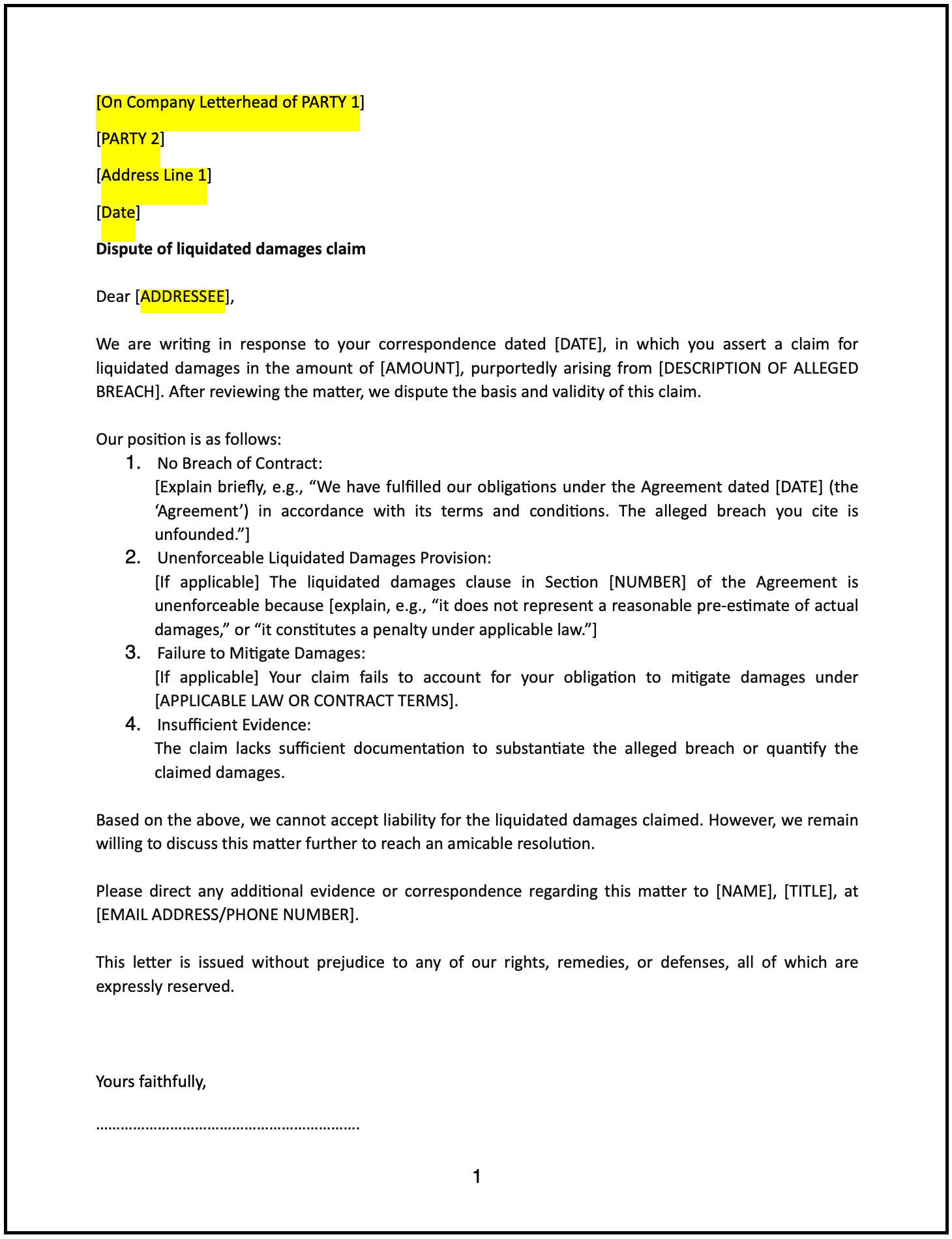
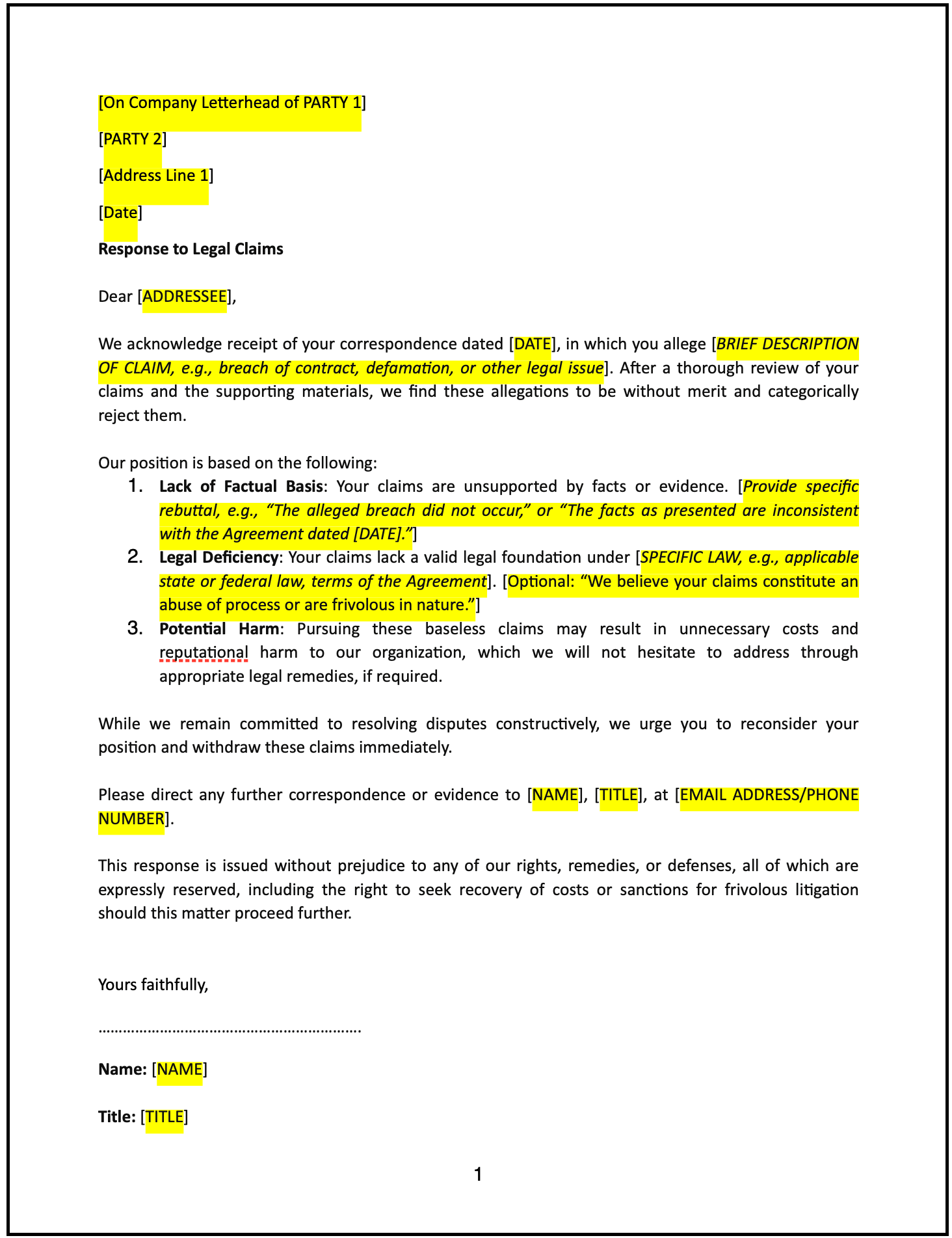
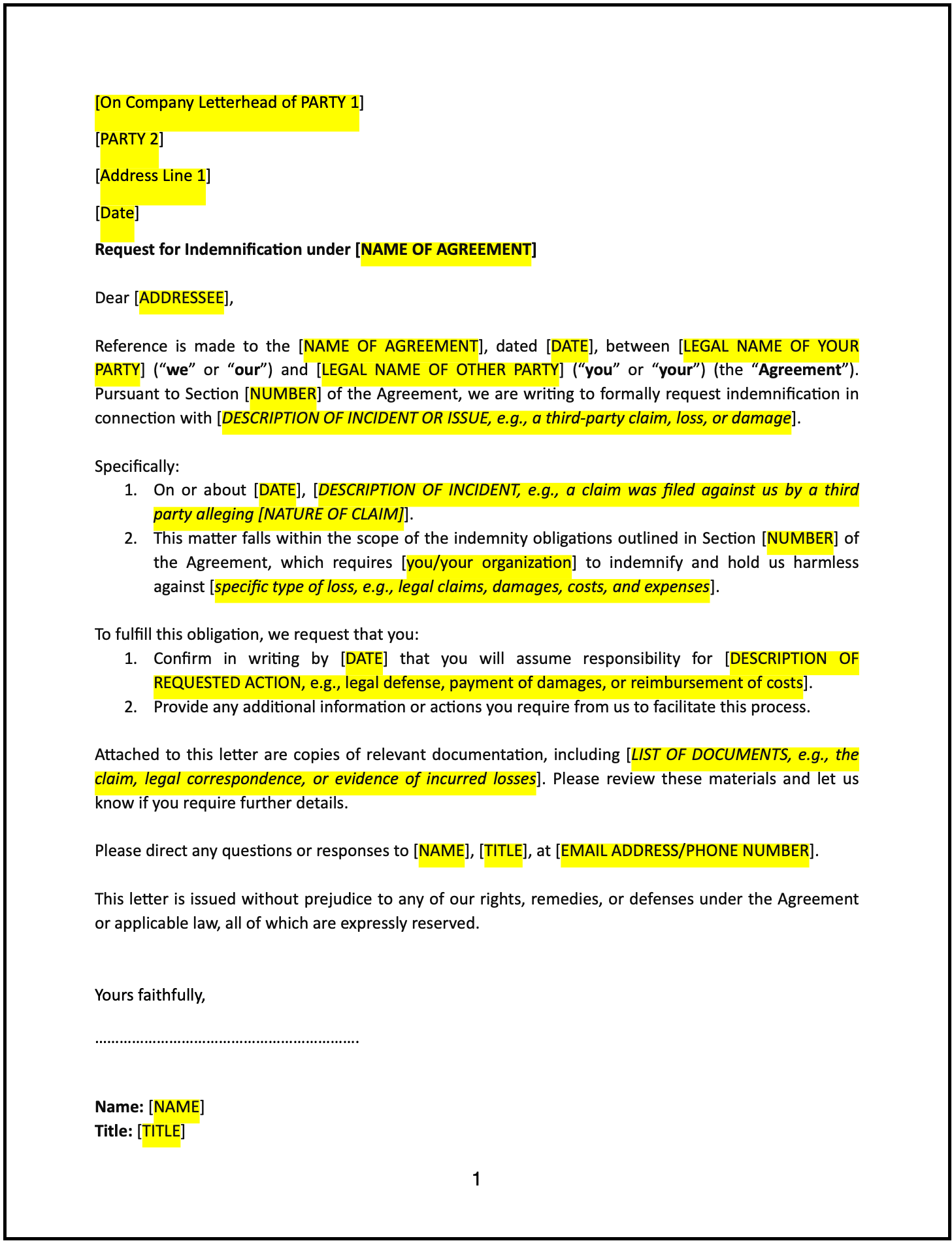
Where deals go from offer to paid
