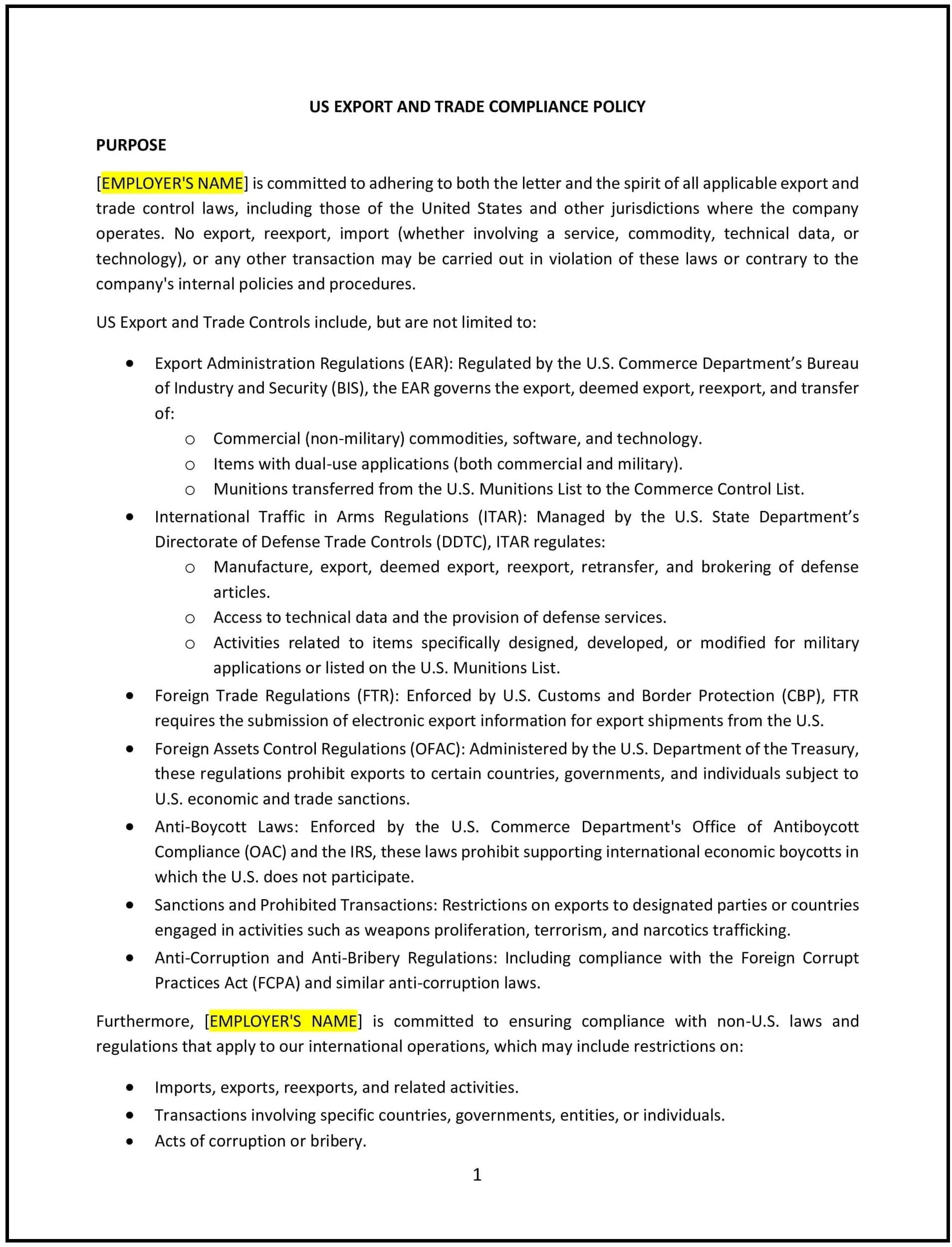
US export and trade compliance policy (North Dakota): Free template
Ensures that all business activities involving exports adhere to U.S. trade laws and regulatory requirements.
- Policies
- North Dakota
US export and trade compliance policy (North Dakota)
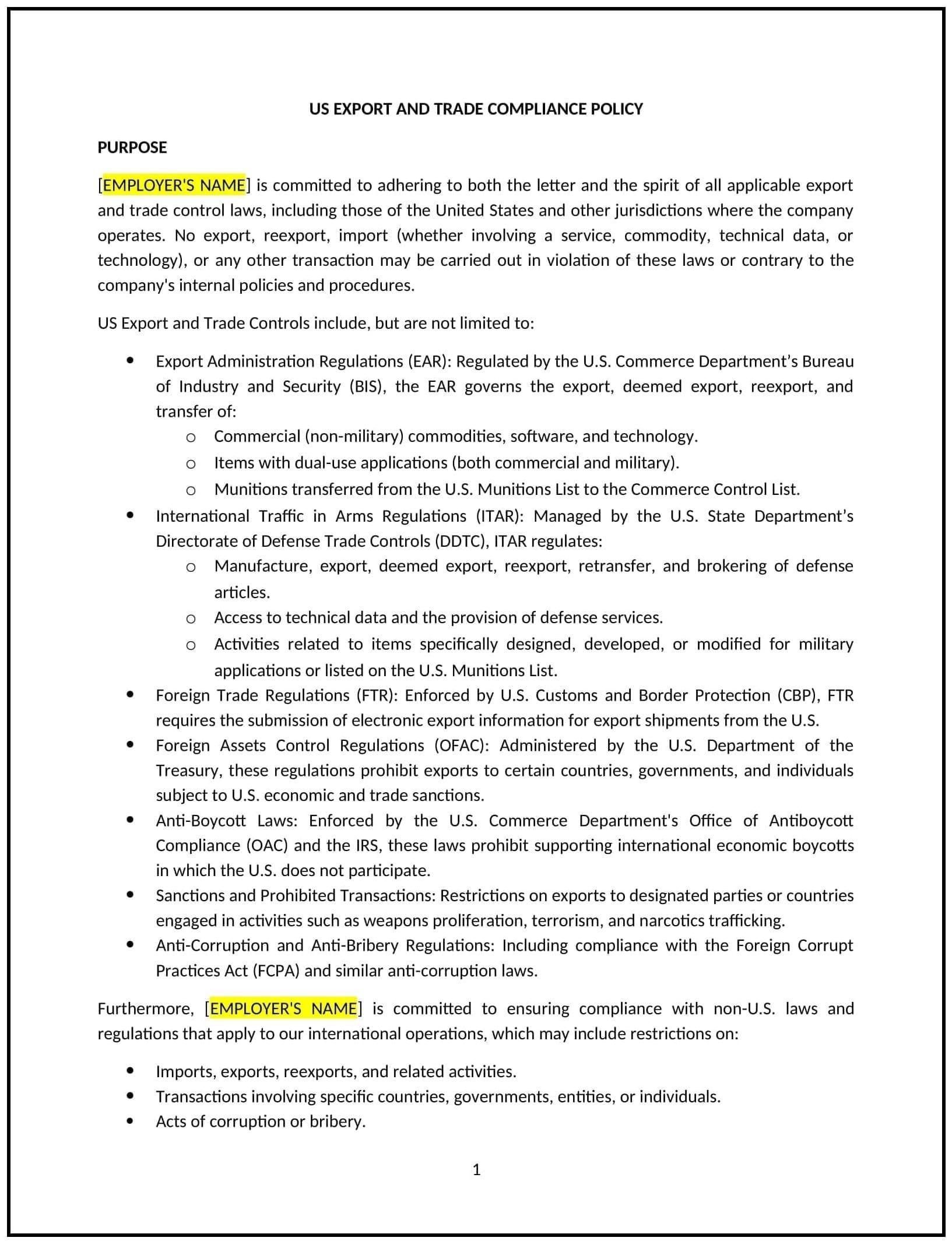
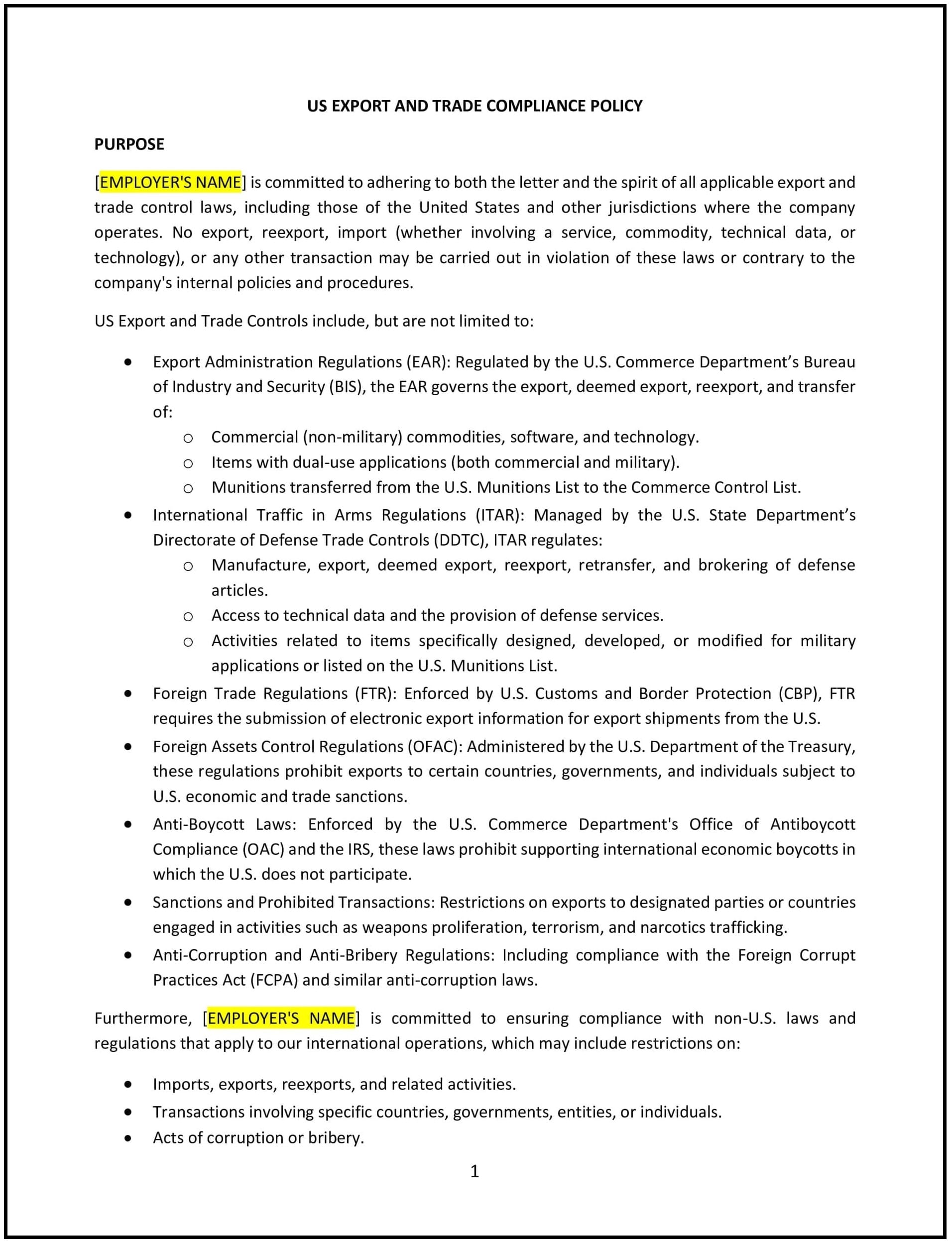
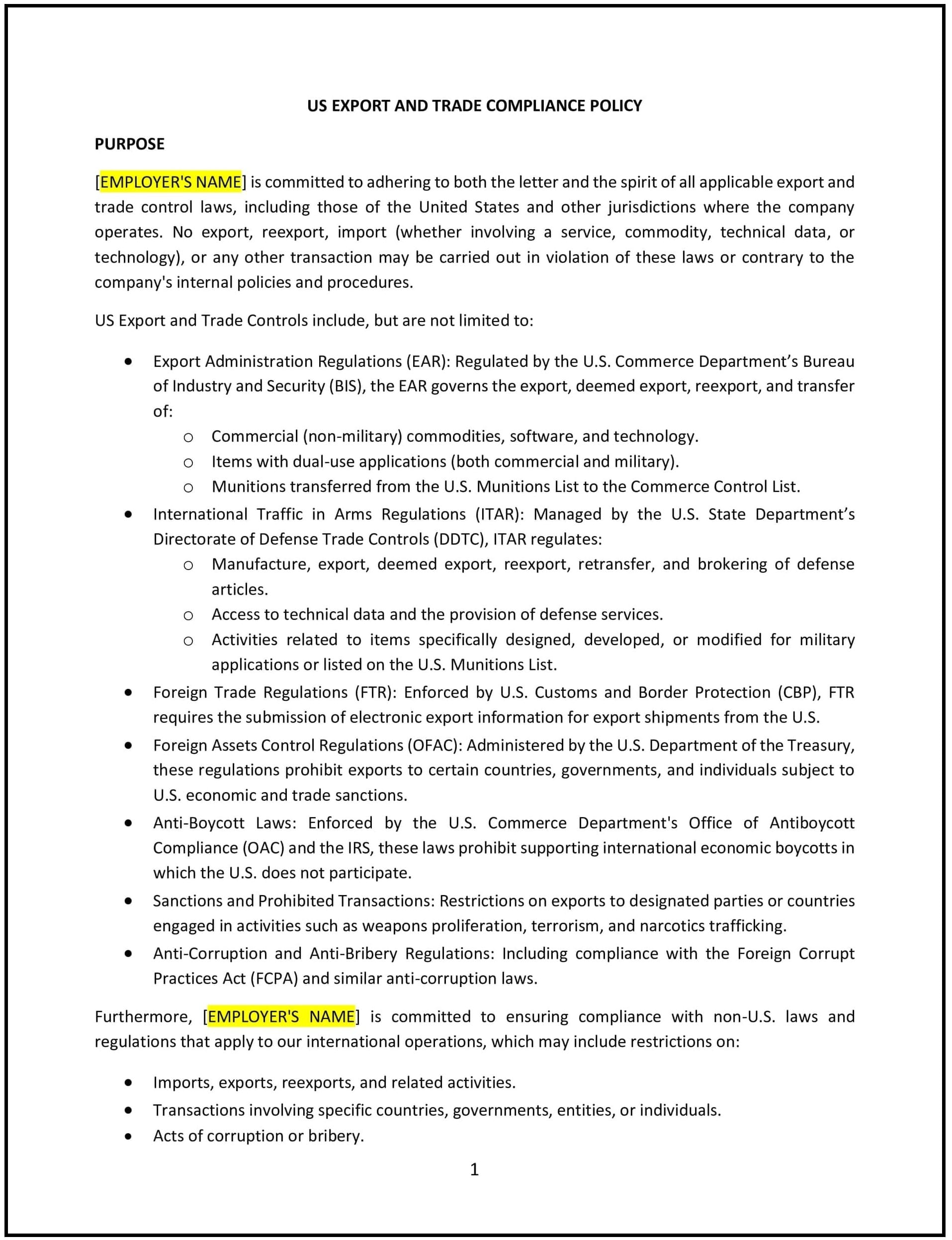
This US export and trade compliance policy is designed to help North Dakota businesses navigate federal export control laws, such as the Export Administration Regulations (EAR) and International Traffic in Arms Regulations (ITAR). It outlines procedures for classifying products, screening transactions, and maintaining records to strengthen alignment with federal trade requirements.
By adopting this policy, businesses can reduce risks of penalties, streamline international transactions, and demonstrate a commitment to ethical global trade practices.
How to use this US export and trade compliance policy (North Dakota)
- Classify products and services: Determine if items fall under EAR, ITAR, or other regulations based on their technical specifications and intended use.
- Screen business partners: Verify customers, suppliers, and distributors against restricted party lists (e.g., OFAC Sanctions Lists).
- Document transactions: Maintain records of export licenses, shipping documents, and due diligence efforts for audits.
- Train employees: Educate staff on recognizing "red flags," such as suspicious orders or requests to circumvent export controls.
- Conduct internal audits: Regularly review export processes to identify and address gaps in compliance.
- Report violations: Establish procedures for self-disclosing potential violations to regulatory authorities like the Bureau of Industry and Security (BIS).
Benefits of using this US export and trade compliance policy (North Dakota)
This policy offers several advantages for North Dakota businesses:
- Reduces legal risks: Minimizes exposure to fines, penalties, or reputational damage from non-compliance.
- Enhances efficiency: Streamlines international trade processes by clarifying roles and responsibilities.
- Builds trust: Demonstrates to partners and regulators that the business prioritizes lawful trade practices.
- Supports growth: Enables safe expansion into global markets by mitigating compliance-related disruptions.
- Strengthens accountability: Creates a framework for consistent adherence to federal export controls.
Tips for using this US export and trade compliance policy (North Dakota)
- Leverage North Dakota resources: Partner with local organizations like the North Dakota Trade Office for export assistance.
- Tailor to your industry: Adjust screening processes for high-risk sectors (e.g., aerospace, energy, or defense contractors).
- Automate screenings: Use software tools to efficiently screen partners against restricted party lists.
- Stay updated: Monitor changes to federal export laws or sanctions programs affecting North Dakota businesses.
- Train regularly: Conduct annual refreshers for employees handling exports, logistics, or sales.
Frequently asked questions (FAQs)
Similar templates
Where deals go from offer to paid
