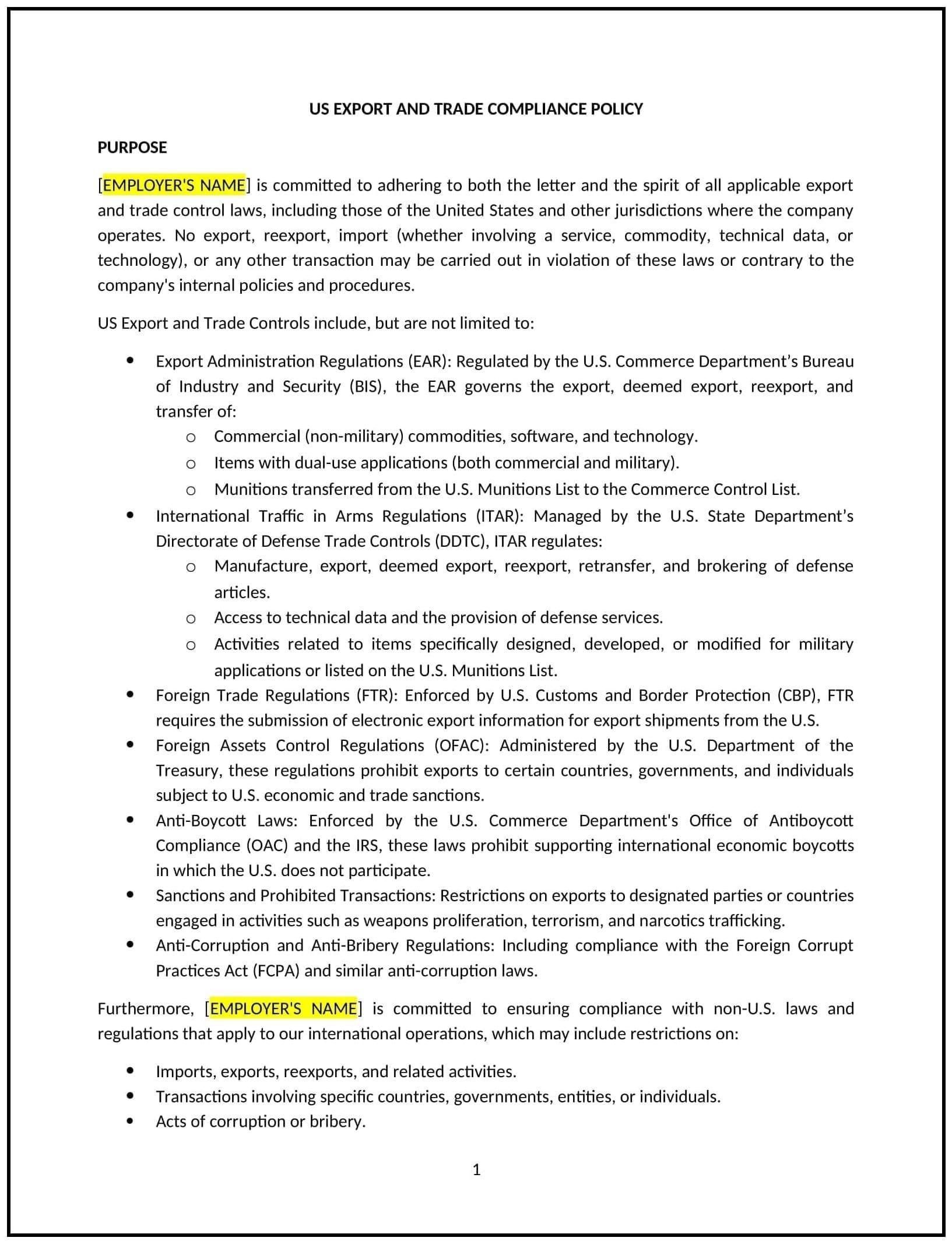
US export and trade compliance policy (South Dakota): Free template
Ensures adherence to U.S. laws regulating international trade and export of goods or services.
- Policies
- South Dakota
US export and trade compliance policy (South Dakota)
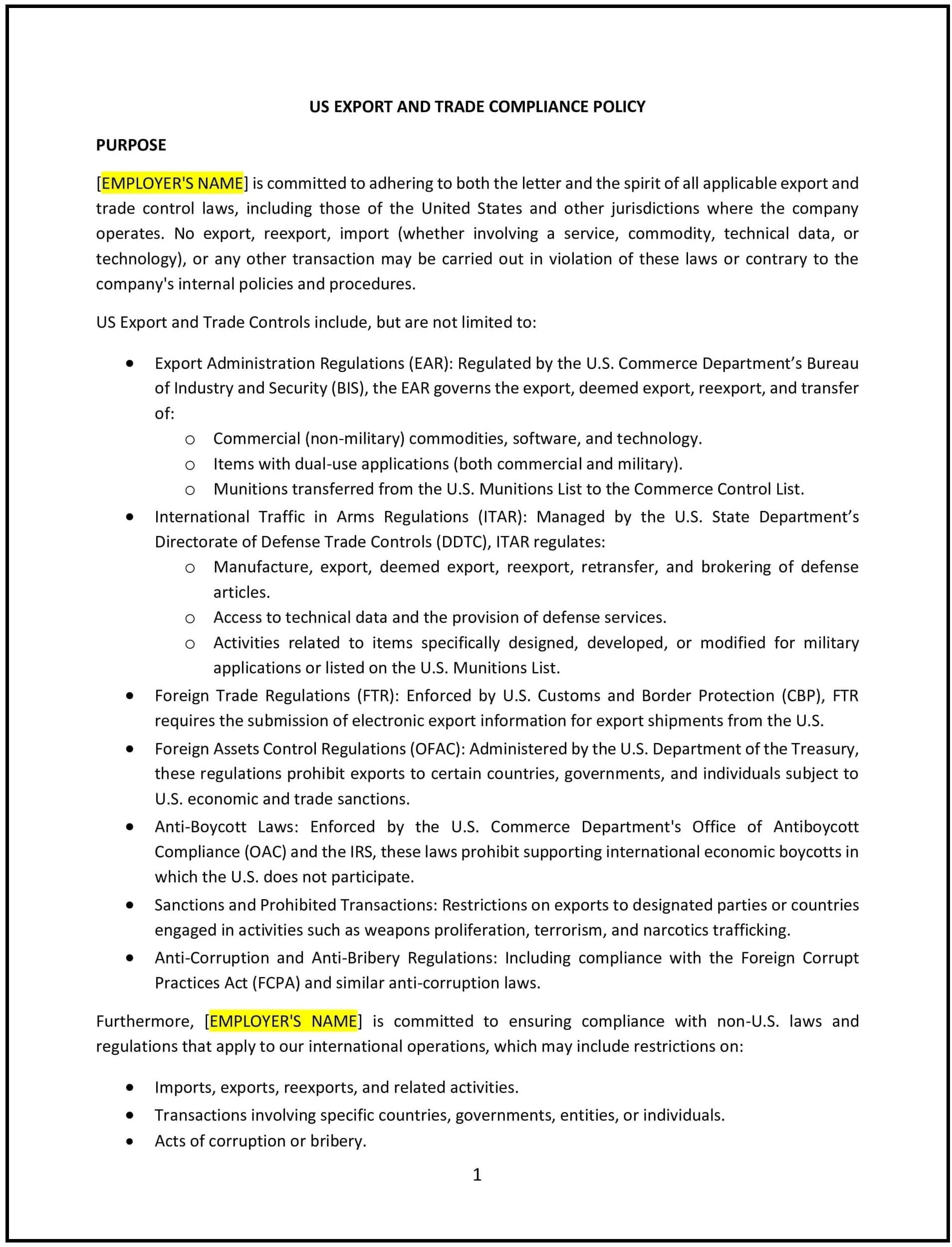
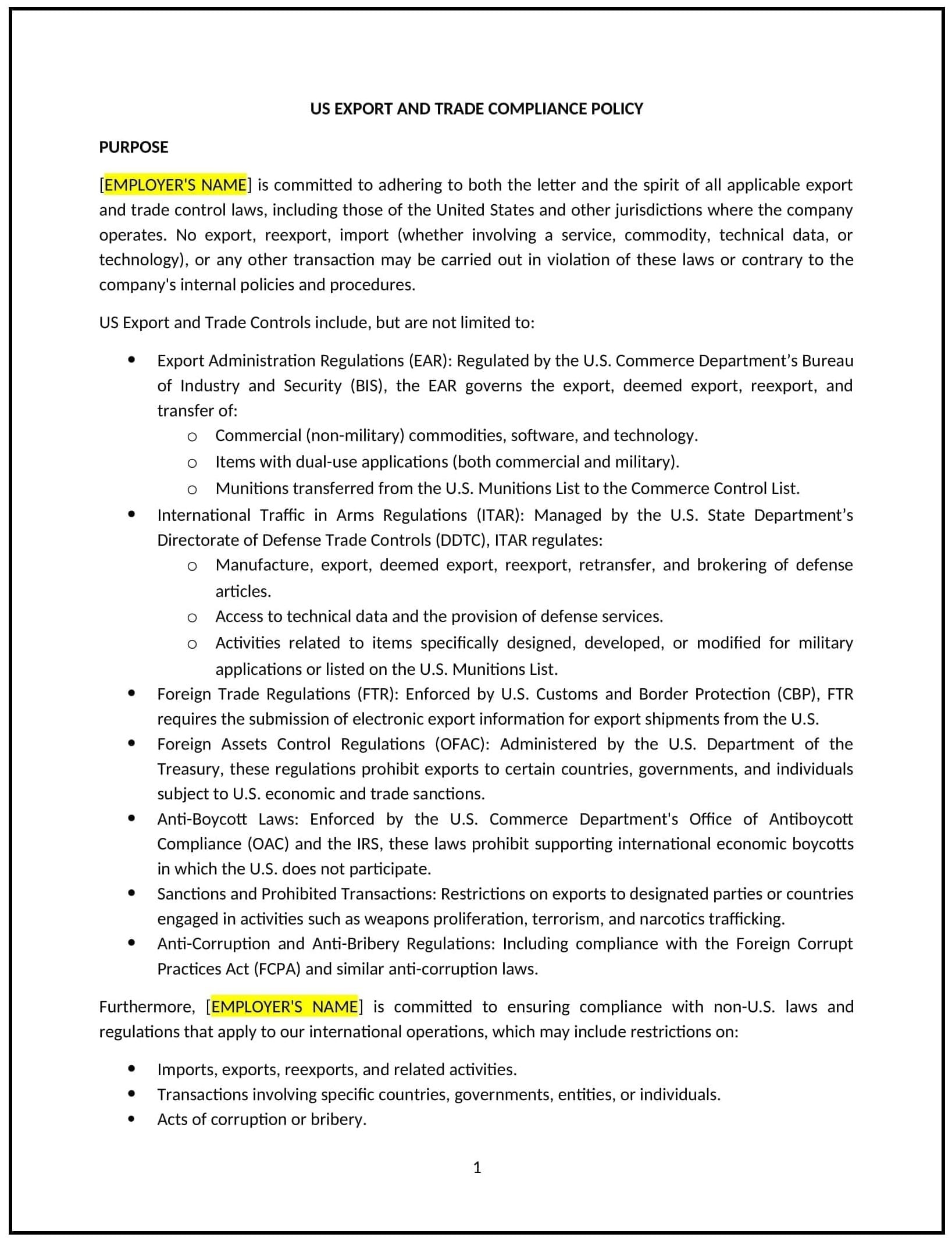
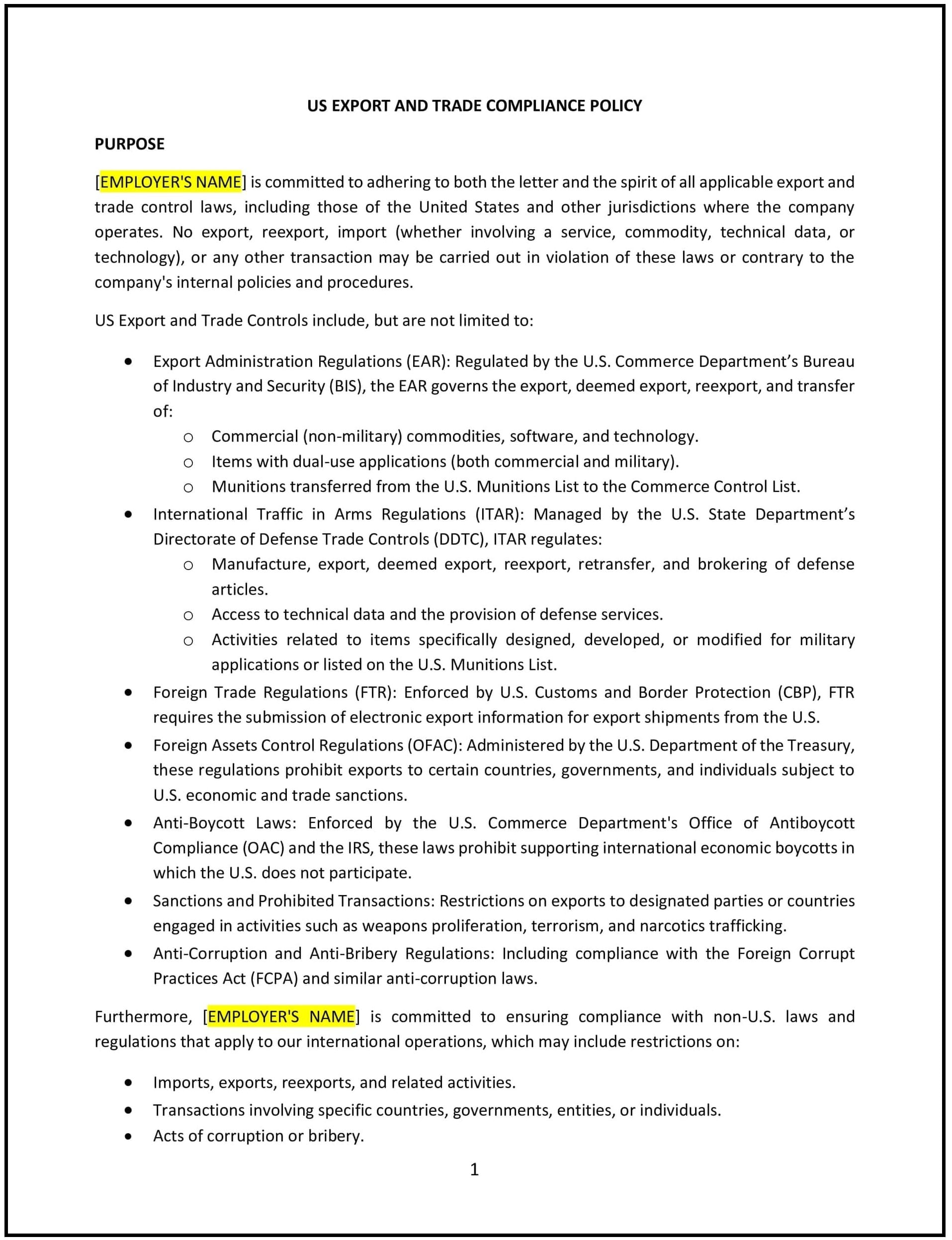
This US export and trade compliance policy is designed to help South Dakota businesses establish guidelines for adhering to federal regulations governing the export of goods, services, and technology. It outlines procedures for classifying products, screening partners, and maintaining records to ensure compliance with export laws.
By adopting this policy, businesses can reduce legal risks, avoid penalties, and align with general best practices for international trade.
How to use this US export and trade compliance policy (South Dakota)
- Define scope: Specify which products, services, or technologies are subject to export controls and trade regulations.
- Classify products: Provide guidelines for determining export control classifications, such as using the Commerce Control List (CCL) or US Munitions List (USML).
- Screen partners: Outline procedures for screening customers, suppliers, and other third parties to ensure they are not on restricted or denied parties lists.
- Maintain records: Explain the types of records businesses must keep, such as export licenses, shipping documents, and compliance reports.
- Train employees: Educate employees on export regulations, compliance procedures, and their responsibilities under the policy.
- Conduct audits: Establish a process for regular internal audits to ensure adherence to export and trade compliance requirements.
- Review and update: Assess the policy annually to ensure it aligns with evolving federal regulations and business needs.
Benefits of using this US export and trade compliance policy (South Dakota)
This policy offers several advantages for South Dakota businesses:
- Reduces legal risks: Helps businesses avoid violations of export laws, which can result in hefty fines or penalties.
- Enhances credibility: Demonstrates a commitment to ethical business practices and compliance with federal regulations.
- Aligns with best practices: Provides a structured approach to managing export and trade compliance.
- Protects reputation: Minimizes the risk of negative publicity or damage to the business’s reputation due to non-compliance.
- Supports international growth: Ensures businesses can expand into global markets while adhering to legal requirements.
Tips for using this US export and trade compliance policy (South Dakota)
- Communicate the policy: Share the policy with employees and include it in the employee handbook.
- Provide training: Educate employees on export regulations, compliance procedures, and their responsibilities under the policy.
- Monitor compliance: Regularly review export transactions and documentation to ensure adherence to the policy.
- Address issues promptly: Take corrective action if violations or discrepancies are identified.
- Update regularly: Review the policy annually to ensure it aligns with evolving federal regulations and business needs.
Frequently asked questions (FAQs)
Similar templates
Where deals go from offer to paid
